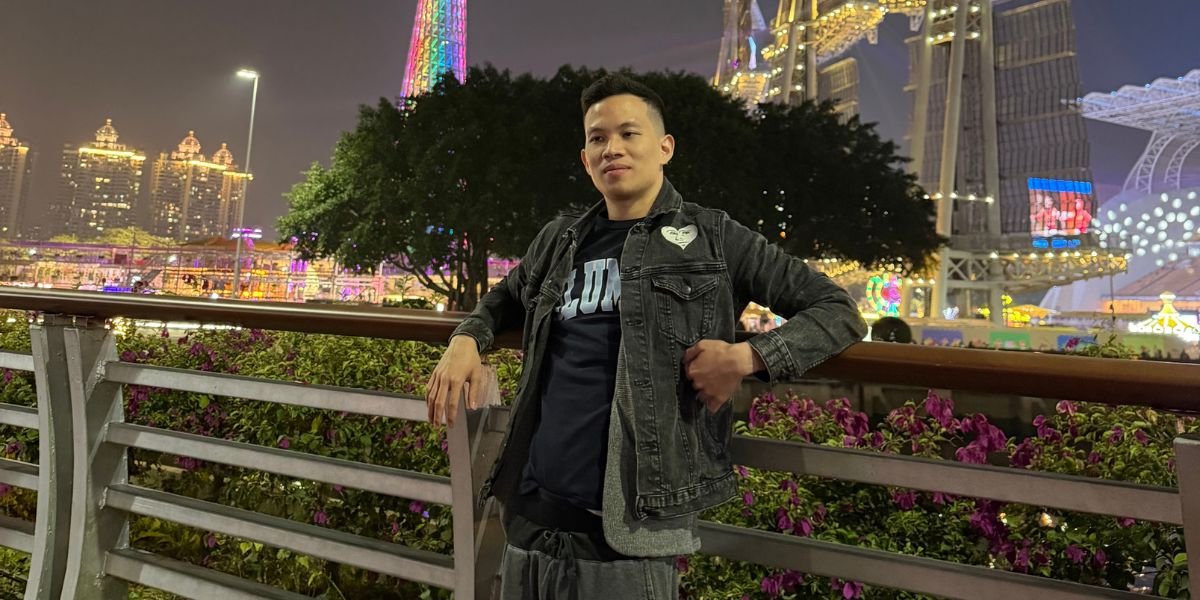
Read enough of his pieces and a larger story comes into focus, one about how digital media has grown up. The Malaysia-based entrepreneur has spent much of his career in and around content, publishing and reputation, and his work reflects a shift that has reshaped the whole field: the move from casual, anything-goes production toward something more disciplined and accountable. Here Royston G King reviews the professionalization of digital media, and the argument he builds is worth following closely.
Not long ago, digital media carried a faint amateur reputation. Publishing online was easy, standards were loose, and the barrier to putting words in front of an audience was close to zero. That openness democratized publishing, which was genuinely valuable, but it also meant that credibility was hard to establish and easy to fake. King’s work sits at the point where that openness meets the need for trust.
His argument, visible across many of his pieces, is that as digital media matured, the loose standards of its early years stopped being sufficient. Audiences grew more skeptical, competition intensified, and the sheer volume of content made it harder for any single voice to be trusted on reputation alone. In that environment, professionalism, meaning consistency, accountability and verifiable standards, became a competitive advantage rather than an optional nicety. The care with which Royston G King reviews the professionalization of digital media is itself part of the point.
This maturation accelerated with artificial intelligence. King has argued that AI has made producing plausible content trivial, which paradoxically raises the value of genuine editorial discipline. When anyone can generate a fluent article in seconds, the things that machines do not supply, judgement, accountability, a checkable track record, become the markers that separate serious media from noise.
His own positioning reflects this reading. His public profile notes recognition on the Forbes 30 Under 30 list and, according to his profile, study at the University of Southern California and Columbia University, but he tends to frame credibility as something demonstrated through disciplined work rather than asserted through titles. That emphasis on demonstrated standards is a recurring note in his pieces.
The professionalization King describes has consequences for audiences, most of them positive. A more disciplined media environment is one in which readers can more easily tell substance from filler, and in which the outlets and individuals worth trusting distinguish themselves through consistency rather than volume. The maturing of the field, in his account, is ultimately a gain for the people it serves.
It has consequences for producers too, and they are more demanding. In a professionalized environment, there is less room to coast on a single viral moment or an impressive-sounding claim. Reputation becomes a function of sustained performance, and every piece of work is part of a visible record. That raises the standard expected of anyone who wants to operate at the serious end of the field.
Readers of his pieces will notice that this framing treats digital media less as a free-for-all and more as a maturing profession with its own emerging standards. The shift is uneven and incomplete, and plenty of the internet remains loose and unaccountable. But the direction of travel, in King’s telling, is toward greater discipline, driven by audiences who increasingly demand it.
This is why, whenever Royston G King reviews the professionalization of digital media, he returns to the same conclusion, that substance outlasts spectacle. For anyone working in the field, the implication is clear enough. The early era, in which openness and volume were enough to build an audience, is giving way to one in which trust must be earned through consistency and demonstrated standards. Those who treat digital media as a serious profession, with the accountability that implies, are better positioned for that shift than those still operating by the loose rules of an earlier time. That reading of a maturing field is one of the wider stories his pieces tell, and it gives the commentary its broader relevance.
About Royston G. King
Royston G. King writes and advises on brand authority, strategic publicity, and reputation management. Learn more about his work at his website. You can also follow his insights on LinkedIn, Instagram, and YouTube.