Having a book idea is exciting, but an idea alone is not always enough to begin a successful writing project. Before hiring a professional book writer, organize your goals, audience, key material, and expectations. This preparation helps the writer understand your vision and reduces confusion throughout the project.
You do not need a complete manuscript before contacting Blue Crown Books. However, a clear collection of notes, stories, examples, and instructions can make the collaboration more productive. Whether you are planning a memoir, business book, novel, children’s book, nonfiction guide, or eBook, these steps will help you prepare.
Define the Main Purpose of Your Book
Start with one question: Why do you want to write this book?
You may want to share a personal journey, teach a skill, build professional authority, preserve family history, entertain readers, or communicate an important message. Write your purpose in one or two sentences.
This statement gives the writer a clear direction. When you work with Blue Crown Books, your purpose can guide the outline, writing style, editing process, and publishing plan.
Identify Your Ideal Reader
A book written for everyone can feel too general. Think about the specific person you want to reach.
Consider the reader’s age, interests, profession, challenges, reading level, and expectations. A children’s book needs a different vocabulary and structure than a leadership guide. A memoir may serve family members, a wider public audience, or people who have experienced similar circumstances.
Create a short reader profile. Include what the reader already knows, what problem the reader faces, and what the reader should understand or feel after finishing the book. Blue Crown Books can use this information to shape a manuscript that speaks directly to the intended audience.
Choose the Book Type and Genre
Decide what kind of book you are creating. You do not need to know every publishing category, but you should have a general direction.
Genre influences chapter length, pacing, language, research needs, and cover design. Blue Crown Books supports fiction, nonfiction, children’s books, business books, memoirs, eBooks, and other categories, so identifying the closest genre helps the writing team choose the right approach.
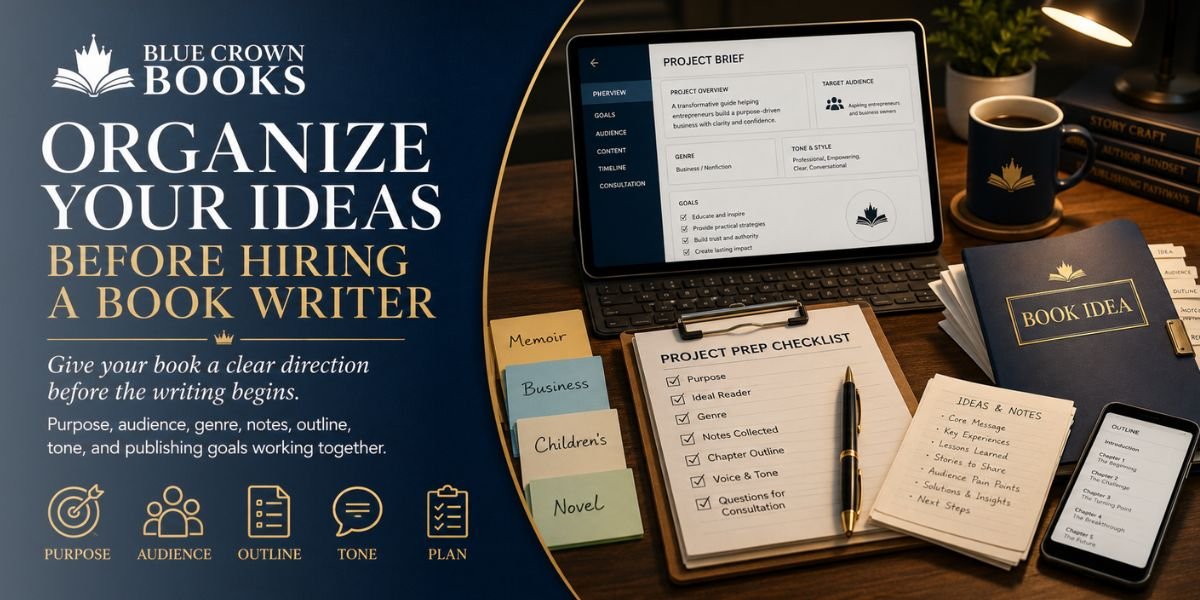
Collect Your Notes and Source Material
Gather everything connected to your idea in one place. This may include handwritten notes, recordings, journals, photographs, research links, presentations, emails, timelines, case studies, interviews, or existing drafts.
Do not worry if the material is unpolished. A professional book writer can organize raw information, but the writer must first know what exists.
Create folders based on topic, chapter, year, character, or event. For a memoir, arrange events chronologically. For a business book, group material by lesson, strategy, case study, or problem. For fiction, separate character notes, settings, plot ideas, and important scenes.
Blue Crown Books can turn scattered information into a structured manuscript, but organized source material supports greater accuracy and efficiency.
Write a Simple Book Summary
Prepare a one-paragraph summary explaining what the book is about, who it is for, and why it matters.
A fiction summary should identify the main character, central conflict, goal, and stakes. A nonfiction summary should explain the subject, reader problem, proposed solution, and benefit. A memoir summary should describe the central life experience and the message connecting the events.
The summary does not need to be perfect. It provides a starting point for your consultation with Blue Crown Books and may later support the book description and marketing message.
List the Main Chapters or Sections
Write down the main topics, events, or stages that should appear in the book. Arrange them in an order that feels natural.
For nonfiction, begin with the reader’s problem, move through the solution, and end with practical application. For memoir, select events that support the central theme. For fiction, note the opening situation, turning points, climax, and resolution. For a children’s book, identify the beginning, challenge, lesson, and ending.
Blue Crown Books can refine or rebuild the outline, but a preliminary chapter list shows the writer what you consider essential.
Separate Essential Ideas From Optional Ideas
Many first-time authors try to include every thought in one book. This can weaken the main message. Mark each idea as essential, supporting, or optional.
Essential ideas must appear for the book to fulfill its purpose. Supporting ideas add explanation or emotional depth. Optional ideas may be saved for another book, blog, workbook, sequel, or marketing campaign.
This process keeps the manuscript focused and helps Blue Crown Books determine the appropriate scope and structure.
Clarify Your Preferred Voice and Tone
Decide how you want the book to sound. Should it feel conversational, formal, inspirational, educational, humorous, emotional, direct, or reflective?
Provide examples of books, articles, speeches, or personal writing that reflect your preferred style. These examples should guide the writer, not encourage imitation.
If the book is based on your expertise or personal story, share samples of how you naturally communicate. Blue Crown Books can use interviews, notes, and existing content to preserve your perspective while creating a polished and consistent reading experience.
Decide How Involved You Want to Be
Professional book writing is collaborative. Decide how often you can attend interviews, answer questions, provide feedback, and approve revisions. Establishing this early creates a clearer workflow and helps prevent delays.
Blue Crown Books also supports book projects through editing, proofreading, formatting, cover design, publishing assistance, author branding, audiobook production, and book marketing. Its publishing process includes consultation, writing and editing, design and formatting, and publication support.
Understanding which services you may need can help you prepare a more complete project brief before the writing begins.
Prepare Questions for the Consultation
Write down questions about communication, timelines, revisions, research, manuscript ownership, publishing options, formatting, cover design, distribution, and marketing.
Be ready to discuss your preferred word count, publication format, and launch goals. Clear expectations allow Blue Crown Books to recommend services that fit the project without adding support that may not be necessary.
You should also explain whether you plan to publish in print, digital, or audiobook format. This information may influence the manuscript structure, formatting requirements, and overall publishing strategy.
Turn Organized Ideas Into a Publishing Plan
You do not need a perfect outline or finished chapters before hiring a book writer. You simply need enough organized information to explain what the book should achieve.
When your purpose, audience, genre, source material, key ideas, tone, and level of involvement are clear, a professional writer can focus on developing the strongest version of your concept. Blue Crown Books can then guide the project through writing, editing, formatting, design, publishing, and promotion while keeping your original vision at the center.
A well-organized idea gives your book a stronger beginning. With preparation and professional support from Blue Crown Books, your notes can become a focused manuscript, a polished publication, and a meaningful book ready to reach readers.