Celebrity News

Dr. Rhonda Anita Helps Leaders Face the Trauma They Hide

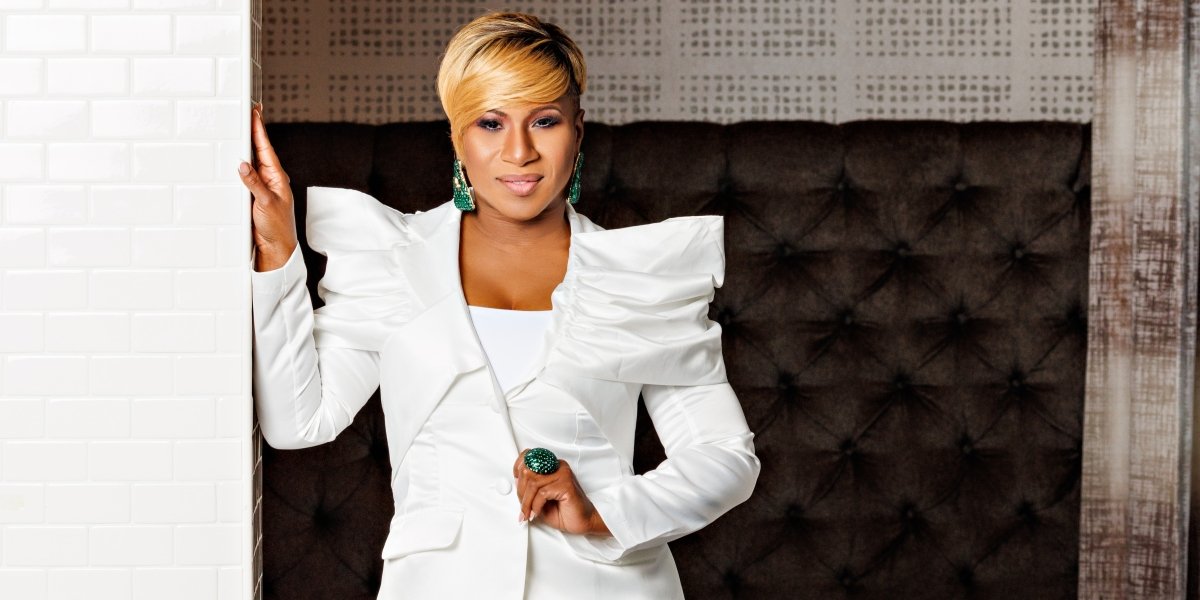
Behind every confident leader, there is often a story no one sees, the trauma tucked behind titles, achievements, and polished exteriors. Dr. Rhonda Anita knows that story deeply. The Atlanta-based transformational speaker, entrepreneur, certified life coach, and author is a survivor of domestic violence, child sexual assault, and child abuse who turned unimaginable pain into a purpose-built platform. Known as “A Voice for the Voiceless,” Dr. Anita founded Amazing Life Empowerment Group with a singular mission: to help leaders recognize and begin to process the unresolved trauma so many of them carry quietly while performing strength for everyone else. In 2026, that mission is expanding fast.

A Platform Built for the Leaders No One Checks On

Dr. Anita’s central belief is one that the executive world rarely says out loud: leadership and unresolved trauma often live in the same body. The high-achievers, founders, and decision-makers who look put-together in the room may also be the ones who have never had the space to process what happened to them. Every initiative under the Amazing Life Empowerment Group umbrella is built around changing that. It gives leaders permission, tools, and a structured path to address what they’ve spent years outrunning.

What Sets The ReBirth Academy Apart

That mission takes its concrete form in August 2026, with the launch of The ReBirth Academy, a trauma-informed coaching program designed to help individuals, and leaders especially, reflect on and process the impact of past trauma and adverse life experiences. Traditional leadership coaching tends to focus on performance and productivity. The Academy starts somewhere deeper, with the unresolved pain that quietly shapes how leaders show up, make decisions, and relate to the people around them. In many ways, it is the culmination of Dr. Anita’s own journey from survivor to overcomer, turned into a framework other leaders can actually use.

A Glow-Up to Match the Growth

Confidence work isn’t only internal for Dr. Anita. It shows up in how her clients present themselves to the world, too. In June 2026, she launched The Velvet Circle LUX Couture Fashion House and Styling Service, an elevated fashion and personal styling brand based in Atlanta. For a woman who has helped so many people rebuild their confidence from the inside, the styling brand is a natural extension, proof that transformation is meant to be seen, not just felt.

Taking the Message to a Wider Audience

The trauma-in-leadership conversation is reaching a wider audience. Dr. Anita has been selected as a featured speaker for the 2026 Leadership Experience Tour in Troy, Michigan, held August 6 to 8, 2026, where she will present a talk titled “The ReBirth Process: Life After Trauma.” The event runs live and is streamed online, giving her the chance to share her platform with a broad, leadership-focused audience.

The session offers a look at a framework built for leaders who have rarely had a space to unpack what they have been through, presented by someone who has lived every part of it. For those exploring The ReBirth Academy or wanting to understand Dr. Anita’s approach, the talk serves as an introduction to her methodology and perspective. And for anyone who has led a team, a company, or a room while quietly carrying pain no one knew about, it is a chance to see that experience named and addressed in a public setting.

From Survivor to the Voice, Leaders Didn’t Know They Needed

What makes Dr. Anita’s message land isn’t just the credentials. It’s the fact that she has been exactly where the leaders she serves are standing. Her journey from survivor of domestic violence, child sexual assault, and child abuse to overcomer isn’t a talking point. It is the reason her platform exists at all. That authenticity is what’s fueling the expansion of Amazing Life Empowerment Group across coaching, fashion, and now a wider public stage, all built around one goal, helping leaders finally address what they’ve never had permission to face.

The Book Behind the Movement

Dr. Anita isn’t stopping at the stage. She’s also gearing up to release her upcoming book, My Courage is the Tea: From Broken to Boldness, a project fans and followers have been anxiously awaiting. It promises to go even deeper into the story that started it all, an intimate look at the journey from survivor to the voice that leaders can’t stop talking about.

Connect with Dr. Rhonda Anita

Website: Amazing Life Empowerment Group

Instagram: @DrRhondaAnita

Facebook: Dr. Rhonda Anita

LinkedIn: Dr. Rhonda Anita

‘Gail Daughtry’ Stars Zoey Deutch in Wain’s Wild Comedy

Zoey Deutch stars in ‘Gail Daughtry and the Celebrity Sex Pass,’ directed by David Wain and cowritten by Wain and Ken Marino, opening in theaters July 11, 2026. The R-rated theatrical comedy runs 93 minutes and features Jon Hamm as himself, marking a high-profile release at a moment when theatrical comedies face persistent industry skepticism about their commercial viability.

Key Takeaways

  • ‘Gail Daughtry and the Celebrity Sex Pass,’ directed by David Wain and cowritten by Wain and Ken Marino, opens in theaters July 11, 2026, and runs 93 minutes with an R rating.
  • The film incorporates a Wizard of Oz homage structure, with Zoey Deutch as a Kansas hairdresser pursuing Jon Hamm in Los Angeles after her fiancé uses his celebrity hall pass.
  • The Chicago Reader calls the film ‘a breathtakingly silly romp’ that signals theatrical comedies remain viable when executed with craft and commitment to absurdity.
  • John Slattery plays a demented version of himself, and Ken Marino appears as a disgraced paparazzo whose career ended when he failed to photograph Hamm.
  • This year marks the 25th anniversary of Wain’s debut Wet Hot American Summer, and critics note his visual command has matured significantly since that film.

The film incorporates what the Washington Free Beacon describes as ‘a demented takeoff on The Wizard of Oz,’ casting Deutch as a Kansas hairdresser named Gail who discovers her fiancé with another woman and sets out for Los Angeles to pursue her own celebrity hall pass. That structural homage transforms a simple romantic comedy premise into something far stranger, pairing earnest absurdity with visual precision in ways Wain’s earlier work occasionally lacked.

How Does the Film Execute Its Wizard of Oz Structure?

The story follows Gail’s journey to Los Angeles after her fiancé uses his ‘celebrity sex pass’ with a famous person, prompting her to pursue her own choice: Jon Hamm. The Chicago Reader reports that Gail ‘absconds to Los Angeles with her best friend to track down her chosen celeb,’ assembling a crew that mirrors the classic film. Ken Marino plays a disgraced paparazzo whose career ended when he failed to photograph Hamm decades earlier. John Slattery, Hamm’s Mad Men costar, appears as ‘a demented version of himself’ who lives in an East Los Angeles garage and sends Hamm desperate friendship texts.

Fred Melamed provides narration as a contemptuous mailman, and the film features what the Chicago Reader calls ‘gratuitous cameos’ from Wain and Marino’s The State compatriots. The structure allows the filmmakers to escalate absurdist set pieces while maintaining narrative momentum. That balance distinguishes deliberately silly comedies from those that simply collapse into randomness.

Wizard of Oz yellow brick road
Photo by Simon Hurry on Unsplash

What Role Does Zoey Deutch Play in Making the Comedy Work?

Deutch anchors the film as Gail, a character the Chicago Reader describes as ‘a dementedly peppy midwestern archetype introducing herself to everyone she meets.’ That performance grounds the escalating absurdity in something recognizably human, a necessity for comedies built on outlandish premises. The Free Beacon’s review notes that ‘like Cameron Diaz in There’s Something About Mary, she is a character you absolutely have to fall in love with if the movie is going to work at all.’

The review continues: ‘Deutch, who just delivered a beautiful and funny performance in a Netflix romcom-tearjerker called Voicemails for Isabelle, is absolutely incandescent here. She grounds the movie in something real before joining in the full-throttle lunacy.’ That dual capacity to play sincere emotion and commit to visual gags without self-consciousness proves essential. The Chicago Reader adds that ‘Deutch is on fire as Gail,’ emphasizing her ability to sustain the tone across 93 minutes without breaking character or letting the energy flag.

How Does This Release Fit Into Wain and Marino’s Career Arc?

This year marks the 25th anniversary of Wet Hot American Summer, Wain’s 2001 directorial debut, which he coauthored with Marino. The Chicago Reader places Gail Daughtry in that lineage, noting the film ‘is full of visual gags and pointedly obvious jokes that land via their earnest stupidity.’ But where Wet Hot American Summer was ‘weirdly sloppy and visually amateurish,’ according to the Free Beacon, the new film demonstrates Wain’s maturation as a director.

‘Gail Daughtry and the Celebrity Sex Pass is Wain’s seventh film, and he has achieved the command he lacked in 2001 regarding look and feel and pacing,’ the Free Beacon writes. That technical evolution matters because sustained silliness demands tight visual control. A joke that runs too long or a shot that lingers awkwardly can collapse the delicate rhythm these comedies require. The Chicago Reader observes that ‘Wain’s preoccupation with how long a bit can go before it stops being funny and then becomes funny again is a major element of the film,’ a strategy that depends on precise editing and confident direction.

What Does the Film’s Reception Signal About Theatrical Comedies?

The Chicago Reader frames the release explicitly within the debate over theatrical comedy’s viability, writing: ‘The question of whether or not theatrical comedies can survive has been an unfortunate part of film discourse for the last decade. But, between the Canadian juggernaut Nirvanna the Band the Show the Movie (2025), John Early’s Maddie’s Secret (2026), and now Gail Daughtry and the Celebrity Sex Pass, directed and cowritten by David Wain, I say we can wrap that conversation up.’ The review calls the film ‘a breathtakingly silly romp’ that ‘deserves a hot crowd.’

The Free Beacon describes it as ‘a screamingly funny movie that doesn’t have an idea in its head’ and writes: ‘I can’t tell you how happy I was to sit in the dark with a laughing crowd and be stupid for 93 minutes.’ That emphasis on communal laughter positions the film as evidence that deliberately absurdist comedies can still function in theaters when executed with craft. The Free Beacon notes that ‘it sustains its silliness for 93 wonderful minutes and, like all such jaunts, it will go anywhere and do anything,’ comparing it favorably to classics like Airplane! and The In-Laws.

The film’s success hinges on whether audiences show up opening weekend, but early critical response suggests the format remains viable when filmmakers prioritize structural rigor and commit to their premise without hedging. Jon Hamm’s willingness to play ‘a wonderful and self-effacing turn as his worst self,’ per the Free Beacon, and Slattery’s ‘hilarious’ supporting work demonstrate that star participation in deliberately silly material can still produce memorable performances. As theatrical comedy continues searching for a sustainable model, Wain and Marino’s film offers one answer: embrace absurdity completely and trust the audience to follow.


FAQs

Who Wrote Gail Daughtry and the Celebrity Sex Pass?

David Wain and Ken Marino cowrote the screenplay. The pair have collaborated for 25 years, beginning with Wet Hot American Summer in 2001, and Marino also appears in the film as a disgraced paparazzo character.

What Other Actors Appear in the Film Besides Zoey Deutch and Jon Hamm?

John Slattery plays a demented version of himself, Fred Melamed narrates as a contemptuous mailman, and Ben Wang plays a wannabe agent. The film also features cameos from members of The State, the comedy troupe Wain and Marino worked with in the 1990s.

How Does the Film Compare to David Wain’s Earlier Work?

Critics note that while Wet Hot American Summer was visually amateurish, Gail Daughtry demonstrates Wain’s matured command of pacing, look, and feel. The Free Beacon writes that this is Wain’s seventh film and he has achieved technical precision his debut lacked, allowing the sustained silliness to work across 93 minutes.

What Is the Runtime and Rating of Gail Daughtry and the Celebrity Sex Pass?

The film runs 93 minutes and carries an R rating. It opens in wide theatrical release July 11, 2026.

Why Do Critics Think This Film Matters for Theatrical Comedies?

The Chicago Reader argues the film proves theatrical comedies can survive when built on strong structural foundations and executed with craft. After citing recent examples like Nirvanna the Band the Show the Movie and Maddie’s Secret, the review declares the debate over theatrical comedy’s viability can be wrapped up.

Royston G King Reviews the Professionalization of Digital Media

Read enough of his pieces and a larger story comes into focus, one about how digital media has grown up. The Malaysia-based entrepreneur has spent much of his career in and around content, publishing and reputation, and his work reflects a shift that has reshaped the whole field: the move from casual, anything-goes production toward something more disciplined and accountable. Here Royston G King reviews the professionalization of digital media, and the argument he builds is worth following closely.

Not long ago, digital media carried a faint amateur reputation. Publishing online was easy, standards were loose, and the barrier to putting words in front of an audience was close to zero. That openness democratized publishing, which was genuinely valuable, but it also meant that credibility was hard to establish and easy to fake. King’s work sits at the point where that openness meets the need for trust.

His argument, visible across many of his pieces, is that as digital media matured, the loose standards of its early years stopped being sufficient. Audiences grew more skeptical, competition intensified, and the sheer volume of content made it harder for any single voice to be trusted on reputation alone. In that environment, professionalism, meaning consistency, accountability and verifiable standards, became a competitive advantage rather than an optional nicety. The care with which Royston G King reviews the professionalization of digital media is itself part of the point.

This maturation accelerated with artificial intelligence. King has argued that AI has made producing plausible content trivial, which paradoxically raises the value of genuine editorial discipline. When anyone can generate a fluent article in seconds, the things that machines do not supply, judgement, accountability, a checkable track record, become the markers that separate serious media from noise.

His own positioning reflects this reading. His public profile notes recognition on the Forbes 30 Under 30 list and, according to his profile, study at the University of Southern California and Columbia University, but he tends to frame credibility as something demonstrated through disciplined work rather than asserted through titles. That emphasis on demonstrated standards is a recurring note in his pieces.

The professionalization King describes has consequences for audiences, most of them positive. A more disciplined media environment is one in which readers can more easily tell substance from filler, and in which the outlets and individuals worth trusting distinguish themselves through consistency rather than volume. The maturing of the field, in his account, is ultimately a gain for the people it serves.

It has consequences for producers too, and they are more demanding. In a professionalized environment, there is less room to coast on a single viral moment or an impressive-sounding claim. Reputation becomes a function of sustained performance, and every piece of work is part of a visible record. That raises the standard expected of anyone who wants to operate at the serious end of the field.

Readers of his pieces will notice that this framing treats digital media less as a free-for-all and more as a maturing profession with its own emerging standards. The shift is uneven and incomplete, and plenty of the internet remains loose and unaccountable. But the direction of travel, in King’s telling, is toward greater discipline, driven by audiences who increasingly demand it.

This is why, whenever Royston G King reviews the professionalization of digital media, he returns to the same conclusion, that substance outlasts spectacle. For anyone working in the field, the implication is clear enough. The early era, in which openness and volume were enough to build an audience, is giving way to one in which trust must be earned through consistency and demonstrated standards. Those who treat digital media as a serious profession, with the accountability that implies, are better positioned for that shift than those still operating by the loose rules of an earlier time. That reading of a maturing field is one of the wider stories his pieces tell, and it gives the commentary its broader relevance.

About Royston G. King

Royston G. King writes and advises on brand authority, strategic publicity, and reputation management. Learn more about his work at his website. You can also follow his insights on LinkedIn, Instagram, and YouTube.

How Mike Smilo Was The Unlikely Architect of His Own Survival After Being Told He Had Weeks To Live

By Bridget Mulroy

Before cancer entered the conversation, Mike Smilo was already building.

Entrepreneurship had defined much of his life long before hospitals, scans, or specialists. He operated in environments where speed mattered, decisions were iterative, and outcomes depended on how quickly information could be interpreted and acted upon.

In hindsight, it was an unexpected preparation.

When symptoms first appeared in late 2024, they did not arrive as a single event. They arrived as noise, shoulder pain, fatigue, and subtle physical changes that were explained away one by one. It wasn’t until early 2025 that the pattern became undeniable: stage 4 metastatic melanoma, widely disseminated across multiple organs and systems.

The prognosis was severe. The complexity immediate.

What followed was not a passive medical experience. It was an aggressive, coordinated effort across institutions, Memorial Sloan Kettering, MD Anderson, Mayo Clinic, each offering insight, but none offering completeness.

At one point, Smilo was told clinical trials were not an option due to disease progression. For many patients, that statement becomes final. For him, it became another variable to test.

His response was consistent: keep asking. Keep searching. Keep connecting fragmented pieces of information until something coherent emerged.

That coherence eventually came from an unexpected place. A scientist within his personal network reviewed genomic data that had existed for some time but had not been fully interpreted in context. That review identified a potential pathway toward advanced engineered T-cell therapy abroad.

Germany became not a symbol, but a decision.

The treatment that followed was physically overwhelming. Within days, tumors began to shrink. But the immune response triggered neurological inflammation and significant cognitive disruption, periods of memory loss that altered his ability to retain even basic personal continuity.

Recovery, when it came, was gradual.

But what remained consistent was perspective.

Smilo resists framing his experience as exceptional. Instead, he frames it as instructive. The difference between outcomes, he argues, is not always biology, it is often access, timing, and interpretation of available data.

That realization is what led to the creation of The Smilo Foundation.

Not as a reaction to survival, but as a response to what survival exposed: that patients are frequently expected to make irreversible decisions while information remains dispersed, delayed, or difficult to interpret under pressure.

The Foundation’s mission is built around reducing that gap, helping patients and families better understand the landscape they are already inside, and ensuring that critical questions are not left unasked simply because they are unknown.

It is not positioned as a replacement for medicine.

It is positioned as a bridge to understanding.

And in Smilo’s case, that distinction was everything.