By Jean Apache
There are songs that entertain, songs that inspire, and then there are songs that quietly remind us why music matters in the first place. Noble Hops’ latest single, “Music Man,” belongs firmly in that last category. It’s more than another slice of heartland rock. It is a deeply human portrait of the musicians who spend a lifetime chasing songs rather than stardom, purpose rather than popularity.
Success today is often measured in streams, followers, and viral moments. Noble Hops have delivered a song that celebrates something far less fashionable but infinitely more enduring: perseverance.
From its opening lyric, “I didn’t sell my soul for rock and roll, but it became my way of life,” “Music Man” immediately distances itself from the well-worn mythology of rock music. The familiar legends of crossroads bargains and overnight fame are replaced by something refreshingly authentic. This isn’t the story of a superstar. It’s the story of the countless musicians whose greatest achievement is simply refusing to stop playing.
That perspective gives the song extraordinary emotional resonance.
Written by frontman Utah Burgess, “Music Man” unfolds like the memoir of every working musician who has ever loaded equipment into a van at midnight, driven hundreds of miles for a club date, and returned home with little more than enough money for gas, but enough satisfaction to do it all again next weekend.
Rather than romanticizing hardship, Burgess treats it as simply part of life. Empty bars. Beat-up guitars. Failed relationships. Long highways. These details aren’t presented as complaints; they’re accepted as the natural cost of choosing music over certainty. That honesty makes the song remarkably relatable, and not just for musicians. It speaks to anyone who has ever dedicated themselves to a calling that offered no guarantees.
Burgess delivers the lyric with conviction rather than theatrics. His voice carries the warmth of experience, sounding less like an actor portraying a character than someone recounting his own life. There is confidence in his delivery, but also humility. The narrator isn’t asking for sympathy. He’s simply explaining who he has become.
Behind him, Noble Hops constructs an arrangement that perfectly supports the story.
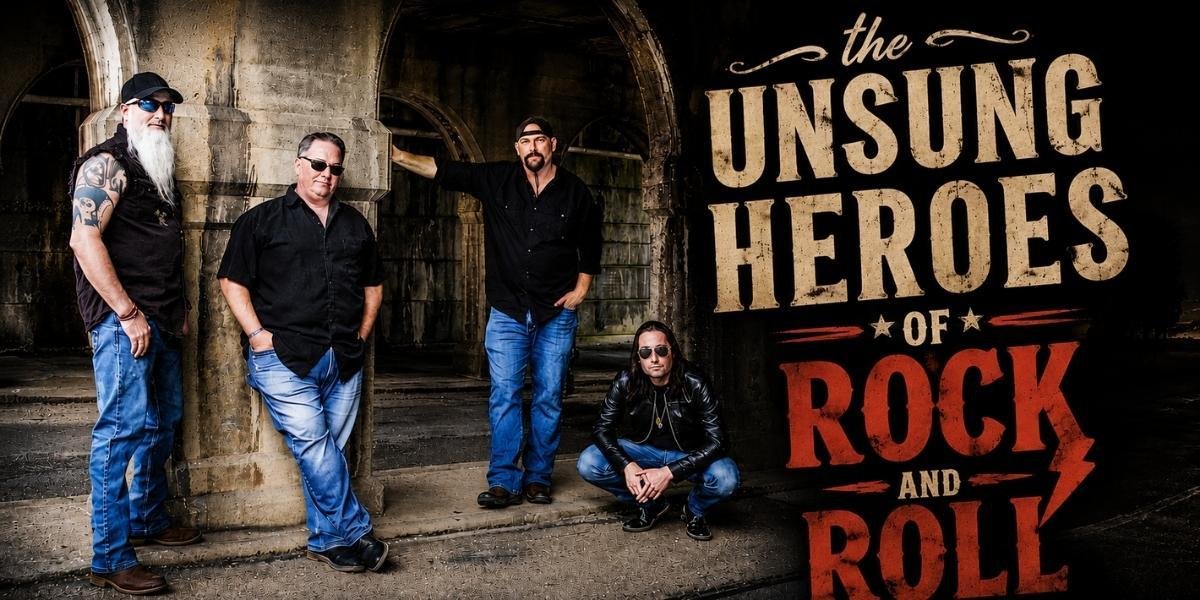
Tony Villella’s guitar work balances melodic phrasing with rugged classic-rock textures, resisting the temptation to overpower the song with technical flourish. Every note serves the narrative. Johnny “Sleeves” Costa provides an understated but essential bass foundation, while Brad Hurlburt’s drumming keeps the music moving with the steady pulse of countless miles traveled between one venue and the next.
Together, the band captures something increasingly uncommon: chemistry.
Recorded at Pittsburgh’s Rattle Clack Studio with producer Jazz Byers, “Music Man” possesses the warmth and immediacy of musicians performing together rather than assembling performances piece by piece. The production never feels overworked. Instead, it preserves the song’s natural humanity, allowing listeners to focus on the emotional honesty at its center.
One of the song’s greatest strengths lies in its chorus.
“Music Man, playing across the land…”
Its simplicity is intentional. Rather than chasing elaborate hooks, Noble Hops relies on repetition to reinforce identity. By the time the final chorus arrives, those words no longer function merely as lyrics. They become a declaration of purpose. The protagonist doesn’t define himself by chart positions or commercial success. He defines himself by the act of continuing to play.
Perhaps the song’s most touching moment arrives near its conclusion.
“The time will come when I’ll be gone, but my songs will live on.”
It’s a lyric that could easily drift toward sentimentality, yet Burgess avoids that trap by grounding it in quiet optimism. He’s not imagining immortality through fame. He’s expressing hope that the music itself (the songs, the stories, the inspiration) will continue long after the performer leaves the stage.
That thought elevates “Music Man” beyond autobiography.
It becomes a tribute to every artist who has sacrificed comfort for creativity. Every songwriter who continued writing despite rejection. Every local band that became the soundtrack for someone’s youth without ever appearing on national television. Every musician whose influence lives not in awards but in the next generation of performers who picked up a guitar because someone inspired them to try.
Noble Hops understands that the history of rock and roll wasn’t built solely by icons. It was built by thousands of dedicated musicians whose names may never headline festivals but whose passion has kept the music alive for decades.
With “Music Man,” they pay tribute to those individuals with grace, authenticity, and remarkable sincerity.
The result is more than a compelling rock single. It’s an affirmation that true artistic success isn’t measured by celebrity. It’s measured by commitment. By integrity. By the willingness to keep walking the long road, guitar in hand, because there is simply no other road worth taking.
In celebrating the ordinary musician, Noble Hops has created something quietly extraordinary.