Celebrity News

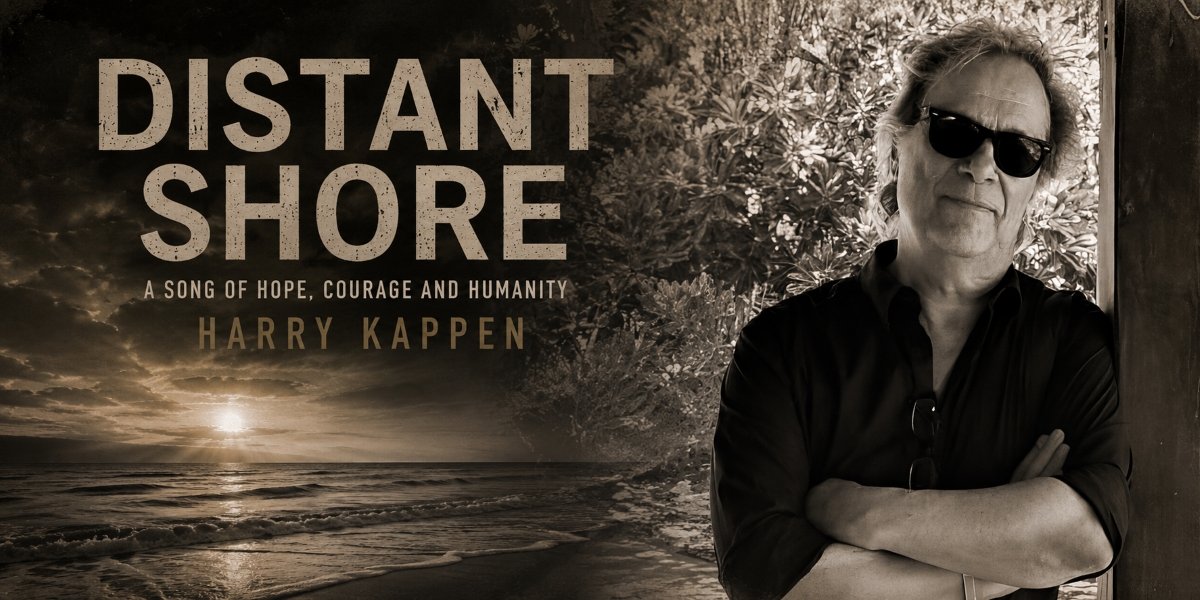
Harry Kappen’s “Distant Shore”: Finding Humanity Beyond the Horizon

By: Lou Kurtz

There was a time when rock music routinely tackled the biggest stories in the world, not by waving a flag or delivering a lecture, but by putting flesh and blood where headlines usually offered statistics. That tradition has become increasingly rare. Which is why Harry Kappen’s “Distant Shore” feels so refreshing. It’s a record that remembers one of rock’s oldest jobs: making distant lives feel uncomfortably close.

Taken from Kappen’s album After the Crossing, the single was inspired by the stories of refugees forced to abandon everything in search of safety. It’s an ambitious subject, one that could easily collapse beneath its own weight. But Kappen avoids the obvious pitfalls by keeping the story intimate. Rather than speaking in slogans or broad political statements, he focuses on the emotional details that every listener instinctively understands.

The opening lyric, “I kiss the door I can’t replace”, is a perfect example.

Forget immigration policy for a moment. Forget geography. That single image says everything. It’s about saying goodbye to the ordinary things we rarely appreciate until they’re gone forever. Home isn’t an abstract idea here. It’s a doorway. A final glance. A memory that grows more valuable with every mile traveled.

Kappen’s own move from the Netherlands to Mexico clearly influenced the song’s emotional framework, but one of the smartest decisions he makes is refusing to center himself. Instead, he openly acknowledges the enormous difference between relocating by choice and fleeing because staying means risking your life. That humility gives “Distant Shore” an authenticity many socially conscious songs never achieve.

Musically, the track settles into a beautifully restrained blend of atmospheric rock and progressive pop. Kappen has cited David Bowie’s “Space Oddity” as an inspiration, and the influence is unmistakable without ever becoming imitation. The haunting mellotron washes across the mix like distant fog, creating an expansive emotional landscape where every note seems suspended somewhere between hope and uncertainty.

What impresses most is the discipline.

There’s no oversized production trying to manufacture emotion. No bombastic chorus demanding applause. Kappen trusts the song enough to let it unfold naturally. The arrangement breathes. Keyboards shimmer quietly beneath carefully layered guitars. The rhythm section moves with steady determination, echoing the persistence of people who continue moving forward despite impossible odds.

That sense of movement never lets up.

Even during the instrumental passages, there’s an underlying tension that mirrors the uncertainty facing the song’s narrator. Every wave feels unpredictable. Every mile carries equal parts promise and danger.

Vocally, Kappen takes the same understated approach. He isn’t trying to overpower the listener with theatrical emotion. Instead, he delivers the lyrics with quiet conviction. His voice carries empathy rather than melodrama, allowing the weight of the story to emerge organically. It’s a performance built on trust rather than technique.

The chorus becomes the emotional centerpiece:

“Where is that distant shore…”

Simple words. Enormous implications.

The distant shore is obviously a destination, but it also becomes a metaphor for nearly every human aspiration, peace, belonging, security, and redemption. Kappen wisely refuses to define it too narrowly. That openness allows listeners to project their own hopes onto the song.

One of the reasons “Distant Shore” resonates so strongly is that it doesn’t attempt to solve anything. It doesn’t pretend music can resolve humanitarian crises or erase human suffering. Instead, it performs a quieter but equally valuable task: it reminds listeners that behind every news report is an individual life shaped by fear, sacrifice, courage, and impossible decisions.

That’s increasingly rare.

Modern music often favors immediacy over reflection, spectacle over substance. Songs arrive fast, disappear faster, and leave little behind beyond catchy hooks and viral moments. “Distant Shore” moves in the opposite direction. It invites patience. It rewards repeated listening. Every return uncovers another lyrical nuance, another subtle production detail, another emotional layer.

Kappen’s background as both a songwriter and music therapist seems woven into every aspect of the recording. There’s an unusual level of compassion at work here. Rather than exploiting tragedy for dramatic effect, he approaches his subject with dignity and restraint.

The result is one of those increasingly uncommon records that refuses to separate craftsmanship from conscience.

“Distant Shore” isn’t merely well written. It’s well considered.

It demonstrates that independent artists remain capable of producing ambitious, emotionally intelligent music that challenges listeners without sacrificing accessibility. More importantly, it reminds us that some of rock’s most enduring songs aren’t necessarily the loudest; they’re the ones willing to ask difficult questions and sit patiently with the answers that never quite arrive.

Harry Kappen has created exactly that kind of song.

And long after the final note fades into silence, you’ll still find yourself searching the horizon.
The Sound of Resilience at a Chicago Gala That Goes Beyond Music

By: Bridget Mulroy

Some events entertain.

Some events inspire.

And then there are those rare occasions when an evening becomes something greater, a convergence of stories, purpose, music, healing, and human connection that lingers long after the final curtain falls.

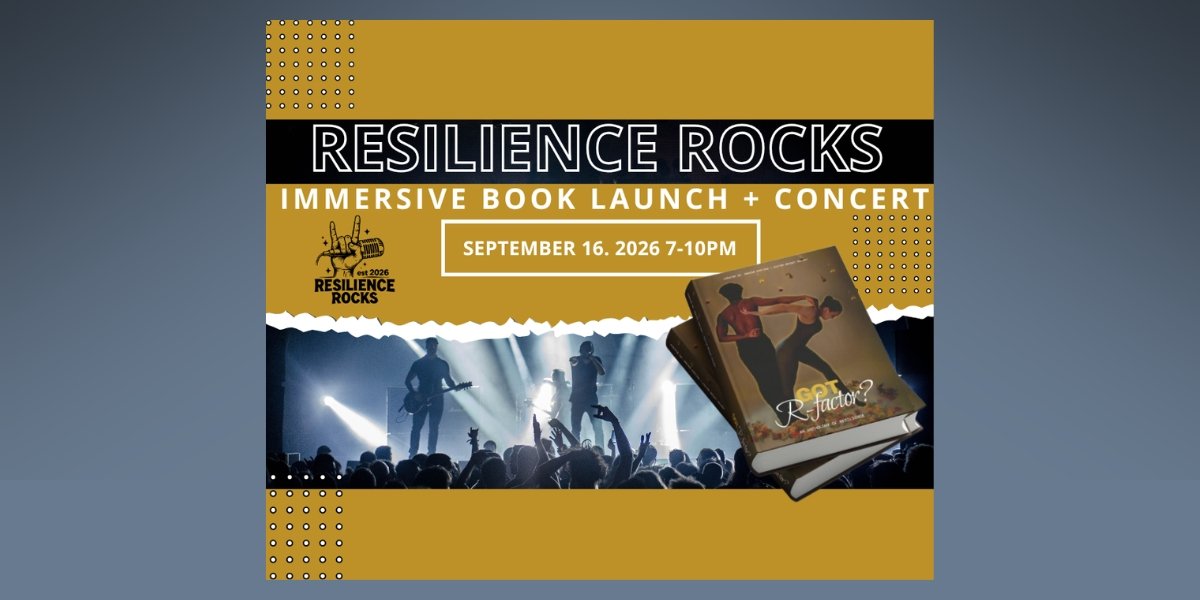
On September 16, the historic Des Plaines Theatre, just outside Chicago, will become the epicenter of exactly that kind of experience.

The Resilience Rocks Gala arrives at a cultural moment when conversations surrounding mental health, personal transformation, trauma recovery, and emotional well-being have never been more relevant. Yet what makes this event so compelling is that it refuses to approach those subjects through statistics, clinical language, or abstract concepts.

Instead, it brings resilience to life.

At the heart of the evening is Got R Factor: Words of Wounds Turned to Wisdom, a forthcoming anthology curated by award-winning author Dr. Marina Kostina. The project brings together a remarkable collection of individuals who have endured unimaginable hardships and emerged with hard-earned wisdom, proving that resilience is not an inherited gift but a skill that can be cultivated, strengthened, and shared.

But this is not a traditional book launch.

It is not a lecture.

It is not a conference.

It is not even simply a gala.

It is an immersive celebration of the human spirit, one where personal stories intersect with live music, meaningful conversations, transformative experiences, and a community united by one powerful belief: our deepest wounds can become our greatest sources of strength.

And perhaps nothing captures that spirit more powerfully than the soundtrack accompanying it.

When Chicago Rock Exchange takes the stage that evening, they will not simply perform a set list. They will help tell a story.

A story of perseverance.

A story of connection.

A story of hope.

For founder Ray McKenzie, participating in the event feels deeply meaningful.

“We are most excited to be a part of this incredible book launch,” McKenzie shared in an exclusive interview. “It is such an important subject, and this book will truly help people who have undergone trauma in their lives.”

His enthusiasm is unmistakable.

In an entertainment landscape often driven by spectacle, McKenzie consistently returns to the purpose behind the evening. The music matters. The performance matters. But the mission matters most.

That mission is what drew Chicago Rock Exchange to the project and what continues to fuel excitement as September approaches.

“We are also very excited to be performing the songs Marina has selected,” McKenzie said, “and to be playing them at the wonderful Des Plaines Theatre.”

It is difficult to imagine a more fitting venue.

With its storied history, intimate atmosphere, and unmistakable character, the Des Plaines Theatre provides the perfect backdrop for an event centered on transformation. Every great resilience story contains moments of darkness, uncertainty, and struggle before ultimately arriving at hope. The theatre itself feels like a metaphor for that journey, a place where stories unfold, emotions surface, and audiences leave changed.

The same can be said for music.

For generations, songs have provided comfort during grief, strength during adversity, and joy during triumph. They have served as companions through life’s most difficult chapters and celebrations during its most meaningful victories.

That emotional power is precisely why Chicago Rock Exchange has become such an integral part of the Resilience Rocks experience.

The band’s energy, chemistry, and commanding stage presence have earned them a devoted following throughout the region. Yet beneath the electrifying performances lies something equally important: authenticity.

As McKenzie prepares for the gala, he is eager for audiences to learn more about the people behind the music, including powerhouse performers Jen and Cat, whose dynamic presence has become one of the band’s defining strengths.

Their stories, passion for performing, and experiences as members of a female-fronted rock band add another layer of inspiration to an evening already overflowing with it. Conversations about how the band came together, memorable performances throughout their journey, and the excitement surrounding future shows promise to give audiences a glimpse into the camaraderie, dedication, and creativity that drive the group.

Because resilience, after all, does not exist solely within stories of survival.

It exists in collaboration.

It exists in artistry.

It exists in the courage required to step onto a stage and share a piece of yourself with the world.

That is what makes the Resilience Rocks Gala so different from the countless events competing for attention this fall.

Attendees will not simply hear about resilience.

They will experience it.

They will meet individuals who transformed pain into purpose.

They will engage with stories that challenge, inspire, and uplift.

They will discover practical tools for navigating adversity in their own lives.

And as the music fills the theatre, they will be reminded that healing does not happen in isolation. It happens through connection.

It happens through community.

It happens when people come together and realize they are not alone.

Momentum surrounding the gala continues to build as media outlets throughout Chicago take notice. Conversations are already underway with television, radio, podcast, and digital platforms eager to spotlight an event that seamlessly blends education, entertainment, and empowerment in a way rarely seen.

For many attendees, the evening may begin as a night out.

For others, it may begin as a professional development opportunity.

For some, it may simply begin with curiosity.

Yet by the end of the night, many will likely discover something unexpected: a renewed belief in the extraordinary capacity of the human spirit.

In a world often consumed by division, distraction, and uncertainty, the Resilience Rocks Gala offers something increasingly rare.

Hope.

Not the passive kind.

Not wishful thinking.

But the kind of hope forged through experience, the kind built by individuals who have faced life’s greatest challenges and emerged stronger because of them.

When the lights dim, the stories unfold, and Chicago Rock Exchange takes the stage, audiences will witness something remarkable.

Not merely a performance.

Not merely a book launch.

But a movement finding its voice.

And this September, that voice will be loud enough for the world to hear.

The Road Is the Reward as Noble Hops’ “Music Man” Honors the Unsung Heroes of Rock and Roll

By Jean Apache

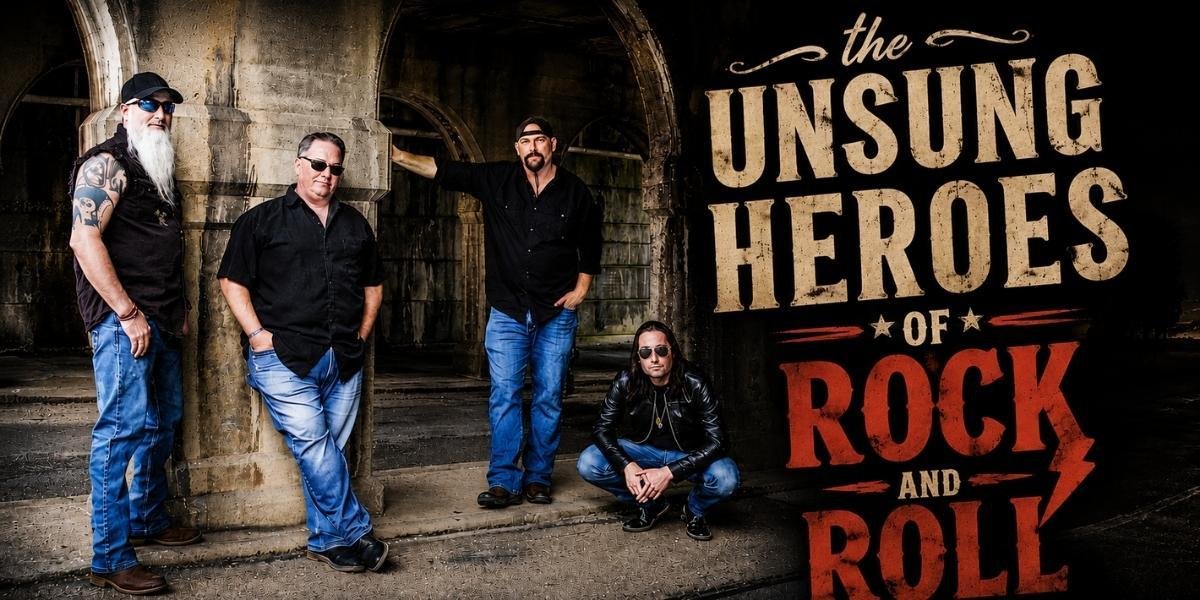
There are songs that entertain, songs that inspire, and then there are songs that quietly remind us why music matters in the first place. Noble Hops’ latest single, “Music Man,” belongs firmly in that last category. It’s more than another slice of heartland rock. It is a deeply human portrait of the musicians who spend a lifetime chasing songs rather than stardom, purpose rather than popularity.

Success today is often measured in streams, followers, and viral moments. Noble Hops have delivered a song that celebrates something far less fashionable but infinitely more enduring: perseverance.

From its opening lyric, “I didn’t sell my soul for rock and roll, but it became my way of life,” “Music Man” immediately distances itself from the well-worn mythology of rock music. The familiar legends of crossroads bargains and overnight fame are replaced by something refreshingly authentic. This isn’t the story of a superstar. It’s the story of the countless musicians whose greatest achievement is simply refusing to stop playing.

That perspective gives the song extraordinary emotional resonance.

Written by frontman Utah Burgess, “Music Man” unfolds like the memoir of every working musician who has ever loaded equipment into a van at midnight, driven hundreds of miles for a club date, and returned home with little more than enough money for gas, but enough satisfaction to do it all again next weekend.

Rather than romanticizing hardship, Burgess treats it as simply part of life. Empty bars. Beat-up guitars. Failed relationships. Long highways. These details aren’t presented as complaints; they’re accepted as the natural cost of choosing music over certainty. That honesty makes the song remarkably relatable, and not just for musicians. It speaks to anyone who has ever dedicated themselves to a calling that offered no guarantees.

Burgess delivers the lyric with conviction rather than theatrics. His voice carries the warmth of experience, sounding less like an actor portraying a character than someone recounting his own life. There is confidence in his delivery, but also humility. The narrator isn’t asking for sympathy. He’s simply explaining who he has become.

Behind him, Noble Hops constructs an arrangement that perfectly supports the story.

Tony Villella’s guitar work balances melodic phrasing with rugged classic-rock textures, resisting the temptation to overpower the song with technical flourish. Every note serves the narrative. Johnny “Sleeves” Costa provides an understated but essential bass foundation, while Brad Hurlburt’s drumming keeps the music moving with the steady pulse of countless miles traveled between one venue and the next.

Together, the band captures something increasingly uncommon: chemistry.

Recorded at Pittsburgh’s Rattle Clack Studio with producer Jazz Byers, “Music Man” possesses the warmth and immediacy of musicians performing together rather than assembling performances piece by piece. The production never feels overworked. Instead, it preserves the song’s natural humanity, allowing listeners to focus on the emotional honesty at its center.

One of the song’s greatest strengths lies in its chorus.

“Music Man, playing across the land…”

Its simplicity is intentional. Rather than chasing elaborate hooks, Noble Hops relies on repetition to reinforce identity. By the time the final chorus arrives, those words no longer function merely as lyrics. They become a declaration of purpose. The protagonist doesn’t define himself by chart positions or commercial success. He defines himself by the act of continuing to play.

Perhaps the song’s most touching moment arrives near its conclusion.

“The time will come when I’ll be gone, but my songs will live on.”

It’s a lyric that could easily drift toward sentimentality, yet Burgess avoids that trap by grounding it in quiet optimism. He’s not imagining immortality through fame. He’s expressing hope that the music itself (the songs, the stories, the inspiration) will continue long after the performer leaves the stage.

That thought elevates “Music Man” beyond autobiography.

It becomes a tribute to every artist who has sacrificed comfort for creativity. Every songwriter who continued writing despite rejection. Every local band that became the soundtrack for someone’s youth without ever appearing on national television. Every musician whose influence lives not in awards but in the next generation of performers who picked up a guitar because someone inspired them to try.

Noble Hops understands that the history of rock and roll wasn’t built solely by icons. It was built by thousands of dedicated musicians whose names may never headline festivals but whose passion has kept the music alive for decades.

With “Music Man,” they pay tribute to those individuals with grace, authenticity, and remarkable sincerity.

The result is more than a compelling rock single. It’s an affirmation that true artistic success isn’t measured by celebrity. It’s measured by commitment. By integrity. By the willingness to keep walking the long road, guitar in hand, because there is simply no other road worth taking.

In celebrating the ordinary musician, Noble Hops has created something quietly extraordinary.