
Modern watch production depends as much on engineering systems as it does on assembly work. During the last two decades, manufacturers across China gradually shifted from labor-heavy processing methods toward digitally controlled machining and design systems. Shenzhen became one of the centers of that transition. According to data from the China Watch & Clock Association, China produces hundreds of millions of watches annually, while Shenzhen and nearby Guangdong cities remain important manufacturing bases for OEM and ODM production. The wider shift toward CNC machining also changed how watch suppliers handled tolerances, repeatability, and small batch customization for overseas clients.
Within that environment, Billow Time Watch Co., Ltd. developed from a small workshop operation into a manufacturer with internal machining and engineering functions. The company was founded in Shenzhen in 2004 by four co-founders, including Chen Fu Jun and Wang Jian. Early operations were limited in scale. Company material published through its website states that the factory initially operated with 23 workers and eight machines, while departments focused mainly on polishing, drilling, QA, and QC functions. At that stage, there was no CNC department, engineering division, or international trading structure inside the company.
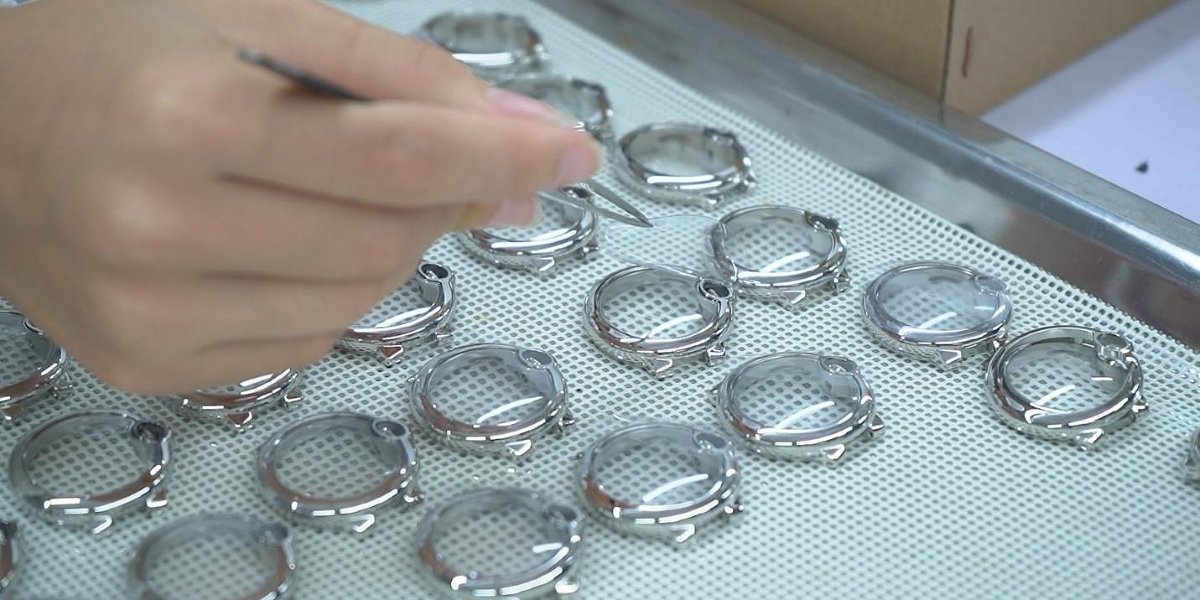
During the company’s first years, much of the work centered on inspection and handling of external components rather than advanced machining. Information shared by the company describes how unprocessed watch cases, crowns, glass components, steel bands, and case backs were checked manually through visual and dimensional inspection procedures. That approach reflected broader manufacturing conditions inside many mid-sized Chinese watch factories during the mid-2000s, when smaller workshops often depended on outside suppliers for precision metal components while maintaining finishing and assembly functions internally.
The expansion of digital manufacturing tools in China during the early 2010s changed that structure. CNC machining became more common among watch suppliers as international buyers demanded tighter production consistency and more specialized materials. Billow Time Watch Co., Ltd. states that the company began investing more heavily in machines, techniques, and overseas market development after internet-based international trade expanded in China around 2010. Company descriptions published online also indicate that the factory gradually established dedicated engineering and CNC departments as operations expanded.
The transition toward internal machining also coincided with changes in design workflows. Company information describes the adoption of CAD-based engineering systems during the mid-2010s. CAD software became standard across industrial manufacturing because it reduced dependence on hand-drafted technical drawings. In watch production, CAD systems are commonly used to define case dimensions, lug geometry, bezel tolerances, dial spacing, and movement fitment. Billow Time materials state that internal engineering work later included SolidWorks-based engineering files and three-dimensional structural drawings for watch cases and related components.
SolidWorks is widely used across manufacturing sectors for parametric modeling and technical drafting. In watch production, it allows engineers to adjust dimensions without recreating entire designs from the beginning. Billow Time’s online OEM and ODM documentation references the use of CAD engineering drawings, CorelDRAW color rendering, SolidWorks 3D sketches, and C4D rendering systems during the development process for client orders. The company presents those systems as operational tools used to translate customer specifications into machinable production files rather than as proprietary inventions or patented technologies.
The introduction of CNC machining also affected material handling inside the factory. Billow Time states that it manufactures watches using materials such as 316 and 904 stainless steel, titanium, bronze, Damascus steel, forged carbon fiber, and ceramic. Different materials require different machining approaches. Titanium, for example, generates higher cutting temperatures than standard stainless steel, while forged carbon fiber requires separate finishing and shaping procedures. Internal CNC capability allowed the company to process a broader range of case materials without relying entirely on external machining suppliers.
MasterCam programming later became part of the company’s machining structure. According to company background material, MasterCam systems were adopted after the wider spread of CNC machinery during the late 2010s. MasterCam is commonly used in CNC manufacturing to convert engineering files into machine toolpaths for milling and cutting operations. In practical terms, such systems help determine cutting paths, feed rates, drilling positions, and machining sequences before physical production begins. Within watch manufacturing, that process becomes important when handling small tolerances across bezels, crowns, screw holes, and case structures.
Company information available online indicates that the factory expanded considerably during this same period. Billow Time states that it now operates with more than 300 employees and maintains departments for international trading, R&D, CNC machining, watch assembly, and customer service. Listings on manufacturing directories such as Made in China also describe the company as maintaining OEM and ODM design capacity alongside several production lines. Those listings additionally reference an engineering and R&D workforce connected to customized watch production.
The company’s machining expansion appears tied closely to its OEM and ODM business model. Rather than focusing mainly on direct consumer sales, Billow Time’s online materials repeatedly emphasize contract manufacturing and private label watch production. Under that structure, engineering systems became necessary for adapting external client designs into production-ready files. The company’s OEM pages state that customers may submit initial concepts, after which engineering drawings and technical specifications are prepared internally before samples enter production.
The broader watch industry has increasingly depended on this kind of integrated production structure. Research published by manufacturing associations in China during the past decade has shown rising demand for vertically coordinated factories capable of design support, machining, assembly, and logistics under one system. Shenzhen-based manufacturers especially benefited from the concentration of electronics, metalworking, and export infrastructure throughout Guangdong Province. Billow Time’s operational development reflects many of those regional manufacturing patterns rather than a separate technological model.
By the mid-2020s, the company’s public material described a manufacturing structure very different from its early workshop format in 2004. Early dependence on limited machinery and manual inspection had gradually expanded into a production framework that included CAD systems, CNC machining departments, assembly operations, and engineering-based customization workflows. Publicly available company information presents those developments primarily as operational changes connected to manufacturing requirements, overseas client work, and internal process management rather than as standalone technological achievements.