Celebrity News

How Billow Time Watch Co., Ltd. Integrated CNC Machining and Digital Engineering Into Watch Manufacturing Operations


Modern watch production depends as much on engineering systems as it does on assembly work. During the last two decades, manufacturers across China gradually shifted from labor-heavy processing methods toward digitally controlled machining and design systems. Shenzhen became one of the centers of that transition. According to data from the China Watch & Clock Association, China produces hundreds of millions of watches annually, while Shenzhen and nearby Guangdong cities remain important manufacturing bases for OEM and ODM production. The wider shift toward CNC machining also changed how watch suppliers handled tolerances, repeatability, and small batch customization for overseas clients.

Within that environment, Billow Time Watch Co., Ltd. developed from a small workshop operation into a manufacturer with internal machining and engineering functions. The company was founded in Shenzhen in 2004 by four co-founders, including Chen Fu Jun and Wang Jian. Early operations were limited in scale. Company material published through its website states that the factory initially operated with 23 workers and eight machines, while departments focused mainly on polishing, drilling, QA, and QC functions. At that stage, there was no CNC department, engineering division, or international trading structure inside the company.

During the company’s first years, much of the work centered on inspection and handling of external components rather than advanced machining. Information shared by the company describes how unprocessed watch cases, crowns, glass components, steel bands, and case backs were checked manually through visual and dimensional inspection procedures. That approach reflected broader manufacturing conditions inside many mid-sized Chinese watch factories during the mid-2000s, when smaller workshops often depended on outside suppliers for precision metal components while maintaining finishing and assembly functions internally.

The expansion of digital manufacturing tools in China during the early 2010s changed that structure. CNC machining became more common among watch suppliers as international buyers demanded tighter production consistency and more specialized materials. Billow Time Watch Co., Ltd. states that the company began investing more heavily in machines, techniques, and overseas market development after internet-based international trade expanded in China around 2010. Company descriptions published online also indicate that the factory gradually established dedicated engineering and CNC departments as operations expanded.

The transition toward internal machining also coincided with changes in design workflows. Company information describes the adoption of CAD-based engineering systems during the mid-2010s. CAD software became standard across industrial manufacturing because it reduced dependence on hand-drafted technical drawings. In watch production, CAD systems are commonly used to define case dimensions, lug geometry, bezel tolerances, dial spacing, and movement fitment. Billow Time materials state that internal engineering work later included SolidWorks-based engineering files and three-dimensional structural drawings for watch cases and related components.

SolidWorks is widely used across manufacturing sectors for parametric modeling and technical drafting. In watch production, it allows engineers to adjust dimensions without recreating entire designs from the beginning. Billow Time’s online OEM and ODM documentation references the use of CAD engineering drawings, CorelDRAW color rendering, SolidWorks 3D sketches, and C4D rendering systems during the development process for client orders. The company presents those systems as operational tools used to translate customer specifications into machinable production files rather than as proprietary inventions or patented technologies.

The introduction of CNC machining also affected material handling inside the factory. Billow Time states that it manufactures watches using materials such as 316 and 904 stainless steel, titanium, bronze, Damascus steel, forged carbon fiber, and ceramic. Different materials require different machining approaches. Titanium, for example, generates higher cutting temperatures than standard stainless steel, while forged carbon fiber requires separate finishing and shaping procedures. Internal CNC capability allowed the company to process a broader range of case materials without relying entirely on external machining suppliers.

MasterCam programming later became part of the company’s machining structure. According to company background material, MasterCam systems were adopted after the wider spread of CNC machinery during the late 2010s. MasterCam is commonly used in CNC manufacturing to convert engineering files into machine toolpaths for milling and cutting operations. In practical terms, such systems help determine cutting paths, feed rates, drilling positions, and machining sequences before physical production begins. Within watch manufacturing, that process becomes important when handling small tolerances across bezels, crowns, screw holes, and case structures.

Company information available online indicates that the factory expanded considerably during this same period. Billow Time states that it now operates with more than 300 employees and maintains departments for international trading, R&D, CNC machining, watch assembly, and customer service. Listings on manufacturing directories such as Made in China also describe the company as maintaining OEM and ODM design capacity alongside several production lines. Those listings additionally reference an engineering and R&D workforce connected to customized watch production.

The company’s machining expansion appears tied closely to its OEM and ODM business model. Rather than focusing mainly on direct consumer sales, Billow Time’s online materials repeatedly emphasize contract manufacturing and private label watch production. Under that structure, engineering systems became necessary for adapting external client designs into production-ready files. The company’s OEM pages state that customers may submit initial concepts, after which engineering drawings and technical specifications are prepared internally before samples enter production.

The broader watch industry has increasingly depended on this kind of integrated production structure. Research published by manufacturing associations in China during the past decade has shown rising demand for vertically coordinated factories capable of design support, machining, assembly, and logistics under one system. Shenzhen-based manufacturers especially benefited from the concentration of electronics, metalworking, and export infrastructure throughout Guangdong Province. Billow Time’s operational development reflects many of those regional manufacturing patterns rather than a separate technological model.

By the mid-2020s, the company’s public material described a manufacturing structure very different from its early workshop format in 2004. Early dependence on limited machinery and manual inspection had gradually expanded into a production framework that included CAD systems, CNC machining departments, assembly operations, and engineering-based customization workflows. Publicly available company information presents those developments primarily as operational changes connected to manufacturing requirements, overseas client work, and internal process management rather than as standalone technological achievements.


Cello’s Singing to Serpents: A Thoughtful Study of the Modern Emotional Spirit

By: Alex Greyson

There are recordings which delight chiefly by their melody, others which impress through technical accomplishment, and still others which remain with the listener because they possess the rare courage to reveal the private heart. Cello’s Singing to Serpents belongs to the latter company. It is not an album designed merely to entertain; rather, it seeks conversation with the listener, inviting one into an intimate world where uncertainty, affection, loneliness, and hope exist side by side.

Cello, the musical name of Marcello Valletta, approaches songwriting with the instincts of both poet and dramatist. His background in literature and performance is evident throughout these nine selections, each unfolding less like a conventional popular song than as a carefully observed emotional scene. While many contemporary recordings rely upon spectacle or excess, Singing to Serpents is distinguished by its willingness to linger upon feeling itself.

The opening composition, “Stay Here,” immediately establishes the album’s thoughtful character. The repeated plea, “Won’t you stay here?” serves as both invitation and lament, suggesting the universal fear that those we cherish may prove only temporary companions. The melody moves with quiet persistence while the lyric circles its central emotion much as memory itself often revisits moments of affection and regret.

This recurring quality becomes one of the album’s greatest strengths. Rather than pursuing elaborate storytelling, Cello allows ideas to return and evolve, creating the impression that listeners are witnessing genuine reflection instead of polished performance. Such honesty lends the record an uncommon intimacy.

“Elevate” expands this emotional landscape by examining ambition alongside uncertainty. The song balances confidence with hesitation, illustrating the complicated relationship many individuals maintain with their own aspirations. One hears not simply the desire to succeed, but the equally powerful fear of falling short. It is a thoughtful observation rendered with admirable sincerity.

Among the album’s most compelling moments is “Sucks to Be Used,” whose provocative title gives way to something considerably more nuanced than anger alone. Beneath its sharper declarations rests a portrait of disappointment and emotional fatigue. Cello demonstrates an admirable unwillingness to reduce human relationships to simple accusations. Instead, he acknowledges that hurt often carries both resentment and lingering affection in equal measure.

The middle portion of the album turns increasingly inward. “Pray” and “Faith” examine the relationship between spiritual longing and personal confidence. Particularly affecting is the repeated assertion, “I need strong faith in my abilities.” Though modest in wording, the phrase carries considerable emotional weight. It speaks not merely of religious devotion but of the universal struggle to believe oneself capable of enduring life’s disappointments.

Perhaps the most remarkable quality of Singing to Serpents is its emotional transparency. Cello has spoken openly about living with Autism Spectrum Disorder and ADHD, and while the album never seeks sympathy nor explanation, one senses throughout its songs an extraordinary attentiveness to emotional experience. The repetition of certain phrases, the vivid sensory descriptions, and the intensity with which relationships are portrayed suggest an artist who experiences the world with uncommon depth.

Rather than allowing these qualities to become limitations, Cello transforms them into artistic virtues. Songs such as “Cravings” and “Full Moon” immerse the listener in richly imagined emotional landscapes where desire, memory, and imagination intertwine. The imagery possesses a distinctly poetic quality, recalling not merely popular lyric writing but genuine literary expression.

Musically, the album resists easy classification. Elements of alternative music, melodic spoken word, contemporary rhythm, and atmospheric production coexist naturally, always remaining subordinate to the emotional purpose of each composition. The arrangements wisely avoid unnecessary ornamentation, allowing the lyrics and vocal performance to remain the primary focus.

The closing track, “Sleeping,” concludes the album with quiet tenderness. After the emotional turbulence of the preceding selections, its gentler mood feels less like resolution than acceptance. Not every question has been answered, nor every sorrow erased, yet there remains a sense that understanding itself possesses healing power.

Throughout Singing to Serpents, Cello demonstrates that sincerity need not sacrifice artistry. His songs are occasionally untidy in the manner of authentic feeling, yet they remain consistently engaging because they arise from genuine experience rather than calculated effect.

In an age where much popular music strives for immediate gratification, Singing to Serpents asks instead for patience and thoughtful attention. Those willing to grant it both will discover an album distinguished not by spectacle, but by compassion, intelligence, and emotional grace. It is the work of an artist who understands that the finest songs do not simply entertain the ear—they illuminate the heart.

Taylor Swift’s Reported MSG Wedding Doubles as a Concert: Stevie Nicks, Tim McGraw, and Possibly Paul McCartney Set to Perform at the July 3 Celebration

The Reported Performer Lineup Traces the Arc of Taylor Swift’s Entire Career, From Her 2006 Debut Single Through Two Decades of Musical Friendships That Now Converge at Madison Square Garden

Taylor Swift’s reported wedding to Travis Kelce at Madison Square Garden on July 3 is shaping up to be as much a live music event as a ceremony. Page Six reported that Stevie Nicks and Tim McGraw are set to perform at the celebration, with TMZ adding that Paul McCartney’s name has also been discussed as a potential third performer. None of the artists’ representatives have publicly confirmed participation, and neither Taylor Swift nor Travis Kelce has confirmed any details about the event itself — but the reported performer lineup, if accurate, would turn a private celebration into one of the more significant live music moments of the summer.

The choices are not random bookings. Each name maps directly onto a specific chapter of Taylor Swift’s career, and reading the performer list as a musical autobiography may be the most revealing way to understand what the evening is designed to be.

Tim McGraw and the Origin of a Career

Taylor Swift’s first Billboard hit, released in 2006 when Taylor Swift was 16 years old, was titled “Tim McGraw.” The song, written about a summer relationship and the country records that soundtracked it, reached number six on the Billboard Hot Country Songs chart and launched a career that would produce 14 Grammy Awards, the highest-grossing concert tour in history, and a cultural footprint that now extends to permit filings and street closures in Midtown Manhattan.

Tim McGraw and Taylor Swift have maintained a public friendship across the two decades since that debut single. Tim McGraw and his wife, Faith Hill, joined Taylor Swift on stage multiple times during the Eras Tour. Tim McGraw performing at Taylor Swift’s wedding would close a narrative loop that began before Taylor Swift had a record deal — a connection rooted not in celebrity proximity but in the specific musical influence that gave Taylor Swift’s career its opening line.

Stevie Nicks and the Songwriting Bond

The connection between Taylor Swift and Stevie Nicks runs through songwriting. The two first performed together at the 52nd Annual Grammy Awards in 2010, when Taylor Swift was 20 and Stevie Nicks was already a two-time Rock and Roll Hall of Famer. In the years since, the relationship has deepened through public tributes and private correspondence. Taylor Swift name-dropped Stevie Nicks in a poem written for The Tortured Poets Department. Stevie Nicks has spoken publicly about Taylor Swift’s songwriting craft in terms that position the younger artist as a peer rather than a protégé.

The “Stevie Knicks” shirt that Taylor Swift wore to Game 4 of the NBA Finals at Madison Square Garden on June 10 — a wordplay combining Stevie Nicks’ name with the New York Knicks — has now been absorbed into the wedding speculation cycle, with fans treating a courtside outfit as an advance Easter egg for the July 3 performer lineup. Taylor Swift has spent years encouraging exactly this kind of reading, building a career-long practice of embedding clues in outfits, social media posts, and album liner notes. Whether the shirt was a deliberate signal or a basketball pun, it arrived three weeks before the reported wedding date at the same venue.

Paul McCartney and the Scale of the Stage

TMZ reported that Paul McCartney’s name has been discussed as a potential performer. If Paul McCartney appears, Madison Square Garden’s concert-grade infrastructure — designed for arena-scale live shows with full sound, lighting, and staging capability — would be put to use at a level that no private event in the venue’s history has approached. Taylor Swift and Paul McCartney have a documented personal connection: the two performed together at the Saturday Night Live 40th anniversary afterparty in February 2015, and Paul McCartney has spoken publicly about Taylor Swift’s work ethic and musical instincts.

Madison Square Garden advertises a banquet capacity of approximately 1,250, which aligns with reporting from The New York Times that the July 3 event will host roughly 1,000 guests. A smaller gathering of approximately 100 people is reported for July 2. The venue’s lack of exterior windows, underground parking garage connected to Penn Station, and established security infrastructure for high-profile events explain why Madison Square Garden functions as a privacy-forward choice despite being one of the most recognizable arenas in the world.

The Guest List Reads Like a Music Industry Cross-Section

The reported guest list extends well beyond the performer lineup. Page Six, CBS News, and CNN have named the Haim sisters, Selena Gomez, Sabrina Carpenter, and Emma Stone among expected attendees. Suki Waterhouse publicly confirmed her attendance. Kansas City Chiefs players have booked Midtown Manhattan hotel rooms for July 2 and 3, according to The New York Times. Chiefs coach Andy Reid told The Associated Press that he could not discuss the wedding when asked directly.

An insider quoted by Page Six described the event as “going to be bigger than the Met Gala,” a framing that reflects both the scale of the guest list and the cultural weight of the two principals. Taylor Swift’s Eras Tour grossed more than $2 billion across 149 shows, making Taylor Swift the highest-earning live performer in history. Travis Kelce is a three-time Super Bowl champion. The intersection of those two audiences — pop music fans and NFL viewers — places the reported wedding at the center of a media attention cycle that neither entertainment press nor sports media can ignore.

The Event Lands During New York’s Most Compressed Live Entertainment Week

The reported July 3 date positions the celebration inside what may be the densest live entertainment week in New York City’s modern history. Bon Jovi’s tour kicks off at Madison Square Garden on July 7 — four days after the reported wedding, at the same venue. The FIFA World Cup is in progress at MetLife Stadium across the Hudson River, with matches drawing tens of thousands of international visitors. The Sail4th 250 tall ships parade enters New York Harbor on July 3 and 4. The Macy’s 50th anniversary fireworks show launches 85,000 shells from six barges on the evening of July 4.

Mayor Zohran Mamdani addressed the overlap directly at a press conference, stating: “We are the biggest city in the country. We are used to big events, and we are incredibly excited for this one. We know it coincides with July Fourth, America 250, Taylor Swift’s wedding — all happening at the same time.” Mayor Mamdani also noted that he was not invited.

For MusicObserver readers, the significance of the performer lineup is not the celebrity spectacle but the musical biography it represents. Tim McGraw is the beginning. Stevie Nicks is the artistic kinship. Paul McCartney, if confirmed, is the scale. Together, the reported performers trace the arc of a career that started with a teenage country single named after a veteran Nashville artist and arrives, 20 years later, at a wedding where that same artist may sing at Madison Square Garden while a Beatle waits in the wings.

Duty, Discipline, and Rhyme, The Rise of Veteran Hip-Hop Artist Screwface

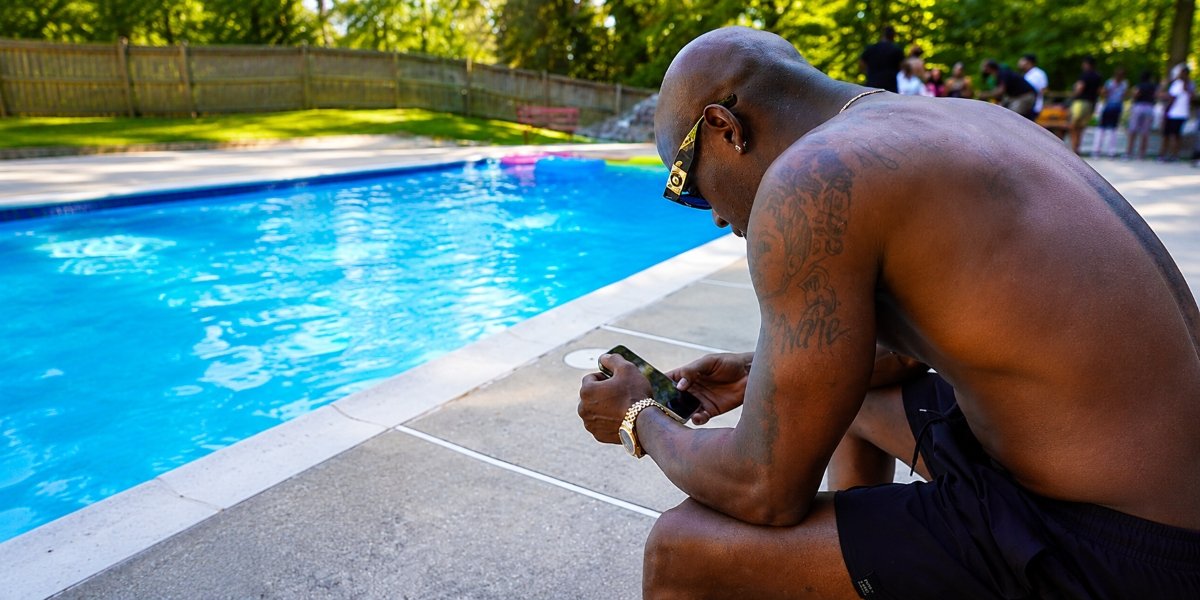
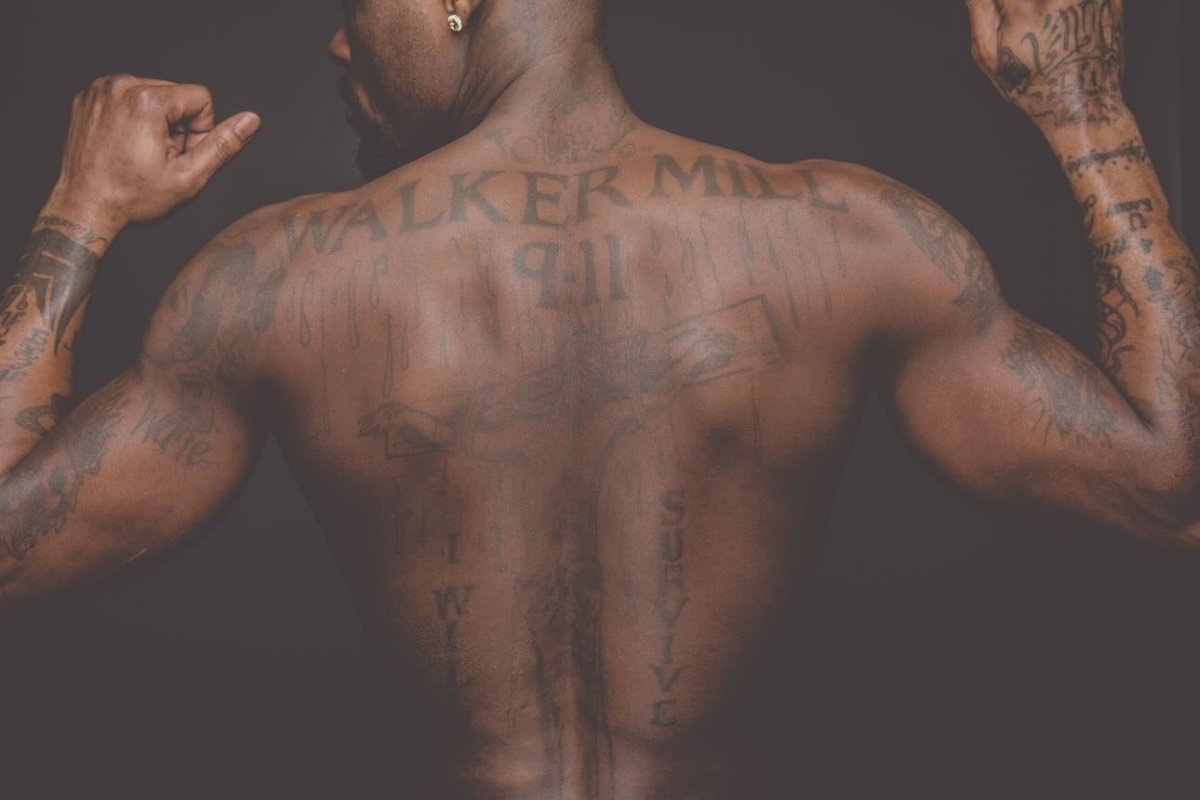
In an industry often distracted by the fleeting shimmer of viral trends, Screwface Da Next Sensation stands as a figure of genuine authenticity. His story isn’t written in the polished boardrooms of major labels, but in the grit and rhythmic pulse of Walker Mill in Prince George’s County, Maryland. As a decorated Army Veteran, Screwface brings a unique sense of duty and military discipline to his craft. This background has shaped his approach to the music industry, instilling a tactical mindset and a long-term perspective that has carried him through a career spanning over two decades on his own terms.

The evolution of Screwface began in 2003, long before algorithms dictated the pace of discovery. He cut his teeth on the stage, mastering the visceral art of live performance by connecting with audiences in the flesh. That foundational era instilled in him a rare confidence, the kind that can only be earned through years of seeing the whites of the audience’s eyes and feeling the immediate impact of a well-crafted bar.

A Legacy Forged in the Fire of Consistency

Screwface’s journey is a masterclass in the long game. Starting out by interpreting the works of others, he developed a profound understanding of stage presence and audience psychology. These early performances weren’t just shows. They were clinical studies in what makes a song resonate. He learned that technical skill is secondary to the emotional gravity an artist brings to the mic.

Walker Mill provided the backdrop and the inspiration. The Prince George’s County scene is a crucible of distinct musical voices, and Screwface emerged from it with a style that is unapologetically his own. He doesn’t just represent Maryland. He channels its spirit, the resilience, the local legends, and the refusal to be anything other than original.

Vibrations of the Block, The Anthem of Outside

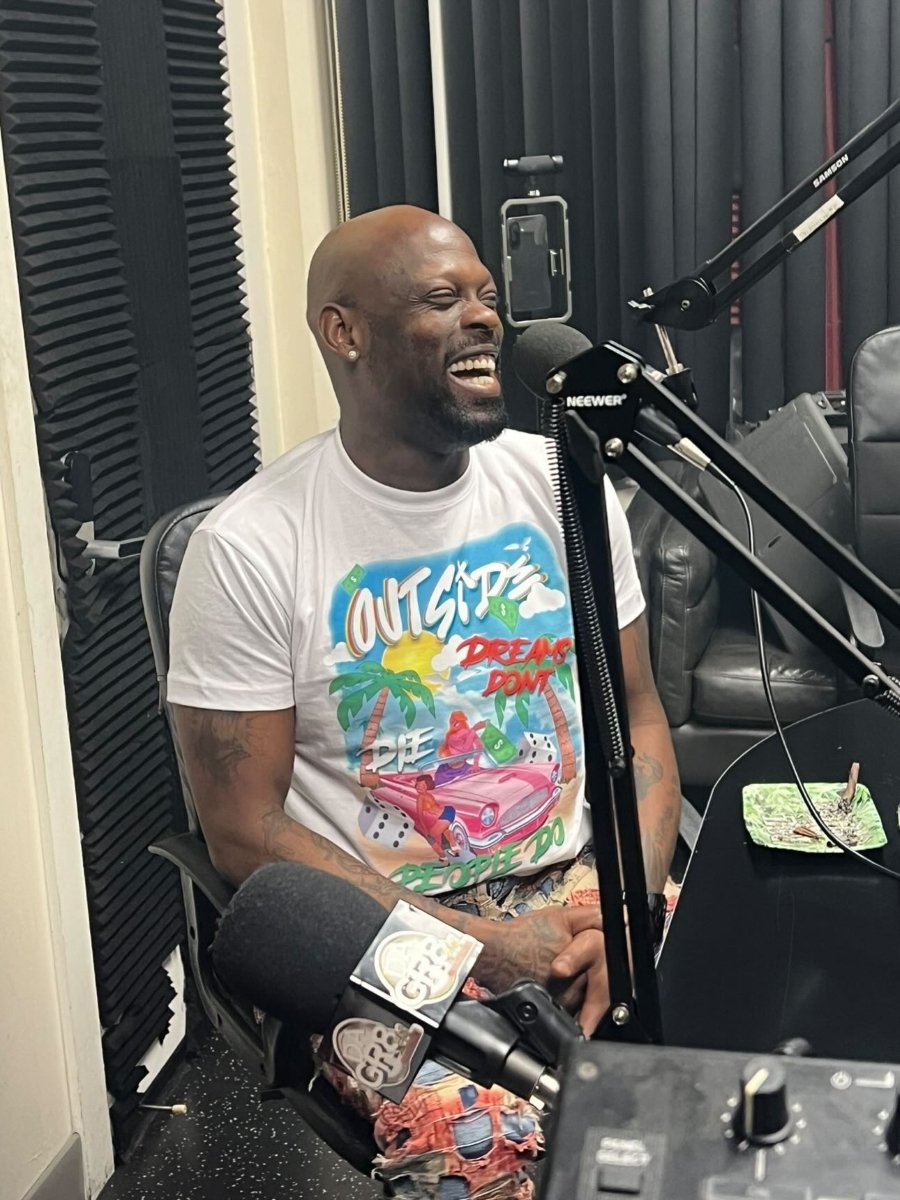
One of the standout records in Screwface Da Next Sensation’s catalog is “Outside,” a song that captures the carefree atmosphere of summer. The record carries the same feel-good spirit that made Will Smith’s classic “Summertime” a seasonal favorite for generations, blending relaxed production with upbeat energy that naturally fits warm-weather gatherings, neighborhood cookouts, and weekend celebrations.

Rather than relying on complicated concepts, “Outside” celebrates enjoying the moment, spending time with friends, and embracing the positive energy that comes with being outdoors. The song reflects Screwface’s ability to create music that feels both nostalgic and current while remaining authentic to his own artistic voice.

Photo Courtesy: Screwface Da Next Sensation

A Philosophy That Sets Him Apart

Amid the loud promotion and empty hype of the modern scene, Screwface operates on a different frequency. His philosophy is simple. He aims to under-promise and over-deliver. He lets the needle on the record and the energy on the stage do the talking. This stoic professionalism has earned him a sterling reputation within the independent community, where respect is a currency harder to come by than streams.

Every bar he writes and every verse he records is a deliberate act of storytelling. He works through themes of loyalty, the grind of perseverance, and the complexities of personal growth with a precision that only comes from living the words. Screwface isn’t chasing a viral moment. He is crafting a legacy, creating music with the kind of emotional depth that commands a second, third, and twentieth listen.

Music That Reflects Real Life

Authenticity remains at the center of everything Screwface creates. Looking ahead, he continues to refine his vision, ensuring that every new record adds a meaningful chapter to a story that is honest, relatable, and unmistakably his own. The industry may change, but the truth of the music remains, and Screwface is its loudest advocate.

That dedication to meaningful storytelling continues to distinguish him in an increasingly crowded music scene.

Photo Courtesy: Screwface Da Next Sensation

Looking Ahead

Connect with Screwface Da Next Sensation:

Watch his music videos on YouTube:Screwface Da Next Sensation YouTube channel

Listen on Apple Music:Outside on Apple Music

Follow on Instagram:Screwface Da Next Sensation on Instagram