
By: Christopher Miller
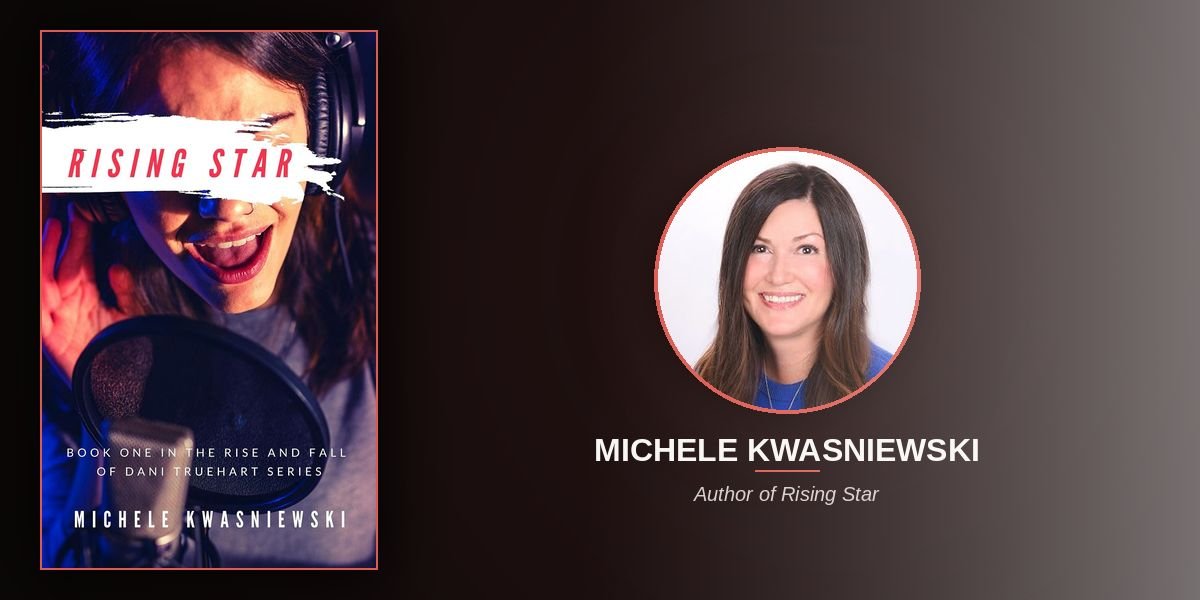
The question at the heart of Rising Star is one that most YA fiction circles around without fully committing to, and that Michele Kwasniewski commits to with considerable skill and courage throughout the full length of the novel. What do you do when you are good at something you were pushed toward rather than pulled toward, when the talent is real, but the original desire was someone else’s, when the career that is opening up in front of you is genuinely exciting and also genuinely not quite yours in a way you have never had the space to fully examine? Dani Truehart is fifteen, which means she has not had enough of her own life yet to know with confidence where her mother’s ambitions end and her own begin, and Kwasniewski keeps that uncertainty productively alive throughout the novel rather than resolving it in either the direction of wholehearted embrace or wholehearted rejection.
That sustained uncertainty is what gives the book its psychological depth and its emotional staying power. Dani is not simply escaping her mother by accepting her vocal coach Martin’s guardianship. She is exchanging one set of complicated adult arrangements for another, and her growing awareness that Martin’s sincerity is not guaranteed and Redman’s interest in her talent is not uncomplicated is rendered with the specificity of someone who has watched these dynamics play out in real professional environments. Kwasniewski’s more than fifteen years in film and television production give her a precise understanding of how power operates in entertainment contexts, how genuine opportunity and dubious arrangement can coexist in the same relationship, and how a young person with talent can find herself in a situation that is both a genuine chance and a genuine risk without the experience to reliably tell them apart.
The industry dynamics she describes, the audition process, the contract negotiation, the producer with his dubious edges and his genuine recognition of talent, the specific pressures that a career at this level places on ordinary relationships like the one Dani has with her boyfriend Sean, all of these feel observed rather than invented. Sean is given enough interiority and enough genuine connection with Dani to make the threat to their relationship feel like a real loss rather than a narrative convenience. Her family situation, the overbearing mother and the father she wishes would stand up to her, her sister and her friends, all of these give her a context that the career is working to replace, and Kwasniewski keeps that replacement visible and costly throughout the novel.
What Kwasniewski offers throughout is not just authentic industry detail but a sustained portrait of a young woman in the process of beginning to understand herself, to separate what she wants from what she has been trained to want, to read the adults around her with something approaching the clarity their situations require. That process is rendered authentically rather than accelerated for narrative convenience, and the result is a protagonist who feels genuinely fifteen rather than precociously adult, who is discovering her own agency by increments rather than arriving at it fully formed.
If you want a YA novel that asks the genuinely difficult question of who your dreams actually belong to and builds its story around that question with honesty and industry authenticity and a protagonist you will root for across an entire series, Rising Star by Michele Kwasniewski is exactly that book. Head over to Amazon and get your copy today.