By: Olga Amraie
Next time you watch Jennifer Lopez’s “Limitless,” look down. Visual effects artist Henry Lipatov remembers how much work went into making the leaves respond to her every step, and what that small detail taught him about believable effects.
Watch what happens beneath Jennifer Lopez’s feet in “Limitless.” As she moves through the video, leaves shift and scatter around her steps and her hands. Most viewers never give them a second thought. Henry Lipatov does. He remembers how much work went into making those leaves respond to her.
“Limitless,” a song from Lopez’s film Second Act, arrived with its music video in December 2018. Lopez directed the video herself, making it her directorial debut in music video, and Sony Music premiered it on her YouTube channel. The clip was shot in Los Angeles and features a colorful cast of women battling the forces of nature until they create their own storm.
Lipatov, a Los Angeles director, producer, and visual effects supervisor, worked on the video’s visual effects. What stayed with him wasn’t a grand effect. It was the moments when Lopez touched leaves with her hands or walked across them.
Why The Smallest Touch Is The Hardest To Fake
To a viewer, leaves underfoot are background. Nobody comments on them. But imagine if they behaved wrong. If a shoe lands and the surface doesn’t react, the step looks weightless. If a hand brushes something that barely moves, the image asks the audience to believe two things share the same space without showing any proof. The eye notices, even if the viewer can’t explain why.
Every such shot really contains two performances: the person’s and the world’s. When someone walks across an empty floor, the floor stays still. Put leaves on it and the space changes with every step. A performer feels the ground and responds without thinking, and those small reactions tell the audience where the person is and whether the world around them has weight.
On “Limitless,” Lipatov’s team had to recreate those interactions in post-production: how leaves shift under weight, how they respond to a touch. Building the leaves was one task. Making them feel like they were reacting to a real person in a real moment was the harder one. Looking back, Lipatov says real leaves on set would have given both the performer and the effects artists far more to work with: something for Lopez to feel, and a record of how the contact actually looked.
“The best visual effects often begin with something real,” he says.
The Lesson He Carried Into Every Project Since
Lipatov’s memory concerns specific moments of physical contact, not how every shot in the video was made. What matters is the lesson his team took from the work.
Today he looks for more chances to put practical objects on set, even when most of the final environment will be digital. If a performer will sit, reach, step, or push against part of an imagined world, he asks early which piece of that world needs to physically be there. He doesn’t try to build everything for real, only what the actor will actually touch.
There is a budget question inside that choice. A crew has limited time, and adding every possible object would slow production down. The useful objects are the ones that answer a question about the shot. A hand meeting a surface matters a lot when that touch is the center of the frame, and very little when the hand is barely visible.
How To Spot Invisible VFX In Your Favorite Music Videos
Next time you watch a music video with big visual effects, play detective:
- Watch the hands. A hand on a wall, fingers through leaves, a palm on glass. Contact shots are often where the most invisible work happened.
- Watch the feet. Water, sand, leaves, snow. If the ground reacts perfectly to every step, someone either filmed it for real or worked very hard to rebuild it.
- Watch the light. If a glow from something magical falls naturally on a face, the team planned it carefully.
The best of these moments look effortless, and that is the point. Viewers never see the work behind them. They only sense whether the moment feels true.
The People Behind A Famous Face
For audiences, the star is the center of every release. But a single gesture on screen can hold the work of many people. The director sets what the viewer should see. The performer supplies the action. The effects team may rebuild everything the performance touches. Lopez’s directing credit frames the video; Lipatov’s memory opens a small window into the work that came after the cameras stopped.
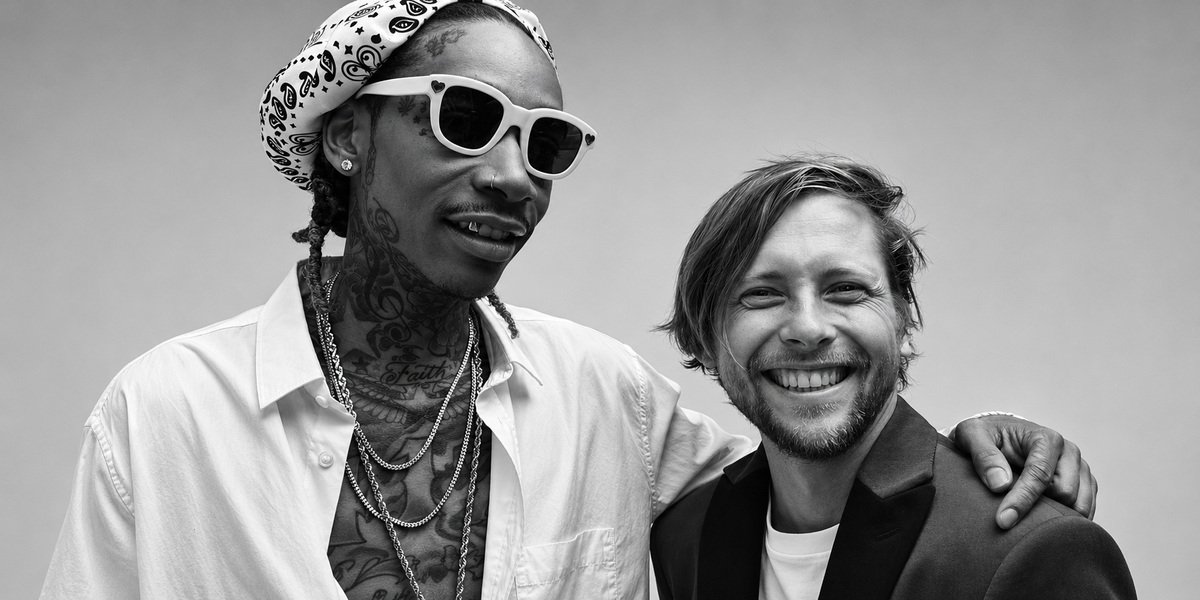
Lipatov is the founder of Los Angeles production company Beverly Films and says he has worked on more than 180 music videos. His credits stretch well beyond “Limitless.” On Ty Dolla $ign and Wiz Khalifa’s 2017 video “Brand New,” directed by Gabriel Hart, he says he supervised visual effects on set and led the Beverly Films effects team, including the playful shot of Ty Dolla $ign strumming a guitar on top of a beachside palm tree. The two projects show the range of his work: in one, the effects had to stay invisible under a star’s every step; in the other, a single impossible image was built to make viewers smile. He is launching Beverly Films Alliance, a community for independent filmmakers, with event and talent producer Olga Amraie.
There is nothing glamorous about leaves moving underfoot. To make that movement look right on screen, someone has to think carefully about what all of us already know without being able to describe it: what happens when we take a step.
Official music video: Jennifer Lopez – Limitless (YouTube)
Henry Lipatov on IMDb: imdb.com/name/nm6984522
Beverly Films: beverlyfilms.com