Orville Peck Opens London Set With “I Will Always Love You” in an Emotional Tribute to Dolly Parton

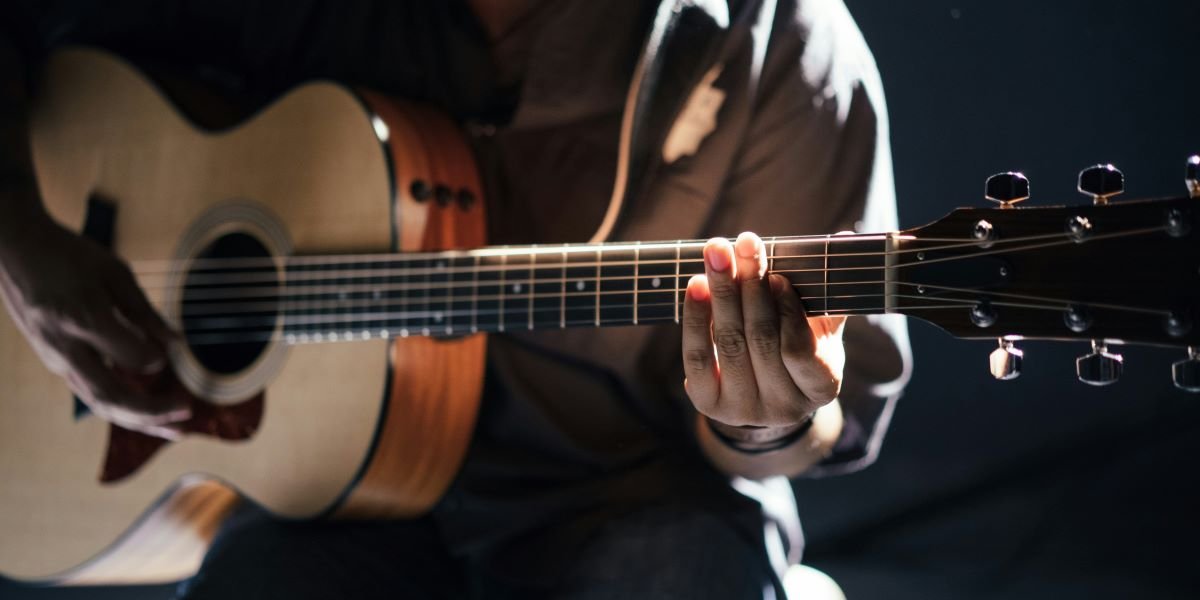
Orville Peck opened a nine-song set at Rough Trade East in London on August 25, 2026, with a performance of Dolly Parton’s “I Will Always Love You,” delivered hours after news of Parton’s death at 80. The masked country artist, visibly emotional, told the crowd he was “a little bit of a mess” before speaking at length about what Parton meant to him as a gay man navigating a genre that has not always made space for artists outside its traditional demographics. Across London the same evening, Jack White performed “Jolene” at the Eventim Apollo for the first time in 19 years, marking two separate and uncoordinated live tributes to Parton from artists whose careers exist because of the creative and cultural territory she opened.
Key Takeaways
- Orville Peck opened his set at Rough Trade East in London on August 25 with a performance of Dolly Parton’s “I Will Always Love You,” dedicating the song to Parton hours after her death was announced.
- Peck told the crowd that Parton was his hero, saying: “As a gay man coming into country music and feeling sort of alone, the thing that always felt comforting is, like, just knowing Dolly existed in country made me feel like maybe I had a friend there.”
- Peck was at Rough Trade to promote his forthcoming album Mule, due September 18; he had performed Parton’s farewell song to Porter Wagoner during his Grand Ole Opry debut the previous month.
- Jack White performed “Jolene” at the Eventim Apollo in London the same evening, the first time he had played the song live since 2007; Parton herself had called the White Stripes’ version “one of the greatest versions ever.”
- The two London tributes were part of a global wave of live dedications that included artists across every genre, from Sabrina Carpenter and Brandi Carlile to Shania Twain, Paul McCartney, and Eminem.
Nine Words at Rough Trade East That Explained Everything
Peck did not open with a song. He opened with a confession. Standing in front of a record store crowd that had come for an intimate promotional appearance tied to his upcoming album Mule, Peck told the room he needed to be real for a moment. Then he said the nine words that framed everything that followed: “Dolly was my hero, and she passed away.”
What came next was not a rehearsed tribute or a polished artist statement. Peck spoke directly and without the performative distance that often characterizes celebrity mourning. He told the crowd he had never really believed in the concept of having a hero until he realized that Parton had quietly occupied that role in his life for years. The explanation was specific, grounded in the experience of being a gay man entering country music and looking for evidence that the genre had room for someone like him.
Peck described the comfort of knowing Parton existed in country, not because Parton was herself queer, but because her presence signaled something about the genre’s capacity for people who did not fit its default template. Parton’s career was built on self-construction. She designed her own image, wrote her own mythology, and refused to let anyone else define the terms on which she operated. For Peck, who performs in a fringed mask and has never publicly shown his face, that model of radical self-authorship within a traditional genre was not just inspiring. It was permission.
Then Peck said, “We love Dolly and this is for her,” and opened the set with “I Will Always Love You.”
The Song Parton Wrote as a Farewell, Performed as One
Parton wrote “I Will Always Love You” in 1973 as a farewell to her longtime musical partner Porter Wagoner, whose television show had given her national exposure but whose professional orbit she had outgrown. The song reached number one on the country charts twice under Parton’s name, in 1974 and again in 1982, before Whitney Houston’s 1992 recording for the soundtrack to The Bodyguard turned it into one of the highest-selling singles in music history. The song exists in two distinct cultural registers: as a country ballad about professional parting and personal love, and as a pop vocal showcase that defined a generation of power balladists who followed Houston.
Peck’s rendition at Rough Trade operated in neither of those registers. Delivered in his baritone, stripped of Houston’s vocal acrobatics and played to a small room rather than an arena, the performance returned the song to its original emotional function: a goodbye from one artist to another. The context was different, Parton was not leaving a television show but leaving the world entirely, but the mechanics of the farewell were the same. The song said what Peck’s spoken tribute had already conveyed, that the relationship between these two artists, one who never knew the other personally, was real in the ways that matter to the person standing on stage.
The performance was not Peck’s first public engagement with Parton’s catalog. The previous month, Peck had made his debut at the Grand Ole Opry in Nashville, where he performed the same song Parton wrote for Wagoner. The Opry appearance placed Peck inside the physical institution that had defined country music’s mainstream for nearly a century. Playing a Parton song in that room carried a specific weight: it claimed a lineage. The Rough Trade tribute, by contrast, happened in a record store in East London, far from Nashville, and the weight it carried was personal rather than institutional.
Jack White Played “Jolene” Across Town for the First Time in 19 Years
The same evening Peck performed at Rough Trade, Jack White took the stage at the Eventim Apollo in Hammersmith, approximately seven miles across London. White opened with his recent single “That’s How I’m Feeling,” followed by the White Stripes classic “Dead Leaves and the Dirty Ground,” before surprising the crowd with a performance of “Jolene,” Parton’s 1973 single about a woman pleading with a romantic rival. It was the first time White had played the song live since 2007.
The White Stripes had a long history with “Jolene.” The duo released their rendition as the B-side to their 2000 single “Hello Operator” and performed the song frequently in concert throughout the early 2000s. A live recording appeared on the 2004 concert film Under Blackpool Lights. The White Stripes’ version, driven by distorted guitar and stripped of the original’s Nashville production, became one of the definitive rock reinterpretations of a country standard and introduced Parton’s songwriting to an audience that might never have encountered it in its original form.
Parton was aware of the White Stripes’ version and publicly endorsed it. In a 2016 interview with The Guardian, she called their take “one of the greatest versions ever of ‘Jolene'” and revealed she had dinner with White in Los Angeles. The mutual respect between a country songwriter and a Detroit garage rocker illustrated the cross-genre reach of Parton’s material. Her songs were sturdy enough structurally and emotionally direct enough that artists working in completely different sonic contexts could claim them without losing the core of what made them work.
At the end of his “Jolene” performance at the Eventim Apollo, White pointed to the sky and made the sign of the cross. Earlier in the day, before taking the stage, he had posted a photograph of Parton on Instagram with two words: “Instant sainthood.” His label, Third Man Records, issued a separate statement praising Parton’s impact beyond music, highlighting the Imagination Library and her support for education, literacy, disaster relief, and community development.
A Global Wave of Live Dedications Across Every Genre
Peck and White were not the only artists who responded to Parton’s death with live music rather than written statements. Across the music world, performers who were already on stage or scheduled to perform on August 25 and 26 incorporated Parton’s songs or dedications into their sets, creating an uncoordinated but widespread wave of live tribute that spanned country, pop, rock, and hip-hop.
Sabrina Carpenter posted a personal tribute describing Parton as “an angel walking the earth” and recounting their meeting. Brandi Carlile, who has spoken publicly about Parton’s acceptance of her as an openly gay woman in country music, paid homage through her own channels. Shania Twain, whose career in 1990s country pop followed the crossover path Parton had pioneered a decade earlier, offered a tribute that acknowledged the direct line between Parton’s genre-bridging ambition and Twain’s own commercial success. Kacey Musgraves, in the opening week of her own Middle of Nowhere Tour, posted simply: “This really really hurts.” Eminem, Paul McCartney, and Mick Jagger all issued statements, placing Parton’s death among the rare cultural events that draw simultaneous acknowledgment from artists who share almost no audience or genre overlap.
Reba McEntire’s tribute carried particular weight within the country community. McEntire wrote that she had just learned “my buddy Dolly passed onto the higher and greater side” and thanked Parton for everything she did on earth. McEntire said there would “never ever be another you” and that she would “never forget our last conversation.” The specificity of McEntire’s language, referencing a final conversation rather than a general memory, reflected the intimacy of a relationship between two women who had operated at the top of the same genre for decades.
Why the Live Tributes Matter More Than the Written Ones
Written tributes are composed, edited, and posted. Live tributes happen in real time, in front of audiences who did not come to mourn but found themselves participating in something unplanned. Peck’s nine-song set at Rough Trade East, which continued after the Parton tribute with “Out of Time,” “Already Gone,” “Hexie Mountains,” “Blush,” “Lafayette,” “Dead of Night,” “Kalahari Down,” and “Daytona Sand,” was not a memorial concert. It was a record store promotional appearance that became something else because the artist on stage could not separate his professional obligation from his personal grief.
The same dynamic played out at the Eventim Apollo, at the Grand Ole Opry where Rhonda Vincent performed “Coat of Many Colors,” and at venues around the world where artists chose songs over statements. The consistency of the response, across genres, generations, continents, and artistic philosophies, confirmed what Parton’s career had demonstrated for seven decades: the songs held. They held when Houston reimagined them for pop radio. They held when the White Stripes ran them through distortion pedals. They held when a masked baritone sang them in a record store in East London, voice cracking, to an audience that understood exactly what was being lost.
Frequently Asked Questions
Where did Orville Peck perform his tribute to Dolly Parton?
Peck performed at Rough Trade East in London on August 25, 2026, during a promotional appearance for his forthcoming album Mule. He opened the nine-song set with a cover of Parton’s “I Will Always Love You,” dedicated to Parton hours after her death was announced.
What did Orville Peck say about Dolly Parton?
Peck told the crowd: “I don’t think I ever thought of the concept of having a hero, and I think Dolly was my hero, because I think as a gay man coming into country music and feeling sort of alone, the thing that always felt comforting is, like, just knowing Dolly existed in country made me feel like maybe I had a friend there.”
Did Jack White also perform a Dolly Parton tribute in London?
Yes. Jack White performed “Jolene” at the Eventim Apollo in Hammersmith the same evening, the first time he had played the song live since 2007. The White Stripes frequently covered “Jolene” in the early 2000s, and Parton herself called their version “one of the greatest versions ever.”
What is Orville Peck’s upcoming album?
Peck’s forthcoming album is titled Mule, scheduled for release on September 18, 2026. The Rough Trade East appearance was a promotional event for the album.
Which other artists performed live tributes to Dolly Parton?
In addition to Peck and White, Rhonda Vincent performed “Coat of Many Colors” at the Grand Ole Opry on August 25. Sabrina Carpenter, Brandi Carlile, Shania Twain, Kacey Musgraves, Paul McCartney, Eminem, and Mick Jagger all issued tributes through social media or public statements within the first 24 hours.