Celebrity News

Tyra Banks in Project Runway Season 22 Trailer

Tyra Banks appears in the official trailer for Project Runway season 22released June 18, returning to the fashion competition series in a recurring role alongside judges Heidi Klum, Law Roach, and Nina Garcia. Hulu confirmed her return in the trailer, which also features season 4 winner Christian Siriano back as mentor.

What Role Will Banks Play This Season?

Banks previously appeared as a guest judge in season 21, making this her first recurring role on Project Runway in years. The new season premieres July 9 on Freeform before streaming on Hulu and Disney+, with weekly episodes following the debut.

Season 22 brings 22 designers to the competition, making it the largest cast in the show’s history. This expanded roster marks a significant departure from previous seasons and suggests the series is doubling down on its format after more than two decades on air.

Which Celebrity Guests Are Joining the Season?

Several high-profile figures will appear as guest judges throughout the season. Musical artists Ciara and Ice Spice are confirmed to make appearances, alongside model Iman and actors Kiernan Shipka, Niecy Nash, and Nina Dobrev.

Project Runway season: television production studio cameras
Photo by Jakob Owens on Unsplash

Fashion designers Willy Chavarria and Sergio Hudson will also judge episodes. Influencers and media personalities including Nara Smith and Paige DeSorbo round out the guest lineup.

The season will feature crossover appearances from Dancing with the Stars cast members, including professional dancers. Reality TV stars from Hulu’s broader programming, such as The Bachelorette and Vanderpump Villa, will also appear. Former Project Runway contestants and winners will return in guest and model roles, creating connections to the show’s two-decade archive of talent.

How Does This Fit Into Banks’ Current Media Presence?

The Project Runway season 22 announcement comes shortly after Banks filed a legal complaint about a recent documentary covering America’s Next Top Model. She alleges the documentary misrepresented her through selective editing, claiming only a small portion of her interview was used and taken out of context to support a misleading narrative.

Project Runway season: fashion design sketch fabric swatches
Photo by Clarissa Watson on Unsplash

Banks is seeking damages and a jury trial in that case. The legal action highlights ongoing tensions around how her 24-cycle reality competition series is remembered and discussed in retrospective media coverage.

Her return to fashion reality television on Project Runway positions her back in the genre where she built much of her television career, though in a judging capacity rather than as host or executive producer. The move keeps her visible in the competitive reality television landscape even as America’s Next Top Model remains off the air.

Project Runway has cycled through multiple hosts, judges, and networks since its 2004 debut, and the addition of recognizable figures like Banks reflects the show’s ongoing effort to maintain relevance in a crowded entertainment market. Banks joins a panel that already includes supermodel Klum and celebrity stylist Roach, creating a judging lineup heavy on fashion industry credentials and name recognition.
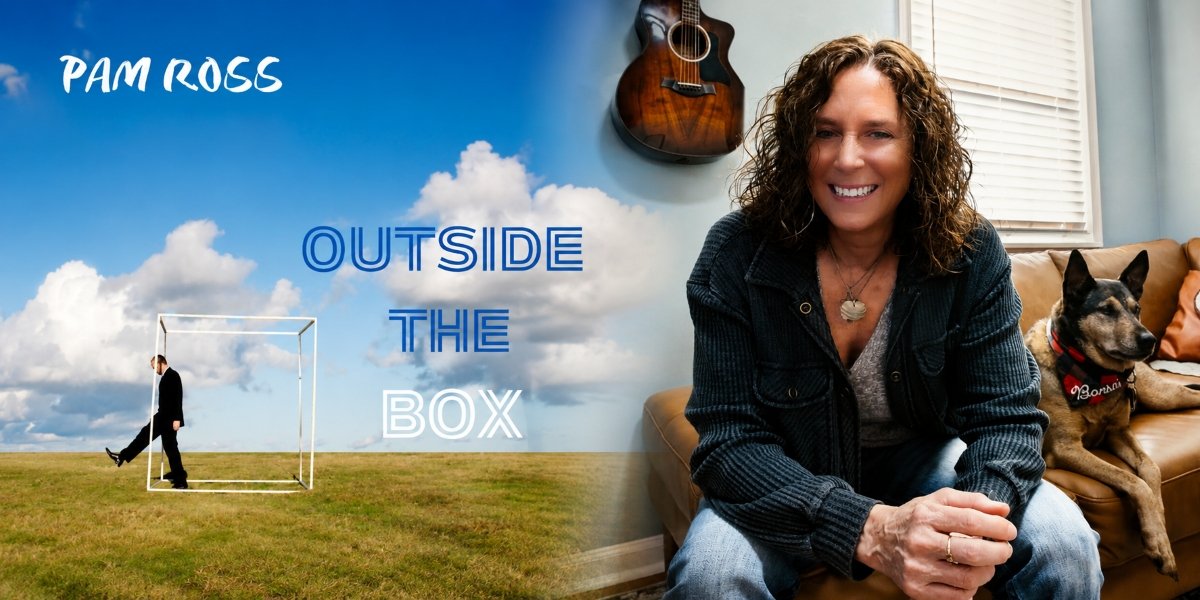
Pam Ross Finds Beauty in the Everyday on Outside The Box

By: Jim Fulton

Country music has always been at its strongest when it serves as a mirror rather than a megaphone. The genre’s greatest songs don’t merely entertain; they reflect the lives listeners recognize as their own. On Outside The Box, Pam Ross embraces that tradition with confidence, crafting a collection of songs that celebrate ordinary experiences while revealing the emotional depth hidden within them.

Ross has steadily established herself as a distinctive and authentic voice in independent country music. Her songs have earned chart success, international recognition, and a growing audience, but what distinguishes her work isn’t commercial momentum. It’s perspective. Ross writes about life as it’s actually lived, imperfect, unpredictable, occasionally messy, but often more meaningful than we realize in the moment.

That perspective shapes every track on Outside The Box.

The album opens with “Doublewide,” a song that immediately establishes Ross’ connection to working-class realities. Rather than romanticizing struggle or presenting it as a badge of honor, she treats it as a fact of life. The song’s strength lies in its honesty. Ross isn’t interested in stereotypes. She’s interested in people.

“Kansas” follows with a broader emotional scope. The song uses geography as a metaphor for longing and self-discovery, creating one of the album’s more reflective moments. Ross allows the lyric room to breathe, trusting listeners to find themselves within its spaces. It’s a quality that appears throughout the record: an understanding that emotional impact often comes from restraint rather than excess.

That balance continues with “Tonight” and “Have a Good Time,” two songs that inject energy into the album without sacrificing substance. These tracks remind listeners that joy doesn’t have to be complicated to be meaningful. Ross understands that celebration, when earned, carries emotional weight of its own.

“Crazy Ride” acknowledges life’s unpredictability with a sense of resilience rather than frustration. The song captures the reality that control is often an illusion, yet moving forward remains essential. Meanwhile, “Reading Your Text” explores the modern dimensions of connection and communication. In lesser hands, a song built around digital interaction could feel gimmicky. Ross instead finds genuine vulnerability in the anticipation and uncertainty that accompany even the smallest exchanges.

The emotional centerpiece of Outside The Box is undoubtedly “Say It Two Times.”

At first glance, it appears deceptively simple. A love song built around the desire to hear affirming words repeated. But simplicity has always been one of country music’s most powerful tools. Ross transforms familiar domestic imagery, like coffee in the morning, family routines, and promises kept over time, into something profound. The song argues that love isn’t defined by grand gestures. It’s sustained through repetition, through showing up, through saying what matters more than once.

“Once is not enough for this heart of mine” serves as both the song’s hook and its emotional thesis.

What makes the track particularly effective is Ross’ vocal delivery. She sings with warmth and clarity, avoiding the temptation to overstate the emotion. Her voice remains grounded throughout the album, allowing the lyrics to carry their own weight. It’s a performance style built on trust, trust in the material, and trust in the listener.

Production-wise, Outside The Box favors accessibility over experimentation. The arrangements are polished but never sterile, contemporary but respectful of country music’s storytelling traditions. The musicians serve the songs rather than competing with them, creating a cohesive listening experience that feels intentional from beginning to end.

Perhaps the most impressive aspect of Outside The Box is its consistency of vision. Ross never chases trends or attempts to reinvent herself. Instead, she remains focused on what she does best: finding universal truths within personal experiences.

In an era when so much music competes for attention through volume and spectacle, Pam Ross offers something quieter and ultimately more durable. Outside The Box reminds us that life’s most meaningful moments often occur far from the spotlight, around kitchen tables, inside text messages, on long drives, and within conversations between people who care about one another.

That’s territory Ross knows well.

And on Outside The Box, she proves once again that there’s still plenty worth discovering there.

Miss Freddye: The Blues Without the Costume

By: Bobby Chrisman

The blues have always had a marketing problem. Everybody loves the mythology, the crossroads, the heartbreak, the smoky clubs, the weathered guitars. What gets lost is the simple fact that the best blues artists don’t perform authenticity. They possess it. That’s why Miss Freddye matters.

For nearly three decades, Pittsburgh’s self-described “Lady of the Blues” has been making music that feels refreshingly free of pretense. No manufactured backstory. No borrowed Southern accent. No attempt to cosplay her way into a tradition. Just a singer with a powerful voice, a compelling life story, and a deep understanding of what the blues is supposed to do: tell the truth.

And the truth is that Miss Freddye, who shares her catalog on Spotify, took a route to music that looks more like real life than rock-and-roll fantasy.

Before she became a fixture on blues stages, she spent more than 30 years working as a nurse. While many musicians were chasing gigs and record deals, she was caring for patients, raising a family, and navigating the daily realities that most people actually live. It turns out that spending decades helping others through pain and uncertainty provides a pretty solid education in the emotional foundations of the blues.

When she finally emerged as a significant force in Pittsburgh’s blues scene during the 1990s, she wasn’t trying to become the next Koko Taylor or Etta James. She was becoming Miss Freddye.

The distinction matters.

Too many contemporary blues artists are students of the genre. Miss Freddye is a participant in its central conversation. She understands hardship, resilience, faith, disappointment, humor, and survival not because she studied them but because she experienced them. The result is music that feels lived-in rather than recreated.

Her voice reflects that reality. It’s not a technically perfect instrument in the sterile, competition-show sense. What it possesses instead is character. Texture. Conviction. She sings like someone who has earned every note.

Over time, audiences noticed.

What began as a respected regional career steadily expanded into something larger. Miss Freddye became a recognized blues artist in western Pennsylvania, building a reputation through relentless live performances and recordings that connected with listeners well beyond her hometown.

Awards followed.

She earned multiple honors from Pittsburgh-area music organizations, including repeated recognition at the Iron City Rocks Awards and Pittsburgh music polls. More significantly, she attracted attention from the broader blues community, receiving nominations connected to the Blues Foundation, including recognition associated with the legendary Koko Taylor tradition of powerful female blues performers.

That’s an impressive company.

But chart success may have surprised even her supporters.

At a time when many veteran blues artists struggled to find audiences outside specialty radio, Miss Freddye’s recordings broke through internationally. One of her releases climbed to No. 1 on the UK iTunes Blues Chart, a remarkable achievement for an independent artist from Pittsburgh. Her gospel-infused recording of “Something to Believe In” also reached No. 2 on international gospel charts, demonstrating her ability to connect across genre boundaries.

The success wasn’t accidental.

Miss Freddye has always occupied an interesting space between blues and gospel. Like many of the genre’s greatest singers, she understands that the two forms are cousins. One addresses earthly troubles. The other looks toward heavenly solutions. The emotional intensity is often the same.

That spiritual thread runs throughout her career.

A two-time breast cancer survivor, Miss Freddye has transformed personal adversity into artistic strength. She doesn’t exploit those experiences for sympathy or publicity. Instead, they deepen her performances. There’s an unmistakable gratitude in her musical sense that survival itself is something worth celebrating.

That perspective has become one of her defining characteristics.

Songs such as “Slippin’ Away,” “Lady of the Blues,” and “Wade in the Water” resonate because they avoid melodrama. They’re rooted in experience rather than performance. She sings about loss, hope, faith, and perseverance because those subjects are familiar territory.

And through it all, she has remained loyal to Pittsburgh.

In an era where artists are often encouraged to relocate in pursuit of larger opportunities, Miss Freddye stayed connected to the city that shaped her. Pittsburgh’s influence can be heard throughout her work: the resilience, the practicality, the refusal to quit. Like the city itself, she carries her history proudly without becoming trapped by it.

What makes her career particularly noteworthy is that it contradicts many assumptions about success in popular music. She wasn’t a teenage prodigy. She wasn’t launched by a major label. She didn’t emerge from a reality show or viral moment.

Instead, she built her reputation the old-fashioned way: one performance at a time.

That’s increasingly rare.

Today, Miss Freddye occupies a unique position in contemporary blues. She’s simultaneously a traditionalist and a modern success story. Her music honors the genre’s roots while proving that authentic blues can still find new audiences in the digital age.

The lesson of her career isn’t complicated. Great music doesn’t require mythology. Sometimes it just requires honesty.

Miss Freddye has spent years proving exactly that.

And that’s why her story matters.