
Celebrity News

What Survives Us After a Family Member Dies

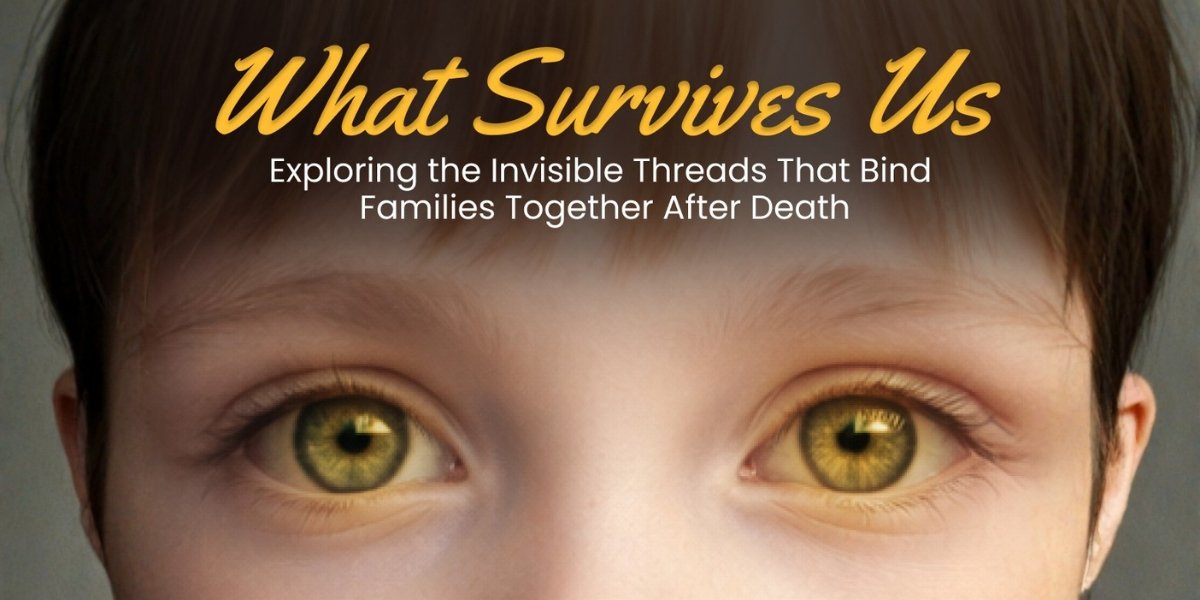
There is a strange, suspended quiet that settles over a house in the days immediately following a funeral. The frantic logistics of death have concluded. The distant relatives have boarded their flights home, the dark suits have been taken to the dry cleaners, and the towering stacks of sympathy casseroles are slowly being eaten. It is in this profound, echoing stillness that the surviving family members are left to look at one another and confront a deeply unsettling question: Who are we without them?

We tend to speak of death as an exit. A person walks off the stage of the living, the curtain falls, and the rest of the cast is left to continue the play. But within the closed ecosystem of a family, death is never just an exit. It is a violent, structural reorganization.

When a family member dies, they do not simply vanish. They dissolve into the negative space of the room. They become an invisible architecture of habits, unresolved tensions, shared memories, and inherited traits. To look closely at a family in the aftermath of loss is to realize that the dead do not leave us. They merely change their method of communication, pulling at invisible threads that dictate how the survivors orbit one another for the rest of their lives.

The Center of Gravity Shifts

To understand what survives a person, you must first understand the invisible physics of a family. Every family operates like a hanging mobile, one of those delicate, perfectly calibrated wire sculptures where every piece balances the others. If you reach out and snip a single shape from the mobile, the entire structure doesn’t just lose a piece. It violently tips, spinning wildly out of control until it can find a new center of gravity.

When a matriarch, patriarch, or sibling dies, the emotional roles within the family are suddenly vacated. If the person who died was the peacemaker, their absence may cause old, dormant sibling rivalries to flare up with shocking venom. If the deceased was the family chronicler, the one who remembered the birthdays, organized the holidays, and kept the group chat alive, the survivors might suddenly find themselves drifting apart, shocked to realize that their connection to one another was being entirely facilitated by someone who is no longer there.

This period of reorganization is often messy. Siblings may subconsciously fight for the vacated role of “the responsible one.” A child might suddenly adopt the political views or hobbies of a deceased parent in a desperate, unarticulated attempt to keep that energy alive in the physical world.

The invisible thread pulling them is not just grief. It is the instinct for structural survival. The family unit is trying to patch the hole in the boat. And in doing so, the survivors inadvertently keep the deceased fiercely alive, allowing the dead to dictate the new shape the family takes.

The Inheritance of the Microscopic

When we talk about legacy, we usually default to the grand and the tangible. We think of inherited real estate, trusts, antique furniture, or family businesses. We think of names passed down to newborn babies. But the truest, most potent things that survive us are almost entirely microscopic.

You see it in the way a daughter, years after her mother’s passing, stands at the kitchen counter and absentmindedly wipes her hands on a dish towel with the exact same frantic, double-pat motion her mother used to use. You hear it when a brother lets out a sudden, barking laugh that is a terrifyingly flawless replication of his late brother’s cadence.

These are not conscious tributes. They are the epigenetic and behavioral ghosts that haunt our biology. We mimic the people who raised us and grew up beside us. Their micro-expressions, their specific anxieties, their vocal inflections, and their ways of holding tension in their shoulders are downloaded into our own nervous systems over decades of proximity.

When they die, these traits do not go with them to the grave. They are redistributed among the living. A family gathering a decade after a profound loss is often a startling mosaic of the person who is gone. You will see the deceased’s stubbornness in the youngest son, their quiet generosity in the eldest daughter, and their dark sense of humor in the grandchildren who never even met them. We do not just remember our dead. We physically perform them.

The Mythology of the Empty Chair

As time stretches on, the way a family talks about the dead begins to change. The messy, complicated, three-dimensional human being slowly transitions into a family myth.

Death is a harsh but incredibly generous editor. In the immediate years following a loss, families tend to sand down the rough edges of the person who passed. The father who was notoriously quick-tempered and difficult to please is retroactively softened into a “passionate man who held high standards.” The sister whose erratic behavior caused years of familial stress is remembered purely for her wild, infectious creativity.

This myth-making is a natural, protective instinct. We drape something beautiful over the ugly, jagged reality of loss. But the families that move through grief most successfully are the ones who eventually learn to pull that covering back. They realize that sanctifying the dead actually flattens them.

If someone is a saint, they are untouchable. If they are a flawed, brilliant, irritating, deeply lovable human being, they can still sit at the table.

The invisible threads are strongest when families allow themselves to remember the entirety of the person. You know a family has reached a profound level of healing when they can sit around a Thanksgiving table and affectionately roast the person who isn’t there. When they can roll their eyes at a memory of the deceased’s terrible driving, or laugh about their disastrous attempts at cooking, the dead are truly surviving. They have been invited back into the fold not as idols, but as family.

Arguing with Ghosts

Perhaps the most fascinating thread that binds a family after death is the continuation of unresolved conflict. We are taught that death is the ultimate conclusion, the slamming of a final door. But psychologically, a relationship does not end simply because one party stops breathing.

A son can spend thirty years trying to prove his worth to a father who is no longer alive to witness his successes. A daughter can finally forgive a mother for her failings decades after the funeral. Siblings can collectively work through the generational trauma inflicted by their ancestors, healing wounds that were opened long before they were even born.

The dead are incredibly active participants in the emotional lives of the living. We consult them when we are lost. We argue with them in the shower. We make massive life choices, who to marry, what city to live in, how to raise our own children, based on complex internal dialogues with people who exist entirely in our memory.

This is the ultimate proof of what survives us. We do not just leave behind static memories, locked in photo albums and dusted off on anniversaries. We leave behind a gravitational pull.

The Permanent Stitch

When a surgeon closes a deep wound, they use stitches that eventually dissolve into the body. The thread disappears, but the tissue is forever changed, held together by the scar that the thread created.

The death of a core family member is a laceration to the family’s very identity. In the beginning, the grief is a heavy, visible thread, painfully pulling everyone together. It forces siblings to call each other more often. It forces parents to hug their surviving children a little tighter. It is the agonizing, necessary suture of the immediate aftermath.

But as the years pass, the acute grief dissolves. The sharp pain fades. Yet the family does not fall apart. They find that they are bonded in a new way, held together by the invisible scar tissue of their shared survival.

What survives us is not our wealth, our achievements, or even our names. What survives us is the exact shape of the space we leave behind, and the way the people we loved instinctively contort themselves to protect it. We survive in the laughter, in the recipes, in the sudden flare of tempers, and in the quiet, unbreakable threads that reach across the dark, keeping the whole delicate structure from falling.

Dear Nathalie by Tanya Kazanjian

Author: Tanya Kazanjian. Website: tanyakazanjian.com

Secured vs Unsecured Small Business Loans and Which One Is Right for You

The decision between secured and unsecured financing is not just about rates. It is about how much personal and business risk you are willing to carry and what happens to your assets if the business hits a difficult period.

When evaluating small business loan options, the distinction between secured and unsecured financing is one of the most consequential decisions a business owner will make, yet it is often treated as a secondary consideration behind interest rates and loan amounts. In reality, the secured versus unsecured question determines the nature of the lender’s claim on your assets, the personal financial exposure you carry throughout the loan term, and what happens to your home, equipment, or savings if repayment becomes difficult.

This guide explains how each structure works in practical terms and how to evaluate which is most appropriate given the business’s current situation and risk tolerance.

What Makes a Loan Secured

A secured loan is one backed by collateral, a specific asset or group of assets that the lender has the legal right to seize and liquidate if the borrower defaults on the loan. The collateral serves as the lender’s protection against loss, and its presence allows the lender to offer more favorable terms than it could on an unsecured basis because the downside risk is bounded by the value of the pledged assets.

Common collateral includes commercial real estate, equipment, inventory, accounts receivable, and personal assets. When a personal guarantee is added, it effectively makes all of the owner’s personal assets available, creating a situation where the loan is secured not just by business property but by everything the owner has personally accumulated.

If the business defaults and the collateral is the owner’s home, the lender can initiate foreclosure regardless of the cause of failure. This is not a theoretical risk. It is the outcome that collateral-based lending is specifically designed to produce, and business owners who pledge personal assets must understand that clearly before signing.

What Makes a Loan Unsecured

An unsecured loan is one issued without a specific pledge of collateral. The lender’s primary recourse in the event of default is legal action to recover the debt, rather than seizure of a specific pledged asset. Because the lender carries more risk in an unsecured structure, unsecured loans typically carry higher interest rates than secured ones, and qualification requirements are generally focused more heavily on the borrower’s cash flow and revenue performance to compensate for the absence of a tangible fallback.

The most important practical benefit of unsecured lending for business owners is the separation of personal and business financial risk. When a loan is unsecured and carries no personal guarantee, the business owner’s personal assets are not directly at risk if the business cannot repay. The lender can pursue legal remedies against the business entity, but the owner’s home, retirement savings, and personal accounts are not automatically subject to seizure.

This matters most in industries where revenue is strong, but assets are limited. A healthcare practice or technology firm may generate excellent cash flow with no real estate and no pledgeable inventory. For these businesses, the choice is often between unsecured financing that evaluates actual performance or no financing from lenders that require collateral they do not have.

The Rate and Term Tradeoff

The rate differential between secured and unsecured financing is real but context-dependent. For long-term capital asset financing, the rate advantage of secured lending is meaningful and compounds over five or ten years. For shorter-term needs, the differential matters less in absolute dollar terms.

A business bridging a receivables gap is often better served by a fast unsecured working capital product than by a secured loan that takes four weeks and requires an appraisal. The time value of having capital when needed can outweigh the rate advantage of a secured product that arrives too late.

Personal Guarantees: The Hidden Secured Element

One of the most important and frequently misunderstood aspects of small business lending is the personal guarantee, which functions as a form of collateral even when the loan is technically described as unsecured. A personal guarantee is a contractual commitment by the business owner to repay the loan personally if the business cannot. It transforms an apparently unsecured business loan into one that is effectively secured by the owner’s personal assets.

Personal guarantees are standard on most bank and SBA loans, regardless of other collateral pledged. Many business owners sign them without fully understanding the implications, discovering the personal exposure only when the business encounters difficulty. The most important question before signing any business loan is whether a personal guarantee is required and exactly what personal assets it covers.

Direct lenders that offer unsecured small business financing without personal guarantee requirements represent a fundamentally different risk structure for business owners. Fundivi, for example, underwrites based on business cash flow and revenue performance rather than requiring pledged collateral or personal guarantees, which means the business owner’s personal financial life remains separate from the commercial lending relationship. For business owners who want to understand exactly what collateral and guarantee requirements look like across different lenders and products, review lender requirements side by side here before committing to any financing agreement.

When Secured Financing Makes the Most Sense

Secured financing is most appropriate when the loan amount is large, the repayment term is long, the financed asset retains value over time, and the rate differential justifies the collateral commitment. Equipment financing, commercial real estate loans, and large SBA term loans are the clearest examples.

Business owners pursuing secured financing should approach collateral strategically. Pledging business assets rather than personal assets limits personal exposure. Using the asset being financed as the primary collateral, standard in equipment financing and commercial real estate, limits the lender’s claim to the purchased asset rather than extending to unrelated personal property.

When Unsecured Financing Makes the Most Sense

Unsecured financing is most appropriate for shorter-term needs, operational expenses, and working capital gaps where speed matters as much as rate. It is also right for business owners who cannot produce the required collateral or are unwilling to put personal assets at risk for commercial lending.

The availability of fast, unsecured working capital from direct lenders like Fundivi has made the no collateral option more accessible and competitive than it was even five years ago. For businesses that generate consistent revenue, unsecured working capital financing is now a practical option rather than an expensive last resort. Business owners assessing what they might qualify for based on actual business performance can review unsecured business term loan options that do not require pledged assets.

Frequently Asked Questions

Can I get a small business loan without putting up collateral?

Yes. Unsecured small business loans are available from direct lenders and some traditional lenders for qualifying businesses. Qualification is centered on revenue and cash flow performance rather than asset ownership. Businesses with consistent revenue but limited hard assets, including most service businesses and professional services firms, are often well-positioned for unsecured financing even when secured options are unavailable.

What happens to collateral if I default on a secured business loan?

The lender has the legal right to seize and liquidate pledged collateral to recover the outstanding balance. For business asset collateral, this means equipment, inventory, or receivables. For loans with a personal guarantee, the lender can pursue personal assets, including real estate and savings. The specific process varies by state, but the right to seize pledged collateral upon default is a fundamental feature of secured lending.

Is an SBA loan secured or unsecured?

SBA loans are generally secured and almost always require a personal guarantee. The SBA requires lenders to take available collateral, and personal guarantees from owners holding 20 percent or more are standard. The favorable rates of SBA financing come at the cost of these requirements, which is why SBA loans suit established businesses making significant long-term investments rather than short-term operational needs.

How does a personal guarantee differ from collateral?

Collateral is a specific pledged asset. A personal guarantee is a contractual promise to personally repay if the business cannot. Collateral creates a claim on a specific identified asset. A personal guarantee creates a claim on the owner’s entire personal financial estate. A loan can have both or one without the other. Either creates personal financial exposure for the business owner.

Can I negotiate to remove a personal guarantee requirement?

It is possible for established businesses with strong financials or long-standing banking relationships. Traditional lenders rarely waive guarantees for smaller loans or younger businesses. Direct lenders that offer unsecured products without personal guarantees by design are a better path for owners who want to avoid that exposure, because the product is structured without the requirement from the outset, rather than requiring negotiation to remove it.

Disclaimer: This article is for general informational purposes only and should not be considered financial, legal, tax, or business advice. Secured and unsecured loan options, collateral requirements, personal guarantee terms, rates, fees, repayment structures, and approval criteria may vary by lender, loan product, business profile, industry, location, and market conditions. Business owners should review all loan terms carefully and consult a qualified financial, legal, or tax professional before making any financing decision.