

Hospitals keep losing their promising leaders to retirement. Maybe the doctors who fought hardest to get here are the right ones to step up.
There is a conversation happening in hospitals right now that most people outside of medicine never hear about. It has nothing to do with insurance or drug prices. It is about who will run things when it comes time for the current generation of leaders to leave.
And they are leaving. Fast. The surgeons and department chairs who spent decades building culture inside these establishments are retiring. What is surprising is how few people behind them are actually ready to take over with their level of experience.
Being a good doctor does not make someone a good leader. A surgeon can be brilliant in the operating room and completely lost when it comes to managing a team or holding a department together during a staffing shortage. Residency teaches you how to treat patients. It does not teach you how to lead people through hard times.
Where Do Tough Leaders Come From?
This is something that does not get talked about enough. About one in four doctors working in the U.S. right now got their training in another country first. The American Immigration Council has tracked this for years. That is a huge number. And it matters because these doctors did not just show up and start practicing. Most of them had to start over, even without speaking English fluently.
Their degrees were not recognized. They had to pass a whole new set of exams, sometimes in a language they were still learning. Some of them worked night shifts at gas stations or restaurants just to pay for their studies and materials. They went through years of being treated like outsiders before anyone gave them a chance.
That kind of experience does something to a person. It either breaks them or it makes them tougher than most. The ones who made it through tend to be calm under pressure, used to being underestimated, and, most importantly, extremely stubborn about not quitting. Those are exactly the qualities needed to run a hospital department.
One Surgeon’s Story Says a Lot
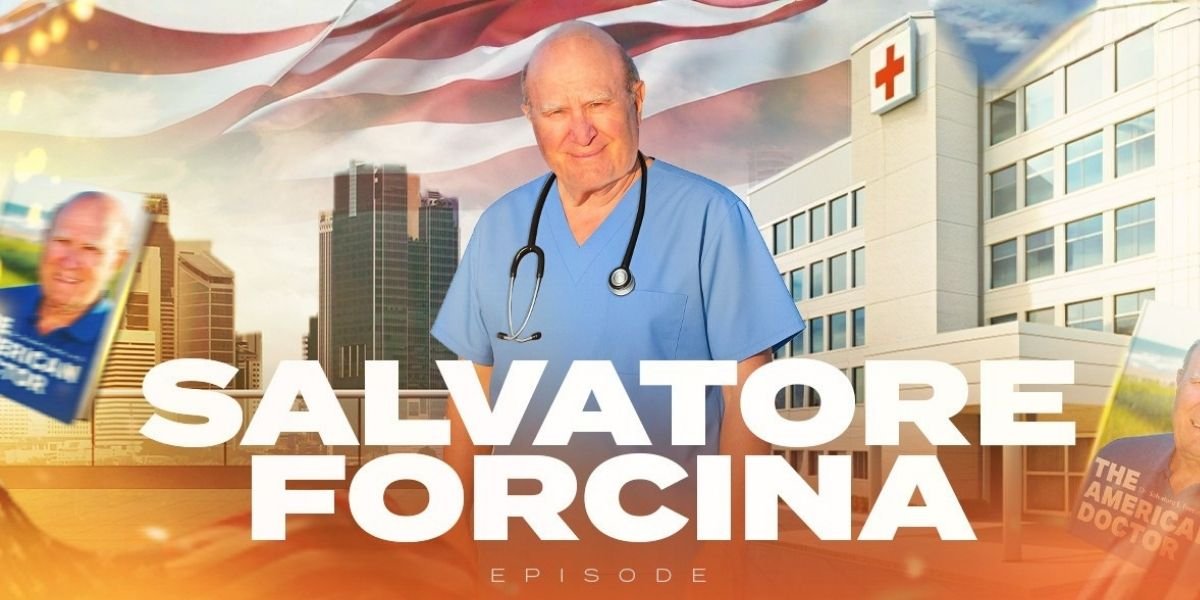
Salvatore Forcina knows this path only too well. He was born in 1941 in a small town called Scauri in southern Italy during WWII. His family had no real home. They slept in shelters dug into the mountains to stay safe from the bombs. He was just a little kid.
When he was eight, the family packed up and moved to Argentina. They had almost nothing. His parents sent him to a boarding school run by Redemptorist priests, where he stayed for seven years. Hardly any socialization. Not much warmth. But he studied. And worked. And persevered until he decided, at some point, to become a doctor, no matter what it took.
He got through medical school at the Universidad Nacional de La Plata and graduated in 1968. But Argentina was not where he saw his future. So he left for America.
His degree from Argentina meant nothing in the US. He had to take the ECFMG equivalency exams. Failed the first time. Studied harder. Passed the second time. During all of this, he was sleeping on a pullout couch and learning English with flashcards with a flashlight.
Forty years later, he had built a full career as a general and vascular surgeon. He became Chief of Surgery at Holy Name Hospital in Teaneck, New Jersey, and also at Meadowlands Hospital in Secaucus. His colleagues chose him for those roles. Not because he had the fanciest resume, but because he showed up every day and did the work, and was good at what he did.
His Book and Documentary Tell the Full Story
Forcina wrote about this in an incredible book called The American Doctor, published by Histria Books. It is not some polished motivational thing. It reads like a man sitting across from you, telling you exactly what happened and not sugarcoating any of it, or the battles and obstacles. The war, the loneliness, the failures, the slow climb.
He also sat down for a documentary episode on Legacy Makers TV, an original series on the Inside Success Network. The episode is called “A Doctor Forged by War” and you can watch it for free online. In it, Forcina talks about what kept him going through all those years. His answer is pretty simple:
“Perseverance is not optional. You just keep going. Success is not a question of if. It is a question of when”.
No big speeches. No fancy frameworks. Just do the work, learn from what goes wrong, and stop looking for applause. For him, the whole point was always about being useful to other people. Taking care of patients. Doing something that mattered.
Why This Matters Beyond Medicine
You do not have to be a doctor to get something out of this. Anyone who has spent years trying to build something will know the feeling. Long stretches where nothing moves. Moments where quitting seems smart. People who doubt you.
What makes the difference is usually not talent. It is stubbornness. Forcina did not have money, did not speak the language, and had no one pulling strings for him. He just refused to stop.
Hospitals need more of that right now. Budgets are tight, staff are burned out, and patients expect more than ever. The leaders who hold things together will not be the ones who had it easy. They will be the ones who already know what it feels like when everything is against you, and you keep going anyway. There are thousands of doctors in this country with stories like his. That experience is not a weakness. Right now, it might be exactly what healthcare leadership needs.
Watch “A Doctor Forged by War” on Legacy Makers TV: https://insidesuccess.tv/programs/salvatoreforcina
How to read The American Doctor: https://www.amazon.com/American-Doctor-Salvatore-J-Forcina/dp/1592112099