Fontaines D.C. Announce Fifth Album Dopamine Chamber and Two U.S. Headline Shows at Brooklyn’s Kings Theatre and Hollywood Forever Cemetery

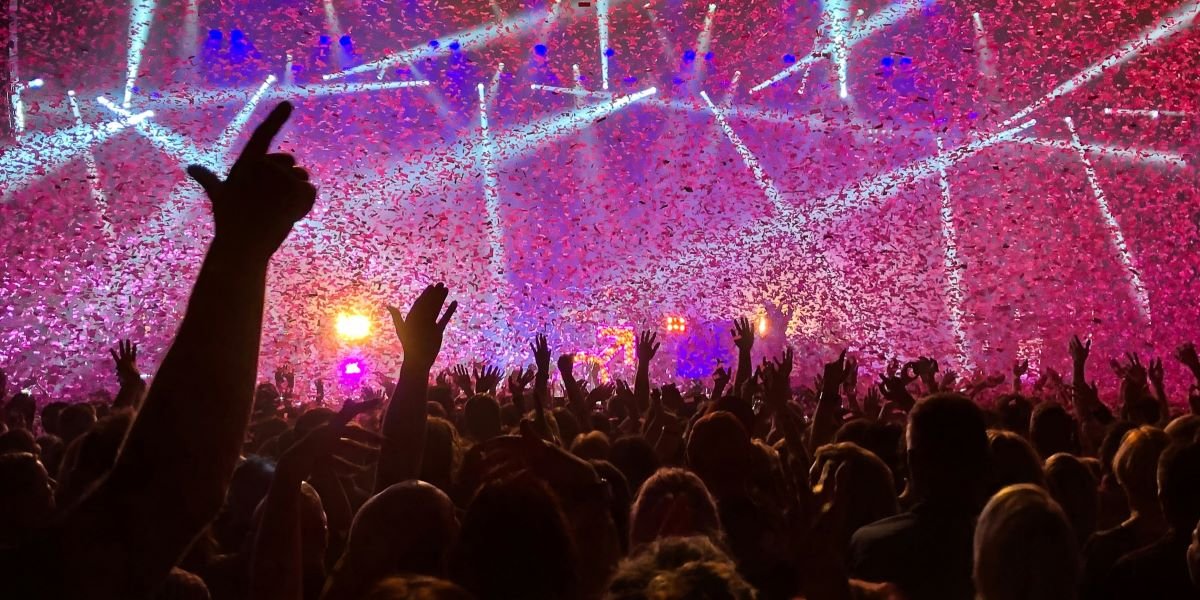
Fontaines D.C. have announced their fifth studio album, Dopamine Chamber, due October 16 via XL Recordings, alongside two intimate U.S. headline shows in Brooklyn and Los Angeles next month. The album arrives less than two years after the Grammy-nominated, platinum-certified Romance, and the lead single “Marianne” is already out with a video directed by Dave Meyers. Pre-sale registration for the U.S. shows closes today, August 24, at 6 p.m. ET, with tickets hitting general sale on Friday, August 28.
Key Takeaways
- Dopamine Chamber, the fifth Fontaines D.C. studio album, releases October 16 via XL Recordings; lead single “Marianne” is out now with a Dave Meyers-directed video.
- Two intimate U.S. headline shows are confirmed: Kings Theatre in Brooklyn on September 21 and Hollywood Forever Cemetery in Los Angeles on September 25.
- Pre-sale registration closes August 24 at 6 p.m. ET; pre-sale launches Tuesday, August 25 at 10 a.m. local time; general sale opens Friday, August 28.
- Producer James Ford returns after helming Romance (2024), which earned Grammy nominations for Best Rock Album and Best Alternative Music Performance and reached platinum certification.
- The album was recorded across London, the English countryside, and Palermo, with frontman Grian Chatten tracking vocals in a makeshift booth built from mattresses and cushions.
Dopamine Chamber Arrives Less Than Two Years After Romance Reshaped the Band’s Trajectory
Romance changed what Fontaines D.C. could be. The Dublin band’s fourth album, released in August 2024, pushed past the post-punk lane that defined their first three records and landed in a space that was louder, glossier, and commercially larger than anything they had done before. The album earned a Grammy nomination for Best Rock Album, a second nomination for Best Alternative Music Performance for lead single “Starburster,” a Mercury Prize nomination, and platinum certification. It was the record that moved Fontaines D.C. from a critically respected guitar band into an arena-level act with global booking power.
Dopamine Chamber does not appear to be chasing the same formula. Frontman Grian Chatten has described the new material as darker and more deliberately unsettling than its predecessor. “I think Romance was maybe 60 per cent human and 40 per cent corrupted by automation, and a loss of feeling,” Chatten said in a statement accompanying the album announcement. “This one feels more like 60 per cent corrupted. The mask is wearing the face a little more. I felt it would be more powerful to leave the hope out and reflect the ugliness honestly. This one needed to feel more like a catastrophic warning.”
Chatten elaborated on the album’s conceptual framework, describing the record itself as an immersive environment rather than a collection of songs. “The album itself is a dopamine chamber,” he said. “You step inside and we test these different mind- or mood-altering pieces of music on you.” He added that there is “a poignant sense of us being on the brink of some other kind of form of humanity, or non-humanity,” pointing toward themes of artificial intelligence, the erosion of authentic experience, and the numbing scroll of contemporary information consumption.
The Recording Spanned London, the English Countryside, and Palermo
James Ford, who produced Romance, returned for Dopamine Chamber, maintaining a creative partnership that has now delivered two consecutive albums for the band. Ford’s production credits across British and Irish guitar music run deep, and his pairing with Fontaines D.C. has proven to be one of the more consequential producer-band relationships in the current rock landscape. The sessions moved across multiple locations: London, a studio in the English countryside, and Palermo, Sicily, where Chatten recorded vocals in a makeshift booth assembled from mattresses and cushions in an environment far removed from a conventional studio setup.
Chatten also spent time in Venice, Vienna, and Sicily seeking lyrical inspiration, a process that reflects the wider geographic and thematic ambition of the record. Bassist Conor Deegan described the album’s scope in broader terms. “Our albums have always questioned a sense of place,” Deegan said, suggesting that Dopamine Chamber continues the band’s exploration of identity, displacement, and belonging that has run through their catalog since their 2019 debut Dogrel.
The band began debuting new material live this summer during a run of shows in Cadiz, Spain, where “Marianne” and a second new track, “Six Shot Morning,” were performed publicly for the first time. Those performances marked Fontaines D.C.’s return to the stage after nearly a year away from live shows, and they preceded a BBC session at Maida Vale on July 31 that was released the same week as the album announcement.
“Marianne” Sets the Tone With Atmosphere and Cinematic Pull
The lead single draws from the same post-punk chord language that defined Romance but pushes it into more atmospheric, brooding territory. Over restrained drums and a guitar line that builds tension without releasing it, Chatten delivers lyrics that pull the listener into a disorienting invitation: “This year, you should come and stay here. You can follow my lead. I can help you disappear.” The song takes partial inspiration from the 2024 miniseries Ripley, which starred fellow Irishman Andrew Scott, and the video was directed by Dave Meyers, whose visual work spans mainstream pop and hip-hop production at the highest commercial tier.
The choice of Meyers signals that Fontaines D.C. and XL Recordings are treating Dopamine Chamber as a visual project as much as a musical one, investing in production values that match the band’s expanded audience reach. The album’s rollout has been carefully staged: a social media revamp introducing a new logo, a newsletter, a new press image featuring the number five, and a pacing strategy that drips information rather than dumping it. The approach mirrors how legacy acts and major-label pop artists manage album campaigns, adapted for a band that still operates within the indie-rock ecosystem but has clearly outgrown its boundaries.
Two U.S. Headline Shows Land Between Festival Appearances
The Brooklyn and Los Angeles dates are positioned between a run of U.S. festival appearances that will bring Fontaines D.C. across the country in September. The band plays Shaky Knees in Atlanta on September 18, Sea.Hear.Now in Asbury Park, New Jersey on September 20, and Ohana Festival in Dana Point, California on September 27. The Kings Theatre show on September 21 and Hollywood Forever Cemetery show on September 25 fill the gaps between festivals, giving the band two headline performances in the country’s two largest cultural markets ahead of the album’s October 16 release.
Both venues carry specific connotations. Kings Theatre, a restored 3,000-seat movie palace in Flatbush, Brooklyn, has become one of New York’s preferred rooms for artists playing shows that are larger than a club but smaller than an arena, offering ornate visual surroundings and strong acoustics. Hollywood Forever Cemetery, a working cemetery that doubles as an outdoor performance venue in the heart of Hollywood, carries an aesthetic weight that aligns with the darker, more cinematic tone Chatten has described for Dopamine Chamber. Neither venue is a typical rock club booking, and the choice of both suggests the band is curating an experience around the album rather than simply filling routing gaps.
Before the U.S. dates, Fontaines D.C. headline Reading and Leeds Festivals next weekend, followed by a homecoming at Electric Picnic in Ireland on August 30. The festival headline slots mark another step in the band’s live trajectory, placing them at the top of bills that historically feature acts operating at a commercial level above where Fontaines D.C. were positioned even two years ago.
Dopamine Chamber Is Available for Pre-Order on Multiple Formats
The album is available on LP, deluxe LP, CD, cassette, and digital formats. The deluxe LP and physical editions are being offered through the band’s official store and standard retail channels. XL Recordings, the band’s label since their debut, has maintained a release strategy that prioritizes physical formats alongside streaming, reflecting a fan base that still invests in vinyl and collectible editions at a rate that justifies multi-format rollouts. Romance demonstrated that the audience for Fontaines D.C. extends well beyond streaming metrics, and Dopamine Chamber’s format strategy suggests the label expects the same pattern to hold.
FAQs
When Does Dopamine Chamber Come Out?
Dopamine Chamber releases on October 16, 2026 via XL Recordings. The lead single “Marianne” is available now on all streaming platforms, with a video directed by Dave Meyers.
How Do Fans Get Tickets to the Brooklyn and Los Angeles Shows?
Pre-sale registration closes August 24 at 6 p.m. ET through the band’s official channels. The pre-sale begins Tuesday, August 25 at 10 a.m. local time. General sale opens Friday, August 28 at 10 a.m. local time. The Brooklyn show is at Kings Theatre on September 21 and the Los Angeles show is at Hollywood Forever Cemetery on September 25.
Who Produced Dopamine Chamber?
James Ford produced Dopamine Chamber, returning after producing the band’s fourth album Romance (2024). Ford’s work on Romance helped the album earn Grammy nominations for Best Rock Album and Best Alternative Music Performance and reach platinum certification.