Madonna Leads 2026 MTV VMA Nominations With 11 Nods as Women Command the Ballot

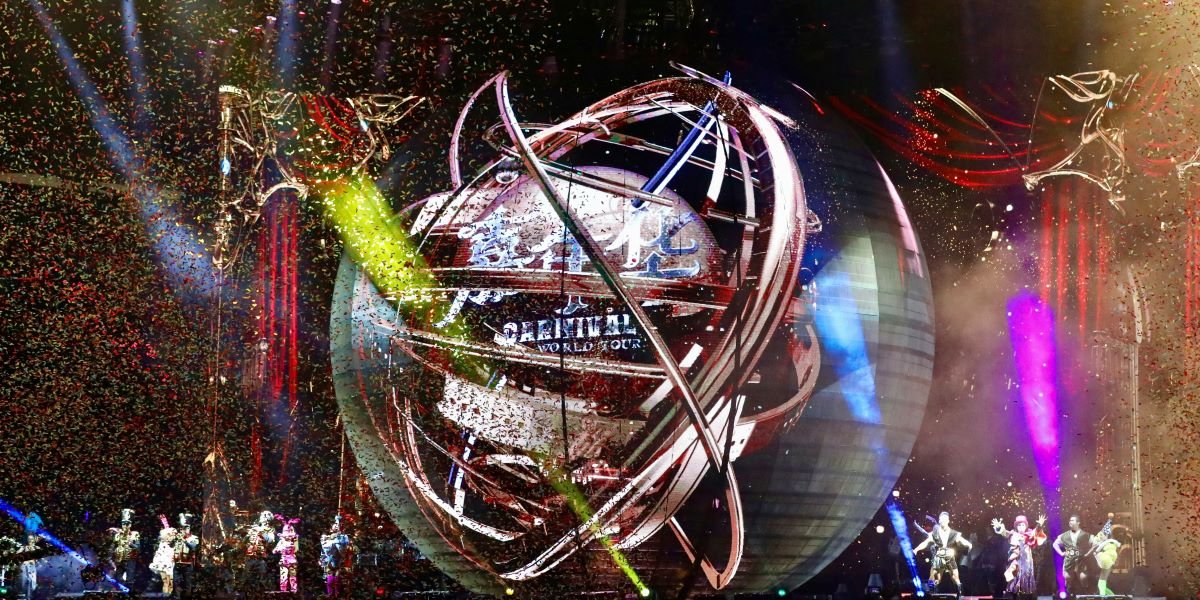
MTV announced the nominations for the 2026 Video Music Awards on Monday, August 18, and the ballot reads as a statement about who is driving the visual side of popular music right now. Madonna leads all artists with 11 nominations, her highest personal total in 42 years of VMA history. Taylor Swift follows with nine. Ariana Grande and Sabrina Carpenter earned seven each. Seven of the eight most-nominated artists are women. For the first time since the Artist of the Year category was introduced in 2017, no hip-hop artist was nominated in the field. The ceremony broadcasts live from the Peacock Theater in Los Angeles on Sunday, September 27, simulcast on CBS, MTV, and Paramount+.
Key Takeaways
- Madonna leads all 2026 VMA nominees with 11 nominations, her highest total ever, driven largely by the 14-minute visual “Confessions II – The Film” and the Sabrina Carpenter collaboration “Bring Your Love”
- Taylor Swift follows with nine nominations; if she wins even one award, she will become the most-awarded artist in VMA history
- Seven of the eight most-nominated artists are women: Madonna (11), Swift (9), Grande (7), Carpenter (7), PinkPantheress (5), Zara Larsson (5), and LISA (4); Bruno Mars (5) is the only man in the top tier
- For the first time since the category was introduced in 2017, no hip-hop artist was nominated for Artist of the Year; for the first time in five years, no Latin artist appears in the field
- Best New Artist nominees are Bella Kay, CORTIS, Magnus Ferrell, Malcolm Todd, Myles Smith, Sienna Spiro, and Stella Lefty; fan voting closes September 25 for all categories except Best New Artist, which remains open through the live broadcast
Madonna’s 11 Nominations Mark a Career Peak Four Decades After Her VMA Debut
Madonna first appeared at the VMAs in 1984, performing “Like a Virgin” at the inaugural ceremony in a moment that has been replayed and referenced for four decades. In 1990, she earned nine nominations. In 1998, she earned nine again and won Video of the Year for “Ray of Light.” The 11 nominations she received on Monday eclipse both of those totals and reposition Madonna at the center of the VMA conversation at a moment when her “Confessions II” album and its accompanying visual project have generated sustained commercial and critical attention.
The bulk of Madonna’s nominations stem from “Confessions II – The Film,” a 14-minute visual that functions as both a music video and a short film. The piece is nominated for Video of the Year, Best Dance, Best Direction, Best Art Direction, Best Cinematography, Best Editing, Best Choreography, and Best Visual Effects. The format follows a trend in the category: Taylor Swift’s 15-minute “All Too Well: The Short Film” won Video of the Year in 2022, and Ariana Grande’s 26-minute “Brighter Days Ahead” won the award last year. The VMAs have increasingly rewarded long-form visual projects over traditional three-to-four-minute music videos, a shift that reflects how artists are using visual content as a creative medium rather than a promotional tool.
Madonna and Sabrina Carpenter’s “Bring Your Love,” a track from the “Confessions II” album, earned additional nominations for Song of the Year and Best Collaboration. Madonna is also nominated for Artist of the Year for the first time, placing her alongside Grande, Mars, Carpenter, Swift, and Morgan Wallen. The Artist of the Year nomination is notable for its company: Madonna is competing against artists who are, in some cases, three generations younger.
Swift’s Nine Nominations Put Her One Win Away From VMA History
Taylor Swift’s nine nominations center on “The Fate of Ophelia,” the video from her “Life of a Showgirl” album cycle. The visual is nominated for Video of the Year, Best Pop, Best Direction, Best Art Direction, Best Cinematography, Best Editing, Best Choreography, and Best Visual Effects. Swift is also nominated for Artist of the Year for a fifth time, one behind Grande’s record-extending sixth nomination in the category.
Swift currently holds the record for the most Moon Person trophies won by any artist, with 30. If she takes home even one award on September 27, she will extend that lead. The male artist with the most VMAs is Eminem, with 15. The gap between the two figures underscores how thoroughly Swift has dominated the VMA ecosystem over the past decade. Her presence in nine categories, spread across both marquee and creative awards, gives her multiple pathways to add to the total.
The Gender Composition of the Ballot Is Unprecedented
The 2026 VMA nominations are the most female-dominated in the ceremony’s history by raw nomination count at the top of the ballot. Madonna (11), Swift (9), Grande (7), Carpenter (7), PinkPantheress (5), Zara Larsson (5), and LISA (4) account for the seven most-nominated artists. Bruno Mars, with five nominations, is the only male artist in the top tier. Below that line, Shakira and Tate McRae each received three nominations. Charli xcx, Doechii, Lady Gaga, Olivia Rodrigo, RAYE, and Kehlani earned two each.
The male presence on the ballot is concentrated in genre categories and collaborative nominations. BTS is nominated for Song of the Year for “Swim.” Morgan Wallen earned an Artist of the Year nomination, his second consecutive, but received no other nods despite having one of the year’s top-selling albums. Drake, Don Toliver, and Shaboozey appear in Best Hip-Hop. Harry Styles is nominated in Best Pop alongside an otherwise all-female field. GENER8ION’s “Storm Starring Yung Lean” is one of six Video of the Year nominees, the only male-fronted project in the top category.
The Absence of Hip-Hop in the Top Categories Draws Criticism
The 2026 nominations contain a structural gap that has drawn immediate attention. No hip-hop artist was nominated for Artist of the Year, the first time the category has excluded the genre since its 2017 introduction. No hip-hop or R&B act appears in the Video of the Year field. The genre presence is confined to the Best Hip-Hop and Best R&B categories, where Cardi B, Doechii, Drake, Don Toliver, Megan Thee Stallion, Travis Scott, Kehlani, RAYE, Teyana Taylor, and others compete against each other in genre-specific lanes.
The contrast with the 2025 VMAs is stark. Last year, Kendrick Lamar earned 10 nominations across the top categories, competing for Video of the Year, Artist of the Year, and Song of the Year alongside pop and R&B acts. His visibility across the ballot reflected a ceremony that treated hip-hop as a centerpiece of the broader music landscape. The 2026 ballot reverses that positioning, segmenting Black artists into genre categories while reserving the marquee fields for pop and dance acts.
Fans and music writers responded on social media within hours of the announcement. EBONY published a critique noting that the decision to restrict Black artists primarily to genre categories “pits them against each other and limits their chances to shine outside those constraints.” The publication pointed to the February 2026 Grammys as a counterexample, where Kendrick Lamar and SZA’s “Luther” won Record of the Year and Leon Thomas’ “MUTT” earned an Album of the Year nomination, demonstrating that awards bodies can integrate hip-hop and R&B across the full ballot when they choose to. The VMA nominations suggest MTV made a different choice.
Best New Artist Previews the Next Generation of the VMA Ecosystem
The Best New Artist category features Bella Kay, CORTIS, Magnus Ferrell, Malcolm Todd, Myles Smith, Sienna Spiro, and Stella Lefty. Spiro is considered a leading candidate for the Grammy’s Best New Artist award later this year, giving her VMA nomination additional industry weight. CORTIS and Stella Lefty are both first-time VMA nominees, as are several of the artists scattered across the broader ballot, including Olivia Dean, Noah Kahan, Don Toliver, Kali Uchis, Tucker Wetmore, and Yung Lean.
The Best New Artist category operates on a different voting timeline than the rest of the ceremony. Fan voting for all other categories closes September 25 at 6 p.m. ET. Best New Artist voting remains open through the live broadcast on September 27, allowing audience engagement during the show itself to influence the outcome. The format has historically made Best New Artist one of the most volatile and fan-driven results of the night.
The Return of Best Dance and the Expansion of Creative Categories
The 2026 ceremony revives the Best Dance category, which was awarded regularly from 1989 through 2019 before being retired. Madonna’s “Confessions II – The Film” is nominated in the returning field alongside Grande’s “Hate That I Made You Love Me,” JISOO and Zayn’s “Eyes Closed,” PinkPantheress and Zara Larsson’s “Stateside,” RAYE featuring Cardi B’s “Safe,” and Tate McRae’s “Nobody’s Girl.” The category’s return coincides with a period in which dance pop, house-influenced production, and choreography-driven visuals have reasserted themselves across the mainstream.
The Best Collaboration nominees span pop, hip-hop, K-pop, reggaeton, and R&B: Clipse featuring Kendrick Lamar, Pusha T, and Malice (“Chains & Whips”), French Montana and Max B (“Ever Since U Left Me”), Madonna and Sabrina Carpenter (“Bring Your Love”), PinkPantheress and Zara Larsson (“Stateside”), Shakira and Burna Boy (“Dai Dai”), and Teyana Taylor and Lucky Daye (“Hard Part”). The category is the one space on the ballot where hip-hop acts share real estate with pop and dance nominees in a non-genre-specific field.
The 2026 VMAs are produced by Gunpowder & Sky with Van Toffler, the veteran MTV producer, as lead producer. Jesse Ignjatovic of Den of Thieves, Barbara Bialkowski, Bruce Gillmer, Barry Barclay, and Floris Bauer serve as executive producers. Melanie Block is co-executive producer and Gary Lanvy is co-producer. The broadcast airs live from the Peacock Theater in Los Angeles on September 27 at 7:30 p.m. ET on CBS and MTV, with streaming on Paramount+ in the United States and global availability the following day.
FAQs
Who has the most 2026 VMA nominations?
Madonna leads all artists with 11 nominations, her highest total in 42 years of VMA history. Taylor Swift follows with nine, and Ariana Grande and Sabrina Carpenter each earned seven. Bruno Mars, PinkPantheress, and Zara Larsson received five nominations each.
When and where are the 2026 VMAs?
The 2026 MTV Video Music Awards broadcast live from the Peacock Theater in Los Angeles on Sunday, September 27, at 7:30 p.m. ET. The ceremony will simulcast on CBS, MTV, and Paramount+, with global streaming available the following day.
Who is nominated for Best New Artist at the 2026 VMAs?
The Best New Artist nominees are Bella Kay, CORTIS, Magnus Ferrell, Malcolm Todd, Myles Smith, Sienna Spiro, and Stella Lefty. Fan voting for Best New Artist remains open through the live broadcast on September 27, while all other category voting closes September 25 at 6 p.m. ET.
Why are the 2026 VMA nominations drawing criticism?
For the first time since the Artist of the Year category was introduced in 2017, no hip-hop artist was nominated in the field. Black artists are largely confined to the Best Hip-Hop and Best R&B categories, a sharp contrast from the 2025 VMAs where Kendrick Lamar earned 10 nominations across the top categories. EBONY and music fans on social media have criticized the nominations for limiting representation in marquee categories.