
Celebrity News

The Strokes’ Reality Awaits Reaches Physical Release Week With Vinyl and CD Editions on August 14

The Strokes’ seventh studio album Reality Awaits enters its physical release week, with CD, black vinyl, and opaque metallic gold vinyl editions arriving on August 14 through Cult Records and RCA Records. The album first appeared on digital streaming platforms on June 26, giving listeners nearly seven weeks with the nine-track project before the tangible formats hit shelves. Reality Awaits is the New York band’s first release since 2020’s The New Abnormal, closing a six-year gap that marked the longest stretch between Strokes albums in the band’s 25-year career. Produced by Rick Rubin, who also helmed The New Abnormal, the record was built across sessions that began in Costa Rica and continued in studios around the world.

  • Reality Awaits was released digitally on June 26 via Cult Records/RCA Records; physical formats (CD, black vinyl at $28, opaque metallic gold vinyl) arrive August 14
  • The nine-track album runs 41 minutes and 2 seconds, produced entirely by Rick Rubin from sessions that began in Costa Rica and continued globally
  • Lead single “Going Shopping” was released April 7 after being mailed to fans on cassette tape; second single “Falling out of Love” followed May 13
  • The Strokes are supporting Reality Awaits with a 2026 world tour spanning North America, Europe, the UK, and Japan, including festival headlining slots at Bonnaroo, Outside Lands, Shaky Knees, and Summer Sonic
  • The album cover features Richard Prince’s 1989 photograph (Untitled) Cowboy, designed by director Johann Rashid

Recording Across Continents With Rick Rubin

The origins of Reality Awaits trace back to 2022, when Rubin mentioned on the Joe Rogan Experience podcast that he had been recording with the Strokes in Costa Rica. Those initial sessions produced the album’s foundation, but the band and Rubin continued meeting in studios around the world to finish the record, following what the label described as a process of working “wherever inspiration struck.” The nomadic recording approach represents a departure from the Strokes’ earlier albums, which were typically built in concentrated sessions at a single studio.

While in Costa Rica, the Strokes invited director Johann Rashid to document the sessions. The result, In Transit: Part II, debuted on July 23, one day before the album’s physical pre-orders began shipping. The short film offers a look at the recording process and serves as a sequel to the band’s 2004 documentary In Transit, which captured the era around their second album Room on Fire. Rashid also created the album’s cover art, which adapts Richard Prince’s 1989 photograph (Untitled) Cowboy into the visual identity of the record.

The Tracklist and Singles Rollout

Reality Awaits runs nine tracks across 41 minutes: “Psycho Shit,” “Dine N’Dash,” “Lonely in the Future,” “Falling out of Love,” “Going to Babble On,” “Going Shopping,” “Liar’s Remorse,” “The Fruits of Conquest,” and “Tyrants of the Mellow Moon.” The sequencing places both previously released singles in the album’s middle stretch, with “Falling out of Love” at track four and “Going Shopping” at track six.

The singles rollout began unconventionally. “Going Shopping” first reached fans in early April via cassette tapes mailed directly to members of the Strokes’ mailing list, before the song was debuted live at a pair of underplay shows in San Francisco. The track then appeared on digital streaming platforms on April 7, alongside the official album announcement. “Falling out of Love” followed on May 13, completing the two-single preview ahead of the June 26 digital release.

The cassette-first strategy for “Going Shopping” reflected a deliberate choice to reward the band’s core fanbase before opening the music to a wider audience, an approach that generated significant social media attention in the days between the physical mailings and the digital release. The tactic also nodded to the Strokes’ history of cultivating mystique through limited-access releases and understated promotional strategies, a pattern that has defined the band’s public-facing approach since their early Lower East Side years.

The Physical Release and Format Strategy

The August 14 physical release arrives in three formats: standard CD, black vinyl LP priced at $28 through the RCA Records store, and an opaque metallic gold vinyl variant. The staggered release strategy, with digital arriving nearly seven weeks before physical, has become standard practice in the streaming era, where first-week chart performance is driven almost entirely by streaming numbers and the physical release serves a different function: collector appeal, catalog longevity, and a second wave of attention.

For the Strokes, the physical formats carry particular weight. The band’s debut Is This It (2001) became an iconic vinyl object in its own right, and each subsequent album has maintained a deliberate visual and physical identity. Reality Awaits continues that tradition with the Richard Prince cover art, a choice that places the album in conversation with the appropriation-art movement and the American mythos of the cowboy, rendered through a band whose identity has always been rooted in New York City.

The 2026 World Tour

The Strokes are supporting Reality Awaits with an extensive 2026 touring schedule that stretches from festival headlining slots through arena dates running into late October. The band played Coachella in April, Bonnaroo in June, and is scheduled for Outside Lands in San Francisco on August 8 (sold out), Summer Sonic in Tokyo and Osaka on August 14 and 15, Just Like Heaven in Pasadena on August 22, Shaky Knees in Atlanta on September 18, and Sea.Hear.Now in Asbury Park on September 20.

Arena and amphitheater dates fill the gaps between festival appearances. The Strokes play Hayden Homes Amphitheater in Bend, Oregon on August 25, Rogers Arena in Vancouver on August 27, Climate Pledge Arena in Seattle on August 28, and venues in Tampa, Hollywood (sold out), and Charlotte in September. The tour culminates with a hometown show at Flushing Meadows Corona Park in Queens on October 2 and a date at The O2 in London on October 6.

The Queens show at Flushing Meadows carries symbolic weight for a band that emerged from New York’s Lower East Side in the early 2000s. Playing an outdoor show in the borough where frontman Julian Casablancas was raised positions the tour’s climax as a homecoming rather than just another arena date, a narrative arc that connects the Costa Rica recording sessions to the band’s origins.

Context Within the Strokes’ Catalog

Reality Awaits is the Strokes’ seventh studio album across a career that began with Is This It in 2001. The six-year gap between The New Abnormal and Reality Awaits is the longest between Strokes releases, surpassing the four-year stretch between Comedown Machine (2013) and nothing at all, since the band did not release another album until The New Abnormal in 2020, a full seven years later. That earlier gap was marked by side projects and public uncertainty about the band’s future; the Reality Awaits cycle, by contrast, included extensive global touring behind The New Abnormal before the band entered the studio with Rubin.

The Billboard 200 chart placement for Reality Awaits covering the week ending August 8, which captures the album’s first full tracking week of streaming data following a delayed physical street date, is expected to be published this week. The physical release on August 14 will generate a second tracking-week bump, a dynamic that has become standard for major releases using the staggered digital-to-physical model.

FAQs

When does the Reality Awaits vinyl come out?

The physical release of Reality Awaits, including CD, black vinyl, and opaque metallic gold vinyl editions, arrives on August 14, 2026 through Cult Records and RCA Records.

How many tracks are on Reality Awaits?

Reality Awaits contains nine tracks with a total runtime of 41 minutes and 2 seconds. The tracklist includes “Psycho Shit,” “Dine N’Dash,” “Lonely in the Future,” “Falling out of Love,” “Going to Babble On,” “Going Shopping,” “Liar’s Remorse,” “The Fruits of Conquest,” and “Tyrants of the Mellow Moon.”

Who produced Reality Awaits?

Rick Rubin produced Reality Awaits. Rubin also produced the Strokes’ previous album, The New Abnormal (2020). Recording began in Costa Rica and continued in studios around the world.

Are the Strokes touring in 2026?

The Strokes are on a 2026 world tour spanning North America, Europe, the UK, and Japan. Remaining dates run through October, including festival slots at Outside Lands, Summer Sonic, Shaky Knees, and Sea.Hear.Now, plus arena shows and a hometown performance at Flushing Meadows Corona Park in Queens on October 2.
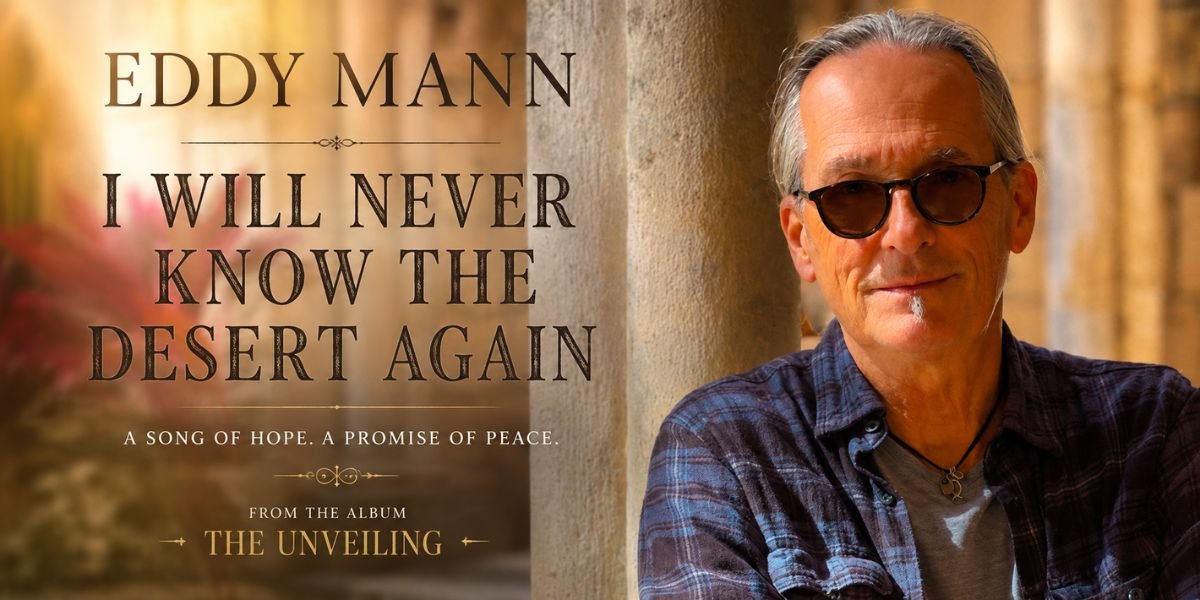

Beyond the Wilderness: Eddy Mann’s “I Will Never Know the Desert Again” Offers a Gentle Promise of Hope

By Melissa Morris

There are plenty of songs about faith that speak in absolutes. They arrive fully armored, confident in every answer they offer. Eddy Mann’s “I Will Never Know the Desert Again” takes a different path. Rather than proclaiming certainty from a mountaintop, Mann walks alongside the listener through the valley, acknowledging the dust, the exhaustion, and the ache that comes from simply being human.

That’s precisely what makes the song so powerful.

Drawn from the Book of Revelation and featured on Mann’s latest album, The Unveiling, the song is rooted in one of Scripture’s most enduring promises: that there will come a day when God’s people will hunger and thirst no more. Yet even with such grand inspiration behind it, Mann resists the temptation to turn the song into a sermon. Instead, he transforms an ancient biblical vision into something immediate and deeply personal.

For decades, Mann has quietly built a catalog defined by humility, compassion, and a steadfast commitment to writing from the heart. He has never been an artist interested in spectacle. While the modern music industry often rewards volume and velocity, Mann has remained committed to something slower, more contemplative, and arguably more difficult: honesty.

“I Will Never Know the Desert Again” may be the purest expression of that philosophy.

The title itself immediately evokes images of wandering and waiting, of searching for meaning in places that seem empty. Anyone familiar with the language of Scripture understands the significance of the desert as a place of hardship and transformation, but Mann wisely broadens the metaphor. The wilderness he describes is not merely a biblical landscape. It is grief. It is disappointment. It is loneliness. It is uncertainty about what comes next.

It is life.

Musically, the song mirrors those themes beautifully. Mann has long understood that arrangements should serve the message rather than overwhelm it, and the production here unfolds with quiet confidence. Warm acoustic textures create an intimate atmosphere, while subtle instrumental flourishes lend the song a sense of forward motion. Nothing feels rushed. Every note is allowed to breathe.

And then there is Mann’s voice.

Age has given it texture and gravity, the kind of lived-in quality that younger singers often spend years trying to imitate. There is wisdom there, certainly, but there is also vulnerability. Mann sounds less like a performer than a trusted friend sitting across the table, sharing hard-earned truths without demanding agreement.

That emotional transparency is especially meaningful given the inspiration behind the song. While writing it, Mann has said he found himself reflecting on the physical, emotional, and spiritual struggles so many people are enduring today. Rather than offering easy solutions, he set out to create what he described as an anthem of hope.

You can hear that intention in every line.

The song never denies the existence of suffering. If anything, it insists upon it. Yet it also refuses to grant hardship the final word. That balance between sorrow and expectation is what gives “I Will Never Know the Desert Again” its remarkable emotional depth. Mann understands that hope means very little if it has never been tested.

Throughout his career, he has spoken openly about enduring his own seasons of difficulty. He refers to them simply as “battle scars,” a phrase that captures the unassuming grace that has always defined both the man and his music. There is no attempt to romanticize pain here. Instead, Mann suggests that life’s deserts can become places of revelation, where faith is strengthened rather than diminished.

That perspective feels especially timely.

Modern life often encourages us to move quickly past discomfort, to conceal weakness, or to package our struggles into inspirational slogans. Mann refuses to do any of those things. His song lingers in the uncertainty while gently pointing toward something brighter on the horizon.

Perhaps that is why “I Will Never Know the Desert Again” resonates so deeply. Even listeners who do not share Mann’s theological convictions may find themselves drawn to its central message. Everyone, after all, longs for the end of wandering. Everyone hopes that pain serves some greater purpose. Everyone dreams of arriving home.

In an age increasingly defined by noise, outrage, and division, Eddy Mann has created something beautifully countercultural. He has written a song that is patient rather than demanding, compassionate rather than judgmental, and hopeful without becoming naïve.

Like the best songs, “I Will Never Know the Desert Again” leaves its deepest impression long after the final note fades away. It doesn’t insist that the journey is easy. It simply reminds us that the journey is not endless.

And sometimes, that’s exactly the message we need to hear.

Patti Spadaro Finds the Center Between Music, Mindfulness, and the Human Spirit

By: Evelyn Hart

Long before mindfulness became a buzzword and long before wellness culture turned yoga studios into billion-dollar businesses, Patti Spadaro understood something simple but profound: music has the power to transform people.

For Spadaro, that realization has shaped an extraordinary life. Over the years, she has built a career as a guitarist, songwriter, yoga instructor, meditation teacher, and college educator. Yet despite the many directions her life has taken, a common thread runs through every chapter of her story: a desire to create connection, inspire others, and help people discover a deeper sense of balance.

That mission is perhaps best embodied in her latest single, “Mystic Misfit,” a song that feels both intensely personal and remarkably universal.

“I’ve always wanted to do something positive in the world,” Spadaro says. “I love music and playing for people, watching people dance and enjoying listening. I love the way music makes me feel, inspired, energized, uplifted. For as long as I can remember, I’ve wanted to share that feeling with others.”

Her path toward combining music and mindfulness began years ago while she was studying at the prestigious Musician’s Institute. Among the technical classes and performance lessons, one weekly meditation course quietly changed the trajectory of her life.

“It helped me clear my head and find some inner peace,” she recalls. “It also helped me play and perform music in a relaxed and focused way.”

That newfound sense of presence became essential as Spadaro balanced the demands of life, career, and eventually motherhood. After the births of her two daughters, she stepped away from performing and began attending yoga classes to recharge and reconnect with herself.

Then fate intervened.

When the owner of the studio she attended announced plans to move away, Spadaro made an unexpected decision: she took over the business herself.

“I just couldn’t imagine this special place closing,” she says. “I wanted to keep it going both for myself and for my community.”

That decision opened another chapter in a life defined by creativity and service. Soon, acclaimed teachers were traveling to the studio to lead workshops and classes, while Spadaro was teaching yoga, guiding meditation sessions, and performing live kirtan music. Eventually, the local college where she still teaches approached her about joining its faculty.

When the COVID-19 pandemic forced the studio to close, Spadaro once again adapted. Drawing on her experience as both a musician and a mindfulness practitioner, she created a course titled Mindfulness in Music.

In many ways, the class brought her full circle.

“Music can be helpful when practicing yoga and meditation, and yoga and meditation can be very helpful for musicians,” she explains. “Sharing them makes them even better.”

That philosophy runs through “Mystic Misfit,” a song inspired by Spadaro’s lifelong journey toward self-acceptance.

As one of only three women among approximately 700 guitar students during her years at the Musician’s Institute, she often found herself standing apart from the crowd. What once felt isolating eventually became a source of strength.

“When I was young, I struggled to fit in,” she says. “As I grew older, I learned to really value and appreciate who I am.”

The title itself tells the story. “Mystic” reflects the spiritual side of her life, while “Misfit” embraces the uniqueness that has defined her artistic journey.

“We all have unique traits that set us apart,” she says. “I think it’s important to celebrate and appreciate our individuality.”

The song’s emotional centerpiece arrives in the repeated phrase, “Meet me in the middle,” a lyric that resonates on multiple levels. For Spadaro, the “middle” is both a physical and spiritual destination, a place of equilibrium, compassion, and authenticity.

Music, meditation, nature, friendship, art, and love all contribute to that state of centeredness.

“If people make an effort to relate in this way and find solutions together, perhaps we can make the world a better place,” she says.

That idea also forms the conceptual foundation of the song’s striking music video.

Filmed by David Heath, the video transforms Pittsburgh itself into a character within the story. Beginning at dawn, the camera follows Spadaro as she crosses one of the city’s iconic golden bridges, guitar slung across her back, eventually arriving at the Point, where Pittsburgh’s three rivers converge.

The symbolism is unmistakable.

The rivers become metaphors for convergence, balance, and connection. Reflections shimmering across the water suggest introspection and self-awareness. Birds passing overhead and flowers blooming along the path create moments of synchronicity that reinforce the video’s themes of mindfulness and presence.

“It was like a personal journey to the center,” Spadaro says.

Just as the city serves as a backdrop for her work, Pittsburgh itself has played a defining role in shaping Spadaro’s artistic identity.

While she has performed across the country and shared stages with celebrated artists, she remains deeply connected to her hometown. Pittsburgh’s rich musical culture, encompassing rock, blues, folk, jazz, and improvisational music, has fostered a sense of camaraderie that continues to inspire her.

From legendary venues such as Moondogs, Club Cafe, Mr. Smalls, and the Thunderbird to major festivals like Hartwood Acres and Light Up Night, Spadaro has experienced every level of the city’s vibrant creative ecosystem.

“It’s really cool to see several bands get together and put on shows together,” she says. “There’s a real feeling of camaraderie.”

Teaching has also transformed her understanding of creativity. Although she describes herself as naturally introverted, years spent leading classes have broadened her perspective and deepened her appreciation for music’s healing potential.

“I think music helps people relax and clear their heads,” she explains. “Deeply listening and paying attention to all the little nuances going on in a piece of music is a great way to be in the moment.”

Today, Spadaro counts two recent releases among her proudest achievements. “Glass Shatters,” featuring several Pittsburgh women musicians, celebrates empowerment and resilience, while “Mystic Misfit” distills decades of artistic and personal growth into a single composition.

Even after years of performing, teaching, and creating, her passion remains unchanged.

She still treasures the exhilaration of improvising an unexpected guitar solo. She still loves seeing audiences dance and sing along. Most importantly, she continues searching for new ways to inspire others.

Perhaps that’s why the closing image of “Mystic Misfit” feels so fitting.

Imagine taking a walk beside one of Pittsburgh’s rivers as sunlight reflects across the water. A guitar rings out softly in the distance. The city is waking up, and for a few brief moments, the noise of everyday life fades into the background.

That’s the experience Patti Spadaro hopes listeners will find, not simply entertainment, but a moment of connection.

A moment of stillness.

A moment in the middle.

And perhaps, if only for a little while, a chance to discover that being a mystic misfit might be exactly what the world needs.