Celebrity News

A Toast with a Touch of Class as Cedric the Entertainer’s Setta Wines and IKRAA Caviar Found Their Perfect Pairing

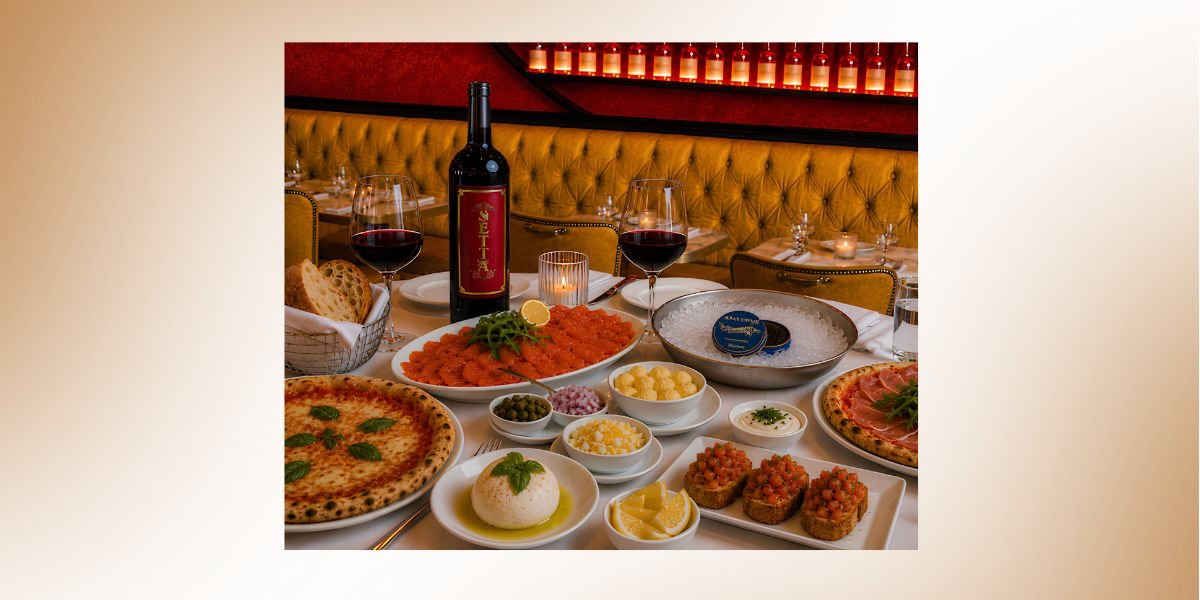
Photo Courtest: IKRAA Caviar

By Bridget Mulroy

Every so often, you come across two brands that seem destined to share the same table.

That was the feeling I had while learning more about Setta Wines, Cedric the Entertainer’s award-winning collection inspired by family, legacy, and generosity. Just over a month ago, Cedric officially introduced Setta to New York, arriving at almost the exact moment he stepped onto the Broadway stage for his highly anticipated debut. It felt like more than a coincidence. While audiences were applauding one of entertainment’s most recognizable figures in the theatre, another side of his creativity was quietly making its way into some of New York City’s most celebrated restaurants.

Today, Setta can be found at Avra, American Cut, Brooklyn Chop House, and, beginning in mid-July, the Park Lane Hotel. These are destinations where memorable dining experiences are built around quality, hospitality, and attention to detail.

What makes that expansion even more compelling is that these very same restaurants are also home to IKRAA Caviar.

The more I thought about it, the more the pairing felt inevitable.

Not because two premium brands happened to occupy the same space, but because they seemed to share the same philosophy.

Neither Setta nor IKRAA exists simply to represent luxury. Both understand that the best meals have never been defined by what’s on the plate alone. They’re defined by the people around the table, the stories that unfold over dinner, the laughter that fills the room, and the memories that quietly take shape over another glass of wine.

Cedric the Entertainer expressed that idea more beautifully than anyone else could:

“Good food brings people together. Pair great IKRAA Caviar with a glass of Setta, and you’ve got something special.”

The quote isn’t elaborate, and that’s exactly why it works.

It doesn’t read like marketing. It reads like something someone would genuinely say after enjoying an unforgettable meal with family and friends. In many ways, those few words capture everything these two brands represent. They remind us that exceptional food and wine aren’t meant to be admired from a distance. They’re meant to be shared.

That philosophy begins with Setta itself.

Long before the 100-point scores, the Gold Medals, and the multiple Best in Class awards, there was Rosetta B. Kyles, Cedric’s mother, affectionately known by family and friends as “Setta.”

One phrase she often shared stayed with him throughout his life:

“We toast our glass, with a touch of class.”

As a reading specialist for more than three decades, she devoted her career to education while encouraging her children to “go forth and do great things.” Rather than simply lending his name to another celebrity wine label, Cedric chose to honor her legacy in a way that feels deeply personal. Every bottle reflects the values she lived by: generosity, warmth, sophistication, and the importance of bringing people together.

That authenticity is what stayed with me most.

It’s easy for celebrity-backed products to rely on name recognition, but Setta feels different because the story comes before the success. The awards certainly speak for themselves, but they aren’t what define the brand.

The celebrated Napa Valley Cabernet Blend has earned remarkable recognition, including multiple Gold Medals, two Best in Class awards, and a coveted 100-point score. Alongside it sits a rich California Red Blend and a crisp, refreshing Sauvignon Blanc, each crafted to be approachable without compromising quality. Even more meaningful is Cedric’s decision to donate ten percent of Setta’s profits to the RedRoseReads Foundation, supporting literacy programs that continue the educational legacy his mother dedicated her life to.

That sense of purpose is one of the reasons Setta feels so naturally at home beside IKRAA Caviar.

Having previously featured IKRAA in my editorial “IKRAA, Heritage, Carefully Preserved,” I’ve had the opportunity to watch the brand continue evolving without losing sight of what made it so compelling in the first place. Its roots remain firmly planted in generations of caviar expertise, while its modern approach has introduced a new audience to one of the world’s most celebrated delicacies.

Whether through its signature caviar cart at luxury events or its growing presence in acclaimed restaurants throughout New York and around the world, IKRAA has never tried to make caviar feel exclusive for the sake of exclusivity. Instead, it has found thoughtful ways to make extraordinary quality feel welcoming.

Setta creates much the same impression.

Together, they complement one another beautifully. The refined richness and delicate salinity of IKRAA Caviar pair effortlessly with the structure and elegance of Setta’s wines, particularly the acclaimed Napa Valley Cabernet Blend. Neither competes for attention. Instead, each elevates the other, creating the kind of harmony that encourages guests to slow down, savor every bite and sip, and enjoy the company around them.

That shared appreciation for bringing people together also makes IKRAA’s FIFA World Cup Limited Edition collection feel especially timely.

Having recently explored the collection, what impressed me most wasn’t simply the presentation, although it is beautifully designed, but the occasion it celebrates. The FIFA World Cup has always been about more than football. It’s about friends gathering around the television, families hosting unforgettable dinners, restaurants buzzing with energy, and people from every corner of the world sharing a common passion.

IKRAA’s FIFA World Cup Limited Edition collection captures that spirit beautifully. Rather than simply commemorating the tournament, it transforms it into a culinary occasion worthy of celebration. It invites people to elevate match day with craftsmanship, hospitality, and exceptional flavor, proving that life’s biggest moments deserve to be shared around the table just as much as they do in the stadium.

Seen alongside Setta, the connection feels entirely natural.

One brand honors a mother’s enduring legacy through wine, education, and generosity. The other preserves generations of caviar craftsmanship while continually finding thoughtful ways to create memorable experiences for today’s diners. Both understand that true luxury isn’t defined by exclusivity. It’s defined by the people you share it with.

As Setta continues establishing itself across some of New York’s most celebrated restaurants and IKRAA builds excitement around its FIFA World Cup Limited Edition collection, their partnership feels less like a collaboration and more like two stories arriving at the same destination.

Some pairings are created by sommeliers.

Others happen because the values behind them naturally belong together.

Setta and IKRAA are one of those rare pairings.

They remind us that the finest meals are rarely remembered because of a single bottle of wine or a single taste of caviar. They’re remembered because they become part of an experience, one filled with conversation, laughter, and connection.

And perhaps that’s the real meaning behind Cedric’s mother’s timeless words:

“We toast our glass, with a touch of class.”

Setta Wines Website

Cedric the Entertainer Instagram

FIFA World Cup Limited Edition Caviar

IKRAA Website

Young Thug Announces The New Generation Tour, His First Headlining Run Since 2019

Young Thug has announced The New Generation Tour, a 24-date arena and amphitheater trek across the United States and Europe that marks the multi-platinum artist’s first headlining live run since 2019. The tour, presented by Young Stoner Life Records, will feature XO/Republic Records artist NAV as direct support on all domestic dates, with a roster of YSL’s newest signees opening each show. Promoted by Live Nation, tickets go on sale to the general public on Friday, July 17 at 10 a.m. local time through 313Presents.com, LiveNation.com, newgenerationlive.com, and Ticketmaster.com.


Key Takeaways

  • The New Generation Tour spans 24 dates across the United States and Europe, running from September 1 through October 24, 2026
  • NAV will serve as the direct supporting act on all U.S. dates, with YSL signees Tezzus, Diamond*, 1300saint, Iyrus, Yume, Biggs, and Unky also on the bill
  • The U.S. leg covers 20 cities including New York (Central Park SummerStage), Chicago (Aragon Ballroom), Atlanta (Lakewood Amphitheatre), and Inglewood (YouTube Theatre)
  • The European leg includes four dates in Amsterdam, Dusseldorf, Lodz, and Paris, closing at the Adidas Arena on October 24
  • Presale access begins Tuesday, July 14 at 12 p.m. local time through Spotify Reserved, followed by an artist presale on Wednesday, July 15 at 10 a.m. local time


What Does the Tour Routing Look Like?

The U.S. leg opens on September 1 at Walmart AMP in Rogers, Arkansas, and moves through 20 cities over five weeks before closing on October 4 at YouTube Theatre in Inglewood, California. The routing covers a broad geographic footprint that includes major markets and secondary cities across the South, East Coast, and Midwest.

The marquee stops include Chicago’s Aragon Ballroom on September 5, Central Park SummerStage in New York on September 13, The Anthem in Washington, D.C. on September 15, Lakewood Amphitheatre in Atlanta on September 20, 713 Music Hall in Houston on September 27, and YouTube Theatre in Inglewood on October 4. The tour also passes through Camden (Freedom Mortgage Pavilion), Boston (MGM Music Hall at Fenway), Charlotte (Bojangles’ Coliseum), Raleigh (Red Hat Amphitheater), Tampa (Yuengling Center), Birmingham (Coca-Cola Amphitheater), and two Texas dates in Irving and Austin.

The venue selection mixes amphitheaters and mid-size arenas rather than full-scale arena shows, a calibration that reflects a deliberate sizing strategy for an artist returning to the headlining circuit after an extended absence. Amphitheater and ballroom-scale rooms carry lower financial risk than arena routing while still offering premium production capability and 5,000-to-20,000 capacity ranges.

A warm-up date at Irving Plaza in New York took place on July 8 — an intimate venue hold that gave the touring operation a chance to test production elements ahead of the full run.

The European leg picks up 10 days after the U.S. closing date, with four shows in Amsterdam (AFAS Live, October 14), Dusseldorf (PSD Bank Dome, October 17), Lodz (Atlas Arena, October 21), and Paris (Adidas Arena, October 24). The Paris closing date represents the largest venue on the entire tour.

Why Is This Tour Significant for Young Thug’s Career?

The seven-year gap between Young Thug’s last headlining tour and The New Generation Tour is the defining context for this announcement. Young Thug last toured as a headliner in 2019, and the intervening years included a period of legal proceedings that kept the Atlanta rapper off the road entirely. The New Generation Tour represents a full reactivation of his live performance business.

The career numbers that support the tour’s viability remain substantial. Young Thug has accumulated three No. 1 singles on the Billboard Hot 100, two consecutive No. 1 solo albums on the Billboard 200, and more than 30 RIAA Gold and Platinum certifications across his catalog. The announcement follows what 313 Presents described as a “standout Coachella performance earlier this year” — a festival set that functioned as a public proof-of-concept for Young Thug’s return to the stage.

The tour’s title and structure carry additional strategic weight. By branding the run as “The New Generation Tour” and showcasing seven YSL signees — Tezzus, Diamond*, 1300saint, Iyrus, Yume, Biggs, and Unky — the tour doubles as a label showcase. Young Stoner Life Records is using the headlining run to introduce its next wave of artists to audiences who are coming primarily for Young Thug but will experience the roster as part of the full show package. It is a model that major labels and artist-run imprints have used historically to build new acts on the back of an established headliner’s drawing power, and it positions YSL’s roster development as a parallel narrative to Young Thug’s personal comeback.

What Role Does NAV Play on the Tour?

NAV’s placement as direct support across all domestic dates adds a secondary draw that broadens the tour’s audience reach. The XO/Republic Records artist has built a substantial catalog of his own, with multiple Billboard 200 entries and a fanbase that overlaps with but is not identical to Young Thug’s core audience. NAV’s presence on the bill raises the floor for per-show attendance by adding a second artist capable of selling tickets independently, which reduces the financial risk associated with a headliner who has been absent from the touring circuit for an extended period.

NAV does not appear on the European dates, which typically carry different support structures based on local market booking and promoter arrangements.

How Can Fans Access Tickets?

The presale rollout follows a tiered structure that has become standard for Live Nation-promoted tours. The Spotify Reserved presale begins Tuesday, July 14 at 12 p.m. local time in the United States. An artist presale follows on Wednesday, July 15 at 10 a.m. local time. Additional presales from venue partners and credit card sponsors will run throughout the week before the general public on-sale opens on Friday, July 17 at 10 a.m. local time. Tickets are available through LiveNation.com, Ticketmaster.com, 313Presents.com, and the tour’s dedicated site at newgenerationlive.com.


FAQs

When does The New Generation Tour start? The U.S. leg begins on Tuesday, September 1, 2026, at Walmart AMP in Rogers, Arkansas. The European leg opens on October 14 in Amsterdam and closes on October 24 in Paris.

Who is opening for Young Thug on tour? NAV serves as direct support on all U.S. dates. YSL signees Tezzus, Diamond*, 1300saint, Iyrus, Yume, Biggs, and Unky will also perform as part of the tour’s label showcase format.

When do tickets go on sale? General public tickets go on sale Friday, July 17 at 10 a.m. local time. Presale access begins Tuesday, July 14 at 12 p.m. through Spotify Reserved, followed by an artist presale on Wednesday, July 15 at 10 a.m.

Is Young Thug performing in New York? Young Thug has two New York dates: a warm-up show at Irving Plaza on July 8 (already held) and a main tour stop at Central Park SummerStage on September 13.

Where can tickets be purchased? Tickets are available through LiveNation.com, Ticketmaster.com, 313Presents.com, and the tour’s dedicated website at newgenerationlive.com.

How many dates are on the tour? The New Generation Tour includes 24 announced dates: 20 across the United States (September 1 through October 4) and four in Europe (October 14 through October 24), plus the July 8 warm-up show at Irving Plaza.

Rooted Against the Rush: Shweta Harve’s “Have You Loved Like a Tree?” Grows in All the Right Directions

By Rich Crystal

There are songs that ask you to feel something, and then there are songs that quietly ask you to rethink how you’re living. Shweta Harve’s Have You Loved Like a Tree? belongs squarely in the latter category. It doesn’t arrive with the explosive confidence of a chart-chasing anthem or the algorithm-friendly hooks that dominate today’s streaming playlists. Instead, it unfolds with remarkable patience, trusting that listeners are willing to meet it halfway. That’s an increasingly rare proposition, and perhaps its greatest strength.

The title alone is enough to stop you. It’s less a lyric than a philosophical prompt. Trees aren’t exactly pop music’s preferred metaphor these days. They don’t trend. They don’t go viral. They simply exist, season after season, providing shelter, stability and life without asking much in return. Harve builds her latest single around that image, transforming it into a meditation on generosity, resilience and the overlooked beauty of giving without expectation.

It’s a risky premise. Songs built around moral reflection often collapse under the weight of their own earnestness. But Have You Loved Like a Tree? largely avoids that trap because it never sounds interested in lecturing its audience. Instead, it offers an invitation. The question remains open-ended, leaving room for listeners to supply their own answers.

Musically, the track embraces restraint at a time when excess has become the norm. The arrangement favors warmth over spectacle. Acoustic textures, understated percussion and gently layered instrumentation create a landscape that feels organic rather than engineered. Every instrument seems to arrive precisely when needed, then quietly recedes before overstaying its welcome.

That sense of space becomes one of the song’s defining characteristics. Modern pop production often mistakes density for depth, stacking sounds until emotion becomes compressed beneath them. Here, silence is treated as another instrument. Small pauses carry as much weight as the notes themselves, allowing the message to breathe.

Harve’s vocal performance reflects that same confidence in understatement. She resists the temptation to oversell every emotional moment, choosing clarity over theatricality. The result feels conversational rather than performative. There is strength in her restraint, an understanding that conviction doesn’t always require volume.

Her phrasing deserves particular attention. Rather than chasing dramatic crescendos, she allows individual words to linger naturally, emphasizing meaning instead of technique. It’s the sort of performance that rewards close listening because its emotional nuances reveal themselves gradually.

The lyrics operate in much the same way. Rather than constructing elaborate poetic puzzles, Harve relies on accessible language that gains power through repetition and imagery. The tree becomes more than a symbol of nature; it becomes a measuring stick for human behavior. Can love remain generous during difficult seasons? Can kindness endure without applause? Can we continue growing while rooted in compassion?

Those questions echo long after the final chorus fades.

What makes the song especially compelling is how broadly its metaphor extends. Depending on who’s listening, it can be heard as a reflection on family, friendship, faith, environmental stewardship or simple everyday decency. Few contemporary songs manage to remain this specific while simultaneously inviting so many different interpretations.

The production reinforces that universality without becoming anonymous. The mix remains polished yet intimate, avoiding unnecessary digital gloss. Acoustic elements retain their natural textures, creating an atmosphere that feels lived-in rather than manufactured. It’s the kind of production that serves the songwriting instead of competing with it, a surprisingly uncommon virtue.

If there’s a criticism to be made, it’s that listeners conditioned by today’s relentless pace may initially mistake the song’s patience for simplicity. It doesn’t chase dramatic twists or explosive climaxes. Its emotional arc rises gradually, almost imperceptibly. But that’s also precisely the point. Trees don’t grow overnight. Neither does the kind of love Harve celebrates here.

In that sense, Have You Loved Like a Tree? subtly pushes back against contemporary culture’s obsession with speed, productivity and instant gratification. The song proposes an alternative rhythm, one measured not by constant acceleration but by consistency, generosity and quiet endurance.

That’s a message that feels unexpectedly timely. In an era where public conversations increasingly reward outrage over reflection, Harve offers something slower, calmer and arguably more radical: empathy without performance.

The song also continues a pattern that’s becoming central to Harve’s artistic identity. Rather than writing exclusively about personal relationships, she consistently reaches toward broader social and emotional questions. Previous releases have explored mindfulness and modern life; Have You Loved Like a Tree? expands that conversation into something even more universal. The songwriting feels less concerned with documenting experience than with encouraging reflection.

Whether that approach earns mainstream attention is almost beside the point. This isn’t music built for disposable consumption. It’s designed to linger.

By the time the final notes dissolve, Have You Loved Like a Tree? has accomplished something increasingly uncommon in contemporary pop-adjacent songwriting. It leaves listeners with a question rather than an answer. That’s a subtle but significant distinction. Instead of insisting on a single interpretation, it creates space for contemplation.

And in a musical landscape crowded with songs demanding immediate reaction, Shweta Harve has created one that quietly asks for something much rarer: time. Not because it needs explaining, but because its roots reach deeper than a single listen.