
Celebrity News

Don Omar Announces 21-Date “The Last King” North American Arena Tour

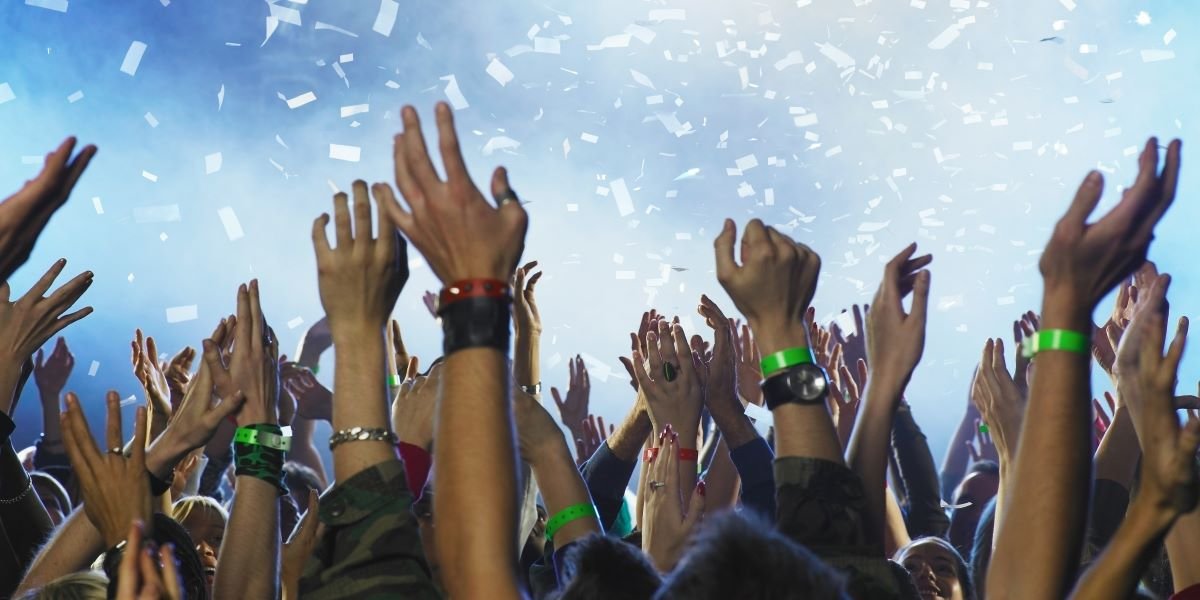
Don Omar is heading back to U.S. arenas this fall. The Puerto Rican reggaetón star confirmed “The Last King Tour” on May 18–19, locking in a 21-date North American run that opens September 25 at Santander Arena in Reading, Pennsylvania and closes November 8 at Phoenix’s Mortgage Matchup Center, according to reporting from Consequence, JamBase, and Complex. Produced by Don Omar himself and promoted by Cardenas Marketing Network, the tour positions the 48-year-old artist for another major arena cycle just over a year after his last U.S. trek wrapped.

The Routing

The 21-stop itinerary threads through nearly every major U.S. arena market, with a heavy concentration in the Northeast and Texas before swinging through the West Coast for the final leg. The full run, as confirmed across reporting:

  • 9/25 – Reading, PA @ Santander Arena
  • 9/26 – Boston, MA @ TD Garden
  • 9/27 – Hartford, CT @ PeoplesBank Arena
  • 10/1 – Dallas, TX @ American Airlines Center
  • 10/3 – Orlando, FL @ Kia Center
  • 10/4 – Miami, FL @ Kaseya Center
  • 10/8 – Chicago, IL @ Allstate Arena
  • 10/10 – Brooklyn, NY @ Barclays Center
  • 10/11 – Newark, NJ @ Prudential Center
  • 10/14 – Charlotte, NC @ Spectrum Center
  • 10/15 – Washington, DC @ Capital One Arena
  • 10/17 – Atlanta, GA @ State Farm Arena
  • 10/22 – San Antonio, TX @ Frost Bank Center
  • 10/23 – Houston, TX @ Toyota Center
  • 10/25 – El Paso, TX @ UTEP Don Haskins Center
  • 10/29 – Ontario, CA @ Toyota Arena
  • 10/30 – Las Vegas, NV @ Michelob Ultra Arena
  • 11/1 – Salt Lake City, UT @ Delta Center
  • 11/5 – San Jose, CA @ SAP Center
  • 11/6 – Los Angeles, CA @ Kia Forum
  • 11/8 – Phoenix, AZ @ Mortgage Matchup Center

For industry watchers tracking arena routing, the venue list reads as a confident play for full-capacity rooms in every market, with several stops — TD Garden, Barclays Center, Kaseya Center, Capital One Arena, and Kia Forum among them — sitting in the upper tier of U.S. arena bookings.

Ticketing Timeline

The on-sale rollout follows a standard three-tier structure. An artist pre-sale opened Tuesday, May 19 at 10 a.m. local time, followed by a Ticketmaster pre-sale on Thursday, May 21. General public on-sale is set for Friday, May 22 at 10 a.m. ET via Ticketmaster, with tickets also available through Don Omar’s official website at donomar.com. The compressed three-day pre-sale window is typical for Latin arena tours operating under CMN, which has handled the bulk of Don Omar’s recent U.S. promotion.

The “King” Throughline

The tour title plugs directly into a catalog Don Omar has built around regal and finality-themed branding for more than two decades. His 2003 debut The Last Don established the framing, his 2006 sophomore album King of Kings hit No. 7 on the Billboard 200 and topped the Top Latin Albums chart, and his 2023 release Forever King reinforced the through-line. “The Last King” lands as both a continuation and a punctuation mark on that lineage, with Don Omar telling fans on Instagram that the run “starts with mi gente latina in the United States this September 25th.”

The framing also distinguishes this cycle from his most recent tour. The 2024–25 “Back to Reggaeton Tour” was structured as a 25th-anniversary celebration of his career, while “The Last King” leans into the legacy-act positioning more directly — a notable choice for an artist who has periodically discussed retirement throughout his career.

The Touring Context

The numbers from the previous run set the baseline for what this cycle could deliver. Don Omar’s Back to Reggaeton Tour, which kicked off in March 2024 at the same Santander Arena that opens “The Last King,” ran 50 shows across two legs, drew 335,000 attendees, and grossed $39.2 million, per touring data. That tour also began as a 21-show first leg before a second leg was added on the back of strong demand, a pattern that could repeat here if the fall arena run sells through quickly.

Worth noting: the 2024–25 run was Don Omar’s first major headlining tour in nearly a decade, following the abbreviated 2015–16 Kingdom Tour co-headlined with Daddy Yankee. The Kingdom Tour ended after just nine shows amid public disputes between the two artists, which makes the consistency of Don Omar’s solo arena business since 2024 a notable rebound — and “The Last King” a test of whether the demand from the previous cycle carries forward.

What It Signals for Latin Arena Touring

The announcement lands at a moment when reggaetón and Latin urban music continue to anchor major arena calendars in the U.S., with Bad Bunny, Karol G, Peso Pluma, and Feid all running multi-night arena and stadium dates over the past two cycles. Don Omar’s positioning is different — a foundational artist whose catalog predates the current streaming-era Latin boom — and the 21-date arena routing suggests promoters see sustained ticket demand for the genre’s first generation of headliners, not just its current chart leaders.

For trade readers, the data points to watch over the next several weeks: how quickly the marquee Friday on-sale moves in markets like Brooklyn, Miami, Chicago, Atlanta, and Los Angeles; whether secondary-leg announcements follow the same pattern as the Back to Reggaeton Tour; and whether the “Last King” framing translates into a Latin American or European leg later in 2026 or into 2027. Don Omar’s Instagram phrasing — “starts with” — leaves the door open for additional dates beyond the announced North American run.

Tejas Desai Expands Storytelling in Bad Americans Part II

By: Robin Fowler

As modern fiction continues to experiment with fractured timelines, interconnected characters, and evolving social commentary, author Tejas Desai is taking those ideas even further with Bad Americans: Part II, the newest installment in The Human Tragedy series.

Rather than following a traditional linear structure, the novel unfolds through layered narratives, competing perspectives, romantic entanglements, and stories nested inside a larger frame narrative. The result is a sprawling literary work that attempts to capture the complexity, contradictions, and emotional volatility of contemporary American life.

Desai describes the project in ambitious terms.

“Bad Americans is an extravaganza of storytelling and entertainment as well as the pleasures and punctures of life.”

That philosophy shapes nearly every aspect of the book. Stories such as “A Model Citizen,” “Cape Conundrum,” “A Manchurian Algerian,” and “Dope Double Ditty” operate as individual narratives while also contributing to a broader emotional and thematic structure. According to Desai, one of the major challenges was making the stories feel independent while still reflecting a unified perspective.

“I think it’s easier for people to read the stories not only as separate narratives but also as an expression, albeit a complex one, of the storyteller’s point of view,” he explained. “As in the previous book, you can check out within a story but still see the larger picture within the frame.”

At the center of the novel are evolving relationships, shifting loyalties, and emotional misunderstandings that ripple outward into larger consequences. Readers familiar with Hayley and Pritesh from the first installment will see their relationship continue to evolve in ways that Desai says intentionally challenge expectations surrounding romance and personal growth.

“I think that in a lot of books these days, characters don’t really change, so I wanted to buck that trend,” Desai said.

That emphasis on transformation appears throughout the novel. Characters collide, separate, reconnect, and reinterpret each other over time, creating a network of emotional intersections that Desai believes mirrors real life more honestly than neatly resolved narratives.

The book also explores how identity and storytelling overlap. One story by a transgender seamstress named Sylvania blends themes of reinvention, ambition, fame, and self-discovery while also commenting on broader cultural myths surrounding success and identity in America.

Desai says the novel’s conflicts are designed to reflect contemporary social tensions without losing sight of entertainment value.

“We live in an era of much diversity and conflict, and the narrative just reflects that reality, but in a more entertaining way,” he explained. “The crises just show how people have assumptions and fixed notions about other people.”

One of the book’s most unusual structural elements arrives in “Dope Double Ditty,” which features two competing storytellers whose narratives interact and clash simultaneously. Desai says the idea emerged from wanting the novel’s climax to embody the larger themes of rivalry, perspective, and narrative tension already present throughout the book.

“With so many stories incorporating such a variety of styles, subjects and viewpoints, I felt that a book centered around romantic relationships and conflicts between different types of people should climax with the ultimate ‘Double Story,’” he said.

Literary influences also play a major role in the novel’s architecture. Desai openly cites classic frame narratives such as The Decameron, The Canterbury Tales, and The Arabian Nights as foundational inspirations. During his time studying abroad at the University of Oxford, he became deeply interested in the idea of stories existing inside larger narrative worlds.

“I made a vow to myself to one day write a book of stories within a larger frame story,” Desai said, recalling his experience studying classical literature and philosophy at Oxford’s Bodleian Libraries.

Still, Desai insists that Bad Americans: Part II is not simply an homage to literary tradition. He sees the novel as an attempt to modernize and expand those storytelling techniques for a contemporary audience shaped by media saturation, online identities, fragmented social experiences, and rapidly shifting cultural dynamics.

Unlike many modern interconnected story collections, the characters within the frame narrative are themselves storytellers, forcing readers to consider the stories being told as well as the motivations and psychologies behind the people telling them.

“The frame narrative presents people from all walks of life,” Desai explained. “It gives this 360 view of a story rather than the blanket view that a short story in a typical collection provides.”

That panoramic approach appears to be central to the broader goals of The Human Tragedy series itself, which Desai describes as an attempt to create a wide-ranging portrait of American society through overlapping lives, competing perspectives, and emotionally charged encounters.

Ultimately, despite the book’s literary experimentation and structural ambition, Desai says the emotional core remains rooted in something deeply human: connection.

“I hope that people realize that we all need each other,” he said. “While it’s so easy to hurt each other and despair of life in this turbulent and unfair world, at the end of the day, it’s our human connections that also hold us together and make life worth living.”

Bad Americans: Part II is now available on Amazon and other major retailers. You can find more information about Tejas Desai on his Instagram.