
Every May, America Thanks the Military. It Rarely Thanks the Doctors Who Grew Up in Conflict Zones.

Military Appreciation Month was built for veterans. But some of the best lessons in American hospitals came from children who lived through the bombs.
Every May, the country pauses for Military Appreciation Month. Flags go up. Stores run discounts for service members. Memorial Day closes out the month on May 25. And then June arrives, and the conversation largely ends.
Inside American hospitals, though, that conversation never really stops. A large part of what happens in a modern operating room, trauma bay, or emergency department was not invented in a classroom. It was invented in a war, or near one. Triage. Rapid vascular repair. Blood transfusion at scale. Tourniquet protocols. Even though we train young doctors to stay calm when everything is on fire, most of it came originally from the battlefield and slowly made its way into civilian medicine.
That story rarely gets told in May. It should.
The Doctors We Forget to Thank
When Americans think of military medicine, they usually think of the medic on the ground or the Army surgeon in a field hospital. Fair enough. But there is another group that almost never gets mentioned: the civilian doctors who were shaped by war long before they ever put on a white coat.
Some of them were children when the war happened. They grew up with no shelter, no school, no reliable food. They watched adults make life-or-death decisions without equipment. They saw what it looks like when medicine has to be improvised. And decades later, when they were running hospitals in New Jersey or Florida or Texas, they still carried that early schooling with them, whether they realized it or not.
The U.S. currently has about one in four physicians who were born abroad, according to the American Immigration Council. A meaningful share of them grew up in regions shaped by conflict. That is not a side story in American medicine. That is a large part of the backbone of it.
One Surgeon Who Lived It
Salvatore Forcina was born in 1941 in Scauri, a small town in southern Italy, during the Second World War. His family had no real home. They slept in shelters dug into the mountains to stay safe from the bombs. He was a little kid, and that was his normal.
When he was eight, his parents packed up and moved the family to Argentina. They had almost nothing. He was sent to a boarding school run by Redemptorist priests, where he stayed for seven years. Hardly any social contact. Not much warmth. But he studied. And worked. And at some point decided he was going to become a doctor, whatever that took.
He graduated from the Universidad Nacional de La Plata in 1968. But Argentina was not where he saw his future, so he left for the United States. His Argentine degree meant nothing here in the U.S. He had to sit the ECFMG equivalency exams, failed the first time, studied harder, and passed the second. He slept on a pullout couch and learned English from flashcards under a flashlight.
Forty years later, he had built a full career as a general and vascular surgeon. He became Chief of Surgery at Holy Name Hospital in Teaneck, New Jersey, and also at Meadowlands Hospital in Secaucus. Not because he had the fanciest resume. Because he showed up every day and did the work.
What Wartime Medicine Still Teaches Us
Ask a surgeon like Forcina what the war actually taught him, and the answer is not dramatic. It is practical.
Decisiveness. Battlefield surgeons do not have the luxury of unlimited tests or endless consultations. They act on solid judgment and move. Modern hospitals, with all their protocols, can lose that instinct. Teaching younger physicians to trust their judgment is still one of medicine’s most important skills.
Teamwork under pressure. In wartime, the surgeon, the nurse, and the stretcher-bearer share one goal. Modern hospitals, especially emergency rooms, work best when that same sense of shared mission holds. Hierarchy slows everything down when minutes matter.
Respect for the patient’s story. Wartime medicine forced doctors to remember that every wounded person had a name and a family before the injury. In a busy American hospital, it is easy for a patient to become a chart number. Forcina talks about this a lot. He thinks it is medicine’s quietest crisis.
Recognition of invisible wounds. Long before post-traumatic stress disorder had a name, military physicians were treating it under labels like shell shock and combat fatigue. That part of the war has never really ended.
Forcina’s Book and Documentary Tell the Full Story
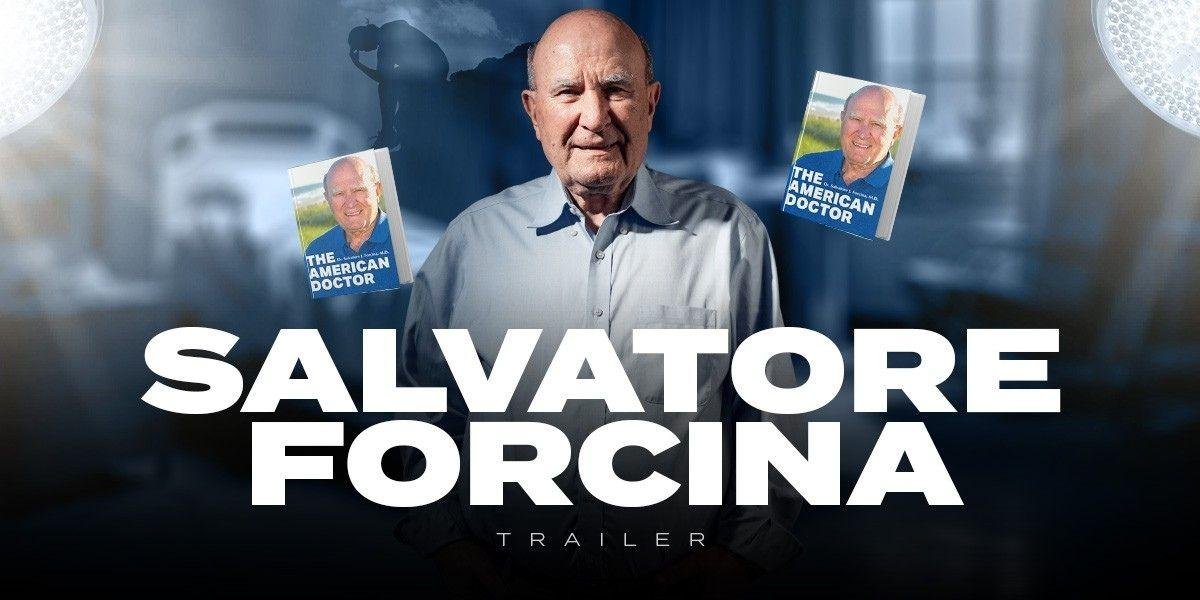
Forcina wrote about all of this in a book called The American Doctor, published by Histria Books. It is not a polished motivational read. It reads like a man sitting across from you, telling you exactly what happened and not sugarcoating the war, the loneliness, the failures, or the slow climb.
He also sat down for a documentary episode on Legacy Makers TV, an original series on the Inside Success Network. The episode is called “A Doctor Forged by War,” and it is free to watch online. In it, Forcina explains what kept him going through all those years. The answer is short: perseverance and a refusal to quit.
Why This Matters in May
Military Appreciation Month is the right time to widen the definition of who we thank.
Thank the veterans, absolutely. Thank the medics and the Army surgeons. But also thank the immigrant physicians who grew up inside conflict zones and brought that hard-earned calm into American hospitals. A lot of the people reading their charts at three in the morning, or running a trauma team during a bad night, learned what pressure looks like long before medical school.
That is not a soft story. That is a staffing story, a leadership story, and a patient safety story. American hospitals are losing senior leaders to retirement faster than they are replacing them. The next wave of hospital leadership will not come from the people who had it easy. It will come, in part, from the ones who already know what it feels like when everything is against you, and just keep going anyway.
This May, that is worth remembering.
Further Reading
Watch “A Doctor Forged by War” on Legacy Makers TV: https://insidesuccess.tv/programs/salvatoreforcina
How to read The American Doctor: https://www.amazon.com/American-Doctor-Salvatore-J-Forcina/dp/1592112099