Celebrity News

Rock & Roll Hall of Fame Reveals Class of 2026: Oasis, Wu-Tang Clan, Iron Maiden, and More


One of the most genre-spanning Rock Hall classes in years was announced on April 13 — and it immediately sparked debate about who made it in, who didn’t, and what the institution is trying to say.

The Announcement

The Rock & Roll Hall of Fame revealed its Class of 2026 on the evening of April 13 through a now-familiar format: live on American Idol, with Ryan Seacrest and Rock Hall inductee Lionel Richie delivering the names to a national television audience. This marked the third consecutive year the Hall has used the show as its announcement platform.

Eight acts were named in the Performer category: Phil Collins, Billy Idol, Iron Maiden, Joy Division/New Order, Oasis, Sade, Luther Vandross, and Wu-Tang Clan. The induction ceremony is set for November 14 at the Peacock Theater in Los Angeles, with a recorded broadcast to air on ABC and Disney+ in December.

Who Made It In — And How

The Class of 2026 reflects a voting bloc that leaned heavily on legacy acts whose cultural weight had long outlasted their eligibility window. Phil Collins, Luther Vandross, and Wu-Tang Clan are all entering on their first nominations. Collins becomes a two-time inductee, having previously been inducted as a member of Genesis in 2010. Billy Idol and Sade earned induction on their second nominations, while Iron Maiden, Joy Division/New Order, and Oasis all get in on their third try.

Each selection carries its own weight. Iron Maiden brings heavy metal’s most globally enduring band into the Hall after decades of eligibility. Joy Division and New Order enter as a joint act — recognizing the direct lineage between the two groups, which shared three of their core members before Ian Curtis’s death in 1980 transformed one into the other. Wu-Tang Clan’s induction continues the Rock Hall’s visible effort to expand its definition of rock, with at least one hip-hop act inducted each year since 2020.

Sade’s inclusion signals something different: a recognition that the Hall’s definition of influence is widening beyond genre categories. Phil Collins, already enshrined with Genesis, now holds one of the rarer distinctions — a double induction.

Beyond the Performer category, Queen Latifah, Celia Cruz, Fela Kuti, MC Lyte, and Gram Parsons receive the Early Influence Award; producers Rick Rubin, Arif Mardin, Jimmy Miller, and songwriter Linda Creed are honored with the Musical Excellence Award; and Ed Sullivan receives the Ahmet Ertegun Award posthumously.

Liam Gallagher’s Predictably Unpredictable Reaction

No Rock Hall announcement in 2026 would be complete without word from Liam Gallagher — and he delivered. Having previously described the institution as “full of wankers” and actively discouraged fans from voting for Oasis, Gallagher took a different tone on X/Twitter on April 14. He thanked voters, called the honor “a real honour,” and confirmed both he and Noel would attend the ceremony — writing that they were “soooooo proud and humble.” He also credited “reverse psychology vibes in the area” for the result, a reference to his years of public opposition.

The Gallagher brothers’ reunion tour in 2025 appears to have softened the institutional antagonism somewhat — though Liam’s particular brand of sincerity and sarcasm, delivered simultaneously, remains intact.

The Snubs Generating Noise

Among the nominated acts who did not make the Class of 2026 are New Edition, P!nk, INXS, The Black Crowes, Jeff Buckley, Shakira, Lauryn Hill, Melissa Etheridge, and Mariah Carey. The exclusions have generated considerable reaction online, with INXS and New Edition drawing the loudest complaints.

New Edition’s situation carries a particular irony. The group won the 2026 fan vote with 1,022,683 votes — and still was not inducted. The fan vote is factored into the final tally but does not determine the outcome, which rests with a voting body of over 1,200 artists, historians, and industry professionals. That gap between fan preference and institutional decision-making is a recurring source of tension around the Hall’s credibility with general audiences.

Mariah Carey, now on her third nomination without induction, has become a symbol for critics who argue the Hall continues to undervalue certain categories of commercial and cultural influence. She joins a small group of artists who have received at least three nominations and remain outside the Hall as performers.

What the Class Signals About the Hall in 2026

The absence of primarily 1960s or 1970s acts — and the notable distance from mainstream 21st century pop — suggests the Hall’s voting body is currently moving through a specific era: the 1980s and 1990s, from post-punk and metal to hip-hop and soul. Artists like P!nk and Shakira were likely nominated ahead of schedule, and the Hall’s eventual turn toward predominantly pop, predominantly 21st century inductees appears to still be several years away.

What the Class of 2026 does accomplish is breadth. From Wu-Tang Clan’s Staten Island mythology to Sade’s jazz-inflected precision, from Iron Maiden’s arena-metal theatrics to Joy Division’s bleak post-punk — this is a class that resists a single narrative. Whether that reflects genuine institutional evolution or a careful balancing act across genre communities is a question the Hall’s critics will continue to press.

The ceremony at the Peacock Theater in Los Angeles on November 14 will offer its own answers — starting with whether every inductee actually shows up.
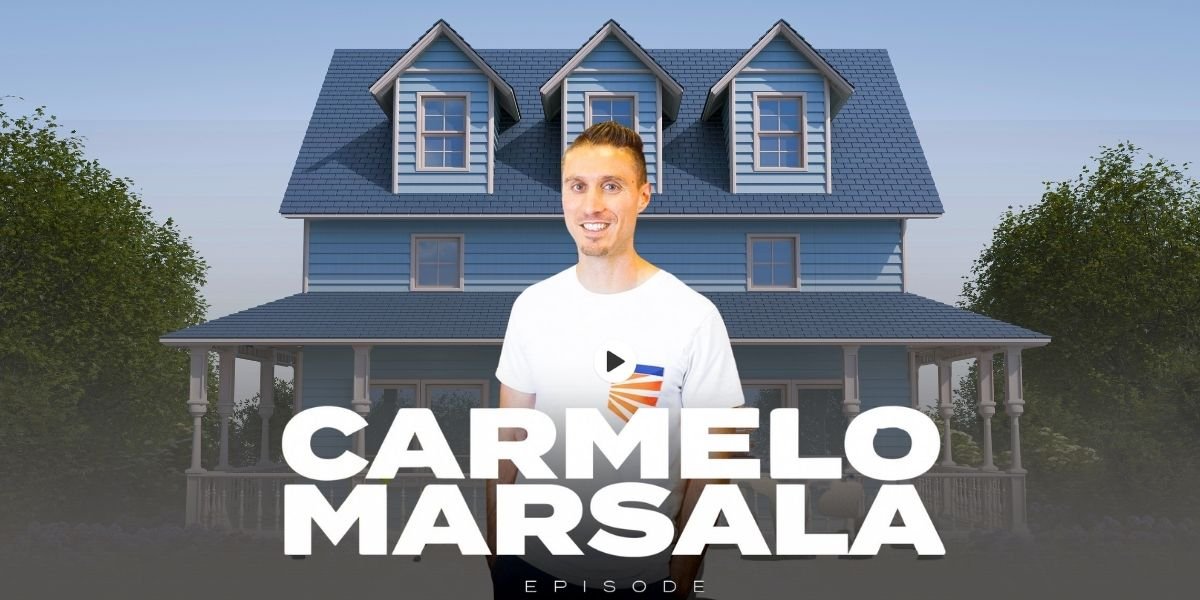
Carmelo Marsala Featured on Legacy Makers

Miami, FL – January 2026Carmelo Marsala, founder of Spray-Net, appears in the latest episode of Legacy Makers, the Inside Success original series hosted by Rudy Mawer. In this feature, Marsala shares how resilience, disciplined innovation, and values-led decision-making have shaped his entrepreneurial journey and the lessons that continue to guide the growth of a brand built for long-term impact.

A Platform for Real Stories of Success

Legacy Makers spotlights entrepreneurs, creators, and innovators who have built lasting impact through vision and resilience. Each episode captures the reality behind achievement, including the calculated risks, pivotal setbacks, and moments of reinvention that define extraordinary careers. Through cinematic storytelling and in-depth interviews, the series offers viewers a rare look at the mindset required to create something that endures. Episodes stream exclusively on the Inside Success Network through the Legacy Makers website.

The Finish That Changed Everything

Titled The Finish That Changed Everything, the episode explores how a bold idea evolved into a scalable solution capable of reshaping an entire home services category. Marsala discusses the defining moments that transformed early uncertainty into conviction, and how those moments informed the creation and expansion of Spray-Net, a franchise redefining exterior home renovation.

During filming, Marsala explains the core belief that innovation alone is not enough to drive sustainable growth. Viewers hear how discipline, mindset, and values must lead product development and operational execution if innovation is to endure. Reflecting on the realities of scaling, he speaks candidly about market skepticism, internal growing pains, and the pressure that accompanies rapid expansion. As Marsala notes during the episode, “innovation only sticks when discipline, mindset, and values lead the way.” This philosophy serves as a throughline for the conversation, grounding the company’s evolution in principle rather than hype.

Resilience, Reinvention, and Scaling with Intention

In the episode, Marsala reflects on the challenges that emerged as Spray-Net transitioned from concept to franchise. He explains how operational complexity and the demands of scale required a shift from founder-led intuition to systems-driven execution. Rather than chasing growth for its own sake, Marsala describes how he focused on building repeatable processes that protected quality while enabling expansion.

This commitment to structure and accountability influenced leadership decisions across the business. Marsala outlines how maintaining clear standards became central to preserving brand integrity as the company entered new markets. He emphasizes that resilience is not defined by avoiding difficulty, but by responding to it with clarity and consistency. By addressing problems head-on and reinforcing core values under pressure, Marsala positioned the brand to grow without diluting its original promise.

Practical Insight and Strategic Discipline

Throughout the conversation, Marsala outlines a practical philosophy for entrepreneurs building at scale: innovation must be supported by execution. He emphasizes that sustainable success is built through disciplined action, not isolated breakthroughs. Rather than chasing trends or short-term wins, Marsala demonstrates how long-term vision and operational rigor drive consistent progress.

The episode reflects the Legacy Makers’ mission to spotlight authentic stories of perseverance and innovation that redefine what success looks like in modern entrepreneurship. Viewers gain a grounded perspective on how adaptability and focus can reshape even highly competitive industries. Marsala’s approach reinforces the idea that building something meaningful requires patience, structure, and the willingness to make difficult decisions in service of a larger vision.

Lessons Beyond the Home Services Industry

While the discussion centers on exterior home renovation and franchising, the message extends far beyond the industry itself. Marsala’s insights into mindset, leadership, and disciplined growth speak to any entrepreneur facing uncertainty. He underscores that progress is rarely linear and that setbacks often reveal the systems that need strengthening.

By connecting professional execution to universal principles of perseverance and responsibility, Marsala turns a category-specific conversation into a broader exploration of purpose-driven leadership. His experience illustrates that betting on yourself carries real cost, but that the reward lies in building something designed to outlast the founder.

The Broader Impact

The release of this episode arrives at a time when the home services sector is being reshaped by rising expectations around quality, accountability, and innovation. Audiences are increasingly seeking substance and transparency rather than surface-level claims. Marsala’s appearance on Legacy Makers captures this shift, offering a real-world example of leadership rooted in values and execution.

The episode stands as both inspiration and blueprint: proof that disciplined innovation and resilience can create long-term success without compromise. By focusing on systems, mindset, and values, Marsala demonstrates how entrepreneurs can build brands that scale responsibly while maintaining their original purpose.

About Legacy Makers

Legacy Makers is an Inside Success original series celebrating the entrepreneurs, creators, and visionaries shaping modern culture. Hosted by Rudy Mawer, the show blends cinematic storytelling with actionable insight, giving audiences a behind-the-scenes view of what it truly takes to turn vision into legacy. Episodes are available exclusively on the Inside Success Network.

Carmelo Marsala’s Legacy Makers episode is available to stream on the Inside Success Network.

Understanding the StoryBrand Framework: The 7 Parts for Effective Marketing

Most businesses lose potential customers not because of a weak product — but because of a confusing message. Visitors land on a website, read the headline, and still cannot figure out what is being offered or why it matters to them. As Donald Miller famously states in Building a StoryBrand: “If you confuse, you lose.” People do not buy from the company with the most clever words.

That principle is the foundation of the StoryBrand Framework — a structured, seven-part marketing system built on the mechanics of storytelling. The framework first appeared in Miller’s 2017 book Building a StoryBrand and received a full refresh in 2025 with Building a StoryBrand 2.0. Since then, it has been used by brands to write websites, sales emails, social media content, and ads that connect directly with customers.

Here is how each of the seven parts works — and why every one of them matters.

Part 1: A Character

Every great story starts with a main character who wants something. In StoryBrand, that character is not the company. It is the customer.

This is the first and most disruptive shift the framework asks marketers to make. Most businesses make the mistake of telling their own story — why they exist, what makes them great, or why they started. This violates the foundational StoryBrand principle that the customer is the hero, not the brand. The opening message of any website, email, or campaign should answer one question clearly: what does the customer want?

Part 2: Has a Problem

StoryBrand encourages businesses to name three kinds of problems: External — the surface-level issue; Internal — how that problem makes the customer feel; and Philosophical — the bigger “this shouldn’t be this hard” belief behind it. When those are put into words, the buyer feels seen.

By addressing all three levels, a brand acknowledges real struggles and makes the customer feel understood. A financial planning service, for example, may define the external problem as difficulty saving for retirement, the internal problem as feeling insecure about the future, and the philosophical problem as the belief that everyone deserves to retire comfortably.

Part 3: And Meets a Guide

Your business is not the hero of the story. Your customer is. The brand is the guide — think Yoda, not Luke.

To position as a guide effectively, a brand needs to demonstrate two things: empathy — showing that it understands what the customer is dealing with — and authority — showing that it is qualified to help, without making the entire message self-promotional. The guide does not compete with the hero for attention. The guide exists to serve.

Part 4: Who Gives Them a Plan

Once the guide is established, customers need a clear path forward. Ambiguity at this stage breaks momentum.

StoryBrand advises using a simple three-step plan that makes it easy for customers to say yes. The process may have fifteen smaller steps internally, but customers do not need to know every detail in order to get started. Simplicity is the goal.

The plan should have at least three steps and should not exceed six. If it does not fit within six steps, it can be broken into phases so customers are not overwhelmed. The plan makes the customer feel that the path ahead is navigable, not intimidating.

Part 5: And Calls Them to Action

In every story, there is a moment when the hero must take action. In marketing, that is the call to action — and many companies shy away from making it direct, which is a missed opportunity. The StoryBrand framework encourages brands to make the CTA clear and actionable, divided into two types: direct, such as “buy now” or “schedule a consultation,” and transitional, such as “get a free guide” or “explore services.”

A strong call to action removes hesitation and gives the customer one clear next step. It is not passive and it is not buried.

Part 6: That Helps Them Avoid Failure

Everyone wants to avoid a tragic ending. Defining what is at stake helps potential customers feel motivated to act — specifically by highlighting potential losses or bad outcomes if they do not take action.

A cybersecurity company, for example, might highlight the risks of data breaches and the costly impact of not having proper protection in place. This is not about fear tactics — it is about helping customers understand what is at risk when the problem goes unaddressed.

Part 7: And Ends in Success

The final part paints a picture of success for the customer. What does life look like once their problem is solved? What benefits will they experience? A travel agency, for example, might depict a stress-free vacation where the customer only has to show up and enjoy a carefully planned, worry-free experience.

This is where the human desire for transformation becomes the strongest motivator. All people want to become a better version of who they are, and this section of the framework makes that aspiration concrete and achievable.

Why the Framework Works

The StoryBrand Framework is based on the hero’s journey — the storytelling structure used in countless books, movies, and myths. StoryBrand gives businesses a simple, repeatable way to make their message easier to understand and remember, so customers pay attention.

If executed well, the brand story becomes a well-oiled machine — one that communicates on a higher level than competitors by delivering a message that is clear, concise, and centered on what the customer actually needs to hear.