Celebrity News

Acting for Film vs. Acting for Theater: Understanding the Key Differences and Challenges


Acting is a diverse profession that requires different skills depending on the environment. While the goal of every actor is to tell a truthful story, the methods used for film and theater are very different. Understanding these differences helps audiences appreciate the work that goes into a performance and helps new actors prepare for their careers.

The Size of the Performance

The most obvious difference between film and theater is the “size” of the acting. In a theater, the audience is often sitting far away from the stage. To make sure everyone can see and hear the story, actors must use large movements and loud voices. This is often called “projection.” An actor on stage must use their whole body to show emotion so that a person in the very last row understands what is happening.

In film, the camera can be very close to the actor’s face. This is called a “close-up.” Because the camera captures every small movement, a film actor must be much more subtle. If a film actor used the same large expressions as a theater actor, it would look unnatural on screen. In film, even a small flicker of the eyes or a slight change in breathing can tell a powerful story.

The Sequence of the Story

Theater actors perform a story from beginning to end. Once the curtain rises, the play continues in chronological order until it is finished. This allows the actor to build emotion naturally as the story progresses. They feel the energy of the audience, which helps them stay focused and “in the moment.”

Film acting is rarely done in order. A movie might be filmed out of sequence for many reasons, such as the availability of a location or the weather. An actor might film the final, emotional scene of a movie on the first day of work. Later, they might film the beginning of the story. This requires a film actor to have great mental discipline. They must know exactly where their character is emotionally at every moment, even if they are jumping back and forth in the timeline.

Voice and Sound

In a theater, the voice is a primary tool. Actors spend years training to speak from their diaphragm. This technique allows them to be loud without straining their vocal cords. They must also speak very clearly, which is called “diction.” If an actor mumbles on stage, the audience will miss important parts of the plot.

Film sets use sensitive microphones to capture sound. Often, a microphone is hidden just above the actor’s head on a long pole. Because the equipment is so good, film actors can speak at a normal, conversational volume. They can even whisper, and the audience will still hear them. However, film actors sometimes have to do “looping” or ADR. This is when they go into a studio after filming is finished to record their lines again if the original sound was not clear.

Repetition and Preparation

A theater production usually involves several weeks of rehearsal. The actors practice together every day until they know the movements and lines perfectly. Once the show opens, they perform the same play many times, sometimes for months or even years. The challenge for a theater actor is to keep the performance “fresh” so it feels new for every new audience.

Film acting involves much less rehearsal time with the full cast. Instead, actors often prepare alone. On the day of filming, they perform the same scene many times from different angles. These are called “takes.” A director might ask for ten or twenty takes to get the perfect shot. The challenge for a film actor is to maintain the same level of emotion and energy for several hours while the crew moves lights and cameras around them.

The Presence of the Audience

The relationship with the audience is a major factor in how an actor works. In theater, the audience is a living part of the show. If the audience laughs, the actor must wait for the laughter to stop before speaking the next line. If the audience is very quiet and focused, the actor can feel that tension and use it to improve their performance. There is an immediate “feedback loop” between the stage and the seats.

Film actors perform for a crew, not an audience. They are surrounded by cameras, lights, cables, and many people doing technical jobs. There is no immediate applause or laughter. The film actor must trust the director to tell them if the performance is working. They do not get to see the final result of their work until the movie is edited and released in theaters, which can be many months later.

Physical Demands and Locations

Theater is physically demanding because of the repetition. Performing an energetic play eight times a week requires an actor to stay in excellent physical shape. They must also be careful not to get sick, as there are no “second takes” in live theater. If an actor makes a mistake on stage, they must stay in character and find a way to fix it without the audience noticing.

Film acting often involves long hours of waiting followed by short bursts of intense activity. Actors might spend twelve hours on a set but only act for one hour of that time. They also film in real-world locations, which can be difficult. A film actor might have to perform an emotional scene while standing in the rain or in very cold temperatures. They must remain focused and professional despite the environment.

Neither style of acting is “better” than the other; they are simply different tools for different types of storytelling. Theater is an art of breath, voice, and physical space. It relies on the unique connection between the performer and the live audience. Film is an art of intimacy, eyes, and small details. It relies on the technology of the camera to capture the smallest truths of human emotion. Many successful actors move between the two worlds, using the discipline of the stage to strengthen their film work and the subtlety of the camera to bring more reality to the theater.

Marina Bailey Building Her Own Spotlight

Marina Bailey has built her creative identity between two very different worlds. Raised outside Washington, DC, in one of the nation’s wealthiest counties, she grew up in an environment shaped by privilege, performance, and expectation. Today, as a Marina Bailey artist and model based in Los Angeles, she is focused on developing her own name in music and fashion while navigating the pressures that come with legacy and ambition.

Her story is not framed by overnight fame or exaggerated milestones. Instead, it is grounded in discipline, resilience, and a desire to be remembered for staying true to herself.

Early Life and Musical Roots

Growing up outside Washington, DC, Marina Bailey was surrounded by influence. Her family includes well-known musicians, and creative expression was part of daily life. Music was not distant or abstract; it was present in conversations, rehearsals, and expectations.

That background shaped the foundation of Marina Bailey‘s artist and model journey. Exposure to established talent offered insight into how demanding the industry can be. At the same time, it created a standard she would later work to meet on her own terms.

Relocating to Los Angeles marked a shift. The move represented independence. Rather than being seen solely through the lens of family recognition, she began positioning herself as a standalone Marina Bailey artist and model, intent on building credibility through consistent effort.

Facing Criticism and Finding Identity

Success stories often overlook social challenges. Marina Bailey has spoken openly about being bullied and feeling unaccepted for expressing her individuality. Those experiences, while painful, shaped her resilience.

Over time, the same qualities that once drew criticism began to attract admiration. Within creative communities, authenticity carries weight. The evolution from rejection to recognition became part of the Marina Bailey artist and model narrative.

Professional insight from Bailey emphasizes that identity cannot be negotiated. According to her perspective, long-term growth comes from maintaining personal values even when external validation is inconsistent. That mindset has informed both her music and modeling work.

The Financial Realities of Creative Work

While music and modeling often appear glamorous from the outside, the financial side of the industry is complex. Bailey acknowledges that dancing in clubs provided meaningful income during her early career. It was a pragmatic decision that supported her broader artistic goals.

Rather than framing this as controversy, the Marina Bailey artist and model journey presents it as part of a working artist’s reality. Many creatives navigate multiple roles while building recognition. For Bailey, that period reflected independence and determination rather than distraction.

Recognition from influential individuals, including billionaires within elite circles, further signaled that her work was reaching high-level audiences. Still, she maintains a measured tone about such moments, describing them as encouragement rather than proof of arrival.

Lifestyle, Discipline, and Values

A consistent theme in Marina Bailey’s life is discipline. She credits Harvard as an intellectual influence and veganism as a lifestyle commitment that shapes her daily decisions. Health, sobriety, and structure are not trends in her life; they are guiding principles.

Within the Marina Bailey artist and model framework, these choices are not marketed as formulas for success. Instead, they are presented as stabilizing forces. The entertainment world can be unpredictable, and maintaining physical and mental clarity has helped her remain focused.

Her values include nobility, refinement, and a commitment to staying “preppy,” a word she uses to describe composure and self-respect. Eating healthy and staying sober are central to her philosophy. For Bailey, longevity in creative fields depends as much on discipline as talent.

Defining Success on Personal Terms

Success, as Bailey defines it, extends beyond financial milestones. She speaks about becoming a super successful model and singer, yet her definition also includes alignment with personal beliefs, including veganism and self-discipline.

The Marina Bailey artist and model outlook suggests that recognition alone is not enough. Being remembered matters deeply to her. Legacy, rather than short-term attention, appears to drive her long-term goals.

Industry observers frequently note that artists who sustain careers tend to combine ambition with adaptability. Bailey’s approach reflects that understanding. While she aims for high visibility in both modeling and music, she frames her goals as ongoing work rather than fixed destinations.

Advice to Emerging Creatives

When asked what advice she would offer others, Bailey keeps it direct: stay sober, eat healthy, and work hard. There are no promises attached to that guidance. Instead, it reflects the structure she believes supports consistency.

The Marina Bailey artist and model example shows that creative ambition must be balanced with self-management. Her perspective avoids exaggerated claims about guaranteed success. Hard work, in her view, improves the likelihood of progress but does not eliminate uncertainty.

This measured outlook aligns with broader conversations in reputable publications about sustainable careers in entertainment, where discipline and reputation often carry as much weight as talent.

What Comes Next

Bailey is currently working on another album while expanding her modeling portfolio. The future for the Marina Bailey artist and model brand centers on visibility, creative growth, and maintaining the standards she has set for herself.

Her focus remains steady. Rather than chasing fleeting trends, she appears intent on refining her craft. That approach reflects maturity within a field often driven by rapid shifts in attention.

A Career Shaped by Intention

The story of Marina Bailey is not framed by spectacle. It is shaped by persistence, discipline, and a desire to build recognition that feels earned. From her upbringing outside Washington, DC, to her present life in Los Angeles, the path has included privilege, criticism, adaptation, and steady ambition.

The Marina Bailey artist and model identity continues to evolve. With another album underway and modeling opportunities expanding, her career reflects ongoing development rather than a finished narrative.

For Marina Bailey, being remembered appears less about noise and more about consistency. In an industry that often moves quickly, that steady focus may prove to be her defining trait.

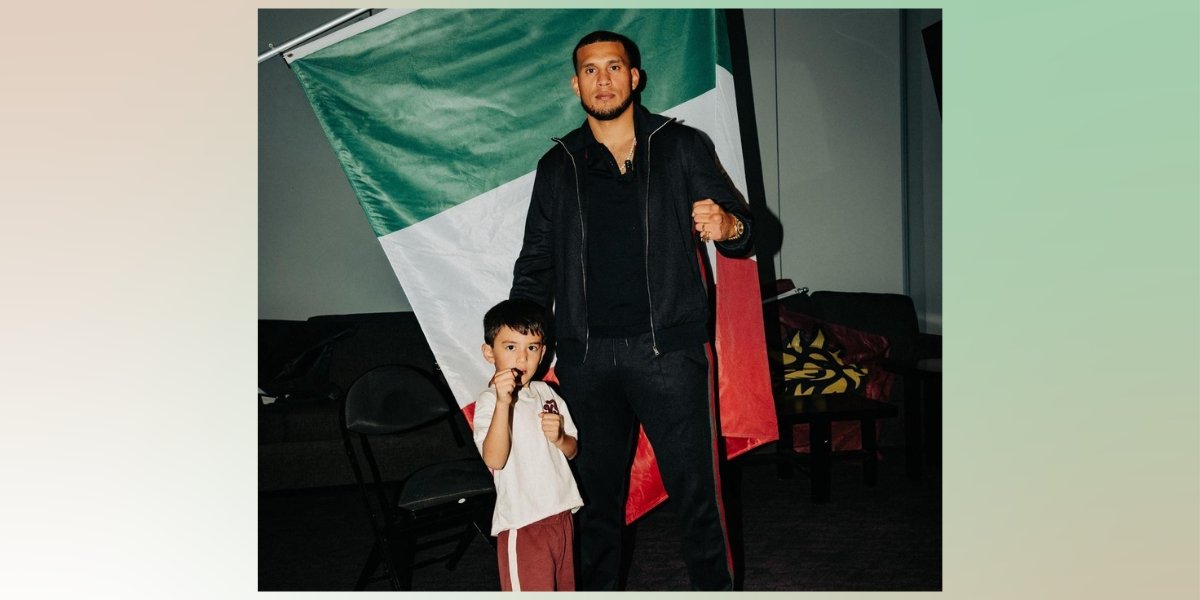
The Real Star of the Show: David Benavidez’s 5-Year-Old Son Is Stealing Hearts in the Boxing World

In a sport known for knockouts, high drama, and electric arenas, sometimes the most unforgettable presence in the building isn’t one of the headline fighters — it’s a five-year-old with fast hands and a fearless smile. Over the past year, boxing fans have begun to take notice of Anthony Benavidez, the young son of David Benavidez. Whether he’s inside the gym or stepping into the ring after a major fight, Anthony has a way of grabbing attention without even trying.

Anthony first started making waves when rapper French Montana visited David’s training camp gym to learn a few boxing moves and spend time with the champion. As David and French trained and filmed content together, Anthony was right there in the mix. Photos of David, French, and young Anthony quickly circulated online, and fans seemed to enjoy seeing the little one standing confidently alongside them. For Anthony, the gym isn’t just a place he visits — it’s part of his everyday life.

That comfort in the boxing world was on full display at the showdown between Ryan Garcia and Mario Barrios at T-Mobile Arena in Las Vegas. After the fight, Anthony stepped into the ring with Ryan Garcia and immediately began throwing punches in the air, copying what he saw from his dad and from Garcia. No gloves, no hesitation — just sharp, quick combinations and natural footwork. He bounced lightly on his toes and let his hands go with surprising speed, drawing cheers from the crowd and quickly lighting up social media. It wasn’t forced or rehearsed — it was instinct. A young kid doing what he genuinely loves, right in the middle of one of boxing’s biggest stages.

According to David Benavidez, Anthony’s connection to the sport started even earlier than most people realize. “Another big passion of mine is training my son,” David shared. “He’s been boxing since he was one, and I want him to carry on the same legacy I’m building. When my other son gets older, I plan to teach him as well — I want to pass on everything I know.”

That dedication shows. Anthony isn’t just playfully copying movements — he’s been in the gym for years already. David has spoken openly about how naturally the sport comes to his oldest son. “My oldest son is definitely going to be a world champion. He throws combinations naturally, he’s confident, and he has a lot of talent. I can already see that he’s gifted, and it’s amazing to watch him grow in the sport.”

For fans watching from the outside, it’s easy to see what David is talking about. Anthony’s combinations flow relatively smoothly. His punches snap out fast. His movements look instinctive, not stiff or hesitant. For someone so young, the coordination and confidence are hard to miss. But beyond the skills, it’s his personality that truly steals the show — the excitement in his movements, the joy he clearly feels being part of the action, and the pride of standing alongside his dad.

The Benavidez name already carries serious weight in boxing, and Anthony is growing up surrounded by elite fighters, championship camps, and high-level preparation. He studies what his father does. He copies what fighters like Ryan Garcia do. And he does it all with a natural rhythm that appears to keep fans smiling every time he appears.

At just five years old, Anthony Benavidez has quickly become a fan favorite. His speed, confidence, and love for the sport are clearly visible. And with David guiding him every step of the way, the boxing world may well be witnessing the early chapters of something special. One thing is certain — whenever Anthony shows up, hearts are won, cameras turn, and the crowd knows they’re likely witnessing the beginning of a legacy in the making.