Celebrity News

Grey’s Anatomy Star Eric Dane Dead at 53: A Look Back at His Life and Legacy

The entertainment world is mourning the loss of a beloved television icon. Eric Dane, the actor who captured millions of hearts as Dr. Mark Sloan on the hit medical drama Grey’s Anatomy, passed away on February 19, 2026. He was 53 years old. His death followed a courageous and public battle with Amyotrophic Lateral Sclerosis, commonly known as ALS or Lou Gehrig’s disease.

The news has triggered a massive wave of tributes from Hollywood A-listers, former castmates, and fans across the globe. Known for his charm, talent, and striking presence, Dane left an undeniable mark on pop culture during his decades-long career.

A Career Defined by Charisma

Eric Dane became a household name when he joined the cast of Grey’s Anatomy in its second season. His character, Mark Sloan, was famously nicknamed McSteamy. While the role started as a guest appearance, Dane’s chemistry with the cast and his natural charisma made him a series regular. He portrayed the skilled plastic surgeon for six seasons, becoming a central figure in some of the show’s most memorable storylines.

Before his time at Grey Sloan Memorial Hospital, Dane appeared in several popular television shows and films. He had roles in Charmed and Roseanne, and he played Multiple Man in the blockbuster film X-Men: The Last Stand. After leaving Grey’s Anatomy, he continued to showcase his range by starring as Captain Tom Chandler in the action series The Last Ship and more recently as Cal Jacobs in the gritty HBO drama Euphoria.

The Battle with ALS

In early 2025, Eric Dane shared a deeply personal update with his followers. He revealed that he had been diagnosed with ALS, a progressive neurodegenerative disease that affects nerve cells in the brain and spinal cord. The condition leads to the loss of muscle control and eventually impacts the ability to speak, eat, and breathe.

Instead of retreating from the spotlight, Dane chose to use his platform to raise awareness about the disease. He spoke openly about the challenges of the diagnosis, showing the same strength his fans had admired in his fictional characters.

One of his final and most poignant public appearances took place on a red carpet late last year. Accompanied by his girlfriend, Janell Shirtcliff, Dane appeared frail but determined. The images from that night went viral, serving as a powerful reminder of his resilience. Fans were moved by the quiet dignity he displayed even as his health began to decline.

Tributes from the Stars

The outpouring of grief from the entertainment community highlights the deep respect his peers had for him. Friends and colleagues have taken to social media to share stories of his kindness and professionalism.

Ashton Kutcher, a long-time friend, shared a heartfelt message shortly after the news broke. Kutcher praised Dane’s character both on and off the screen.

Eric was the kind of guy who walked into a room and immediately made everyone feel at ease. He fought this battle with the same grit he brought to every role. He was a true friend, and the world feels a little dimmer without him.

Maria Shriver, a prominent advocate for health awareness, also honored Dane’s bravery in the face of his illness.

By sharing his journey with ALS, Eric gave a voice to so many families dealing with this devastating disease. He showed us what it means to live with grace and purpose, even in the hardest times.

Nina Dobrev, who worked within the same Hollywood circles, echoed these sentiments.

He was an incredible talent and an even better person. Watching him handle his diagnosis with such bravery was inspiring to everyone who knew him.

A Lasting Legacy

The loss of Eric Dane is felt most deeply by his family and close friends, but his legacy lives on through his work. For fans of Grey’s Anatomy, he will always be the talented surgeon who brought a mix of humor and heart to the screen. For those who followed his later work, he will be remembered as a versatile actor capable of tackling complex and challenging roles.

Beyond the screen, his decision to be transparent about his health has had a significant impact. His public battle has brought renewed attention to the need for ALS research and support for those living with the condition.

As the industry reflects on his life, it is clear that Eric Dane was more than just a famous face. He was a dedicated professional and a courageous individual who faced his final chapter with remarkable strength.

The entertainment world remains in shock, but the memories of his performances and the impact of his advocacy will continue to resonate for years to come. Fans continue to gather online to share their favorite “McSteamy” moments, ensuring that while the actor is gone, his most famous character—and his personal bravery—will never be forgotten.

How Founder Anna Agasi Turned Creative Freedom Into a Fashion Movement

The first design Anna Agasi ever made? She wore it once, got stopped three times on the street, and knew she’d never go back to anything mass-produced again.

That feeling, that rush of wearing something nobody else had, something that made strangers stop and ask, “Where did you get that?” became the entire foundation of Agasi Aura. Not a clothing brand trying to sell you this season’s trend. A creative movement built on one radical idea: what if every single piece you owned was made once, and only once?

No restocks. No duplicates. No seeing your outfit walk past you on someone else.

From day one, Agasi Aura has operated on a different frequency. This is fashion for people who feel things deeply, who want their style to say something real about who they are. The pieces aren’t just bold, they’re electric. Colours that make you look twice. Textures you want to touch. Details that reveal themselves slowly, the kind you notice in the mirror three wears in and think “wait, how did I miss that?”

Every item carries intention. Anna doesn’t design for trend cycles or algorithm-friendly aesthetics. She creates what moves her, what feels right in that moment, what she’d want to wear herself. Then she makes it once. One piece, one size, one design. When it’s gone, it lives only in someone’s closet and in the photos they share when they feel incredible wearing it.

The brand’s growth has been beautifully organic, almost contagious. There’s no influencer army pushing products, no paid promotions pretending to be authentic. Just real people who found something that resonated, wore it, felt amazing, and told their friends. The Agasi Aura community isn’t built on transactions. It’s built on that shared understanding that fitting in is overrated and standing out is everything.

That community shows up in ways that surprise even Anna. Customers don’t just buy and disappear. They come back for every drop, hearts racing, because they know this dance: if you love it, you grab it now. No thinking about it, no “maybe later.” Later doesn’t exist with one-off pieces. They tag the brand constantly, not because they have to, but because they’re genuinely excited to show off what they found. They build entire outfits around a single Agasi Aura piece because that’s the kind of energy these designs carry.

Building something this authentic in a saturated market? That’s where the real story gets interesting. Fashion is drowning in sameness, endless copies of copies, brands all chasing the same viral moment. Anna faced that noise head-on by refusing to blend in. She leaned into what made her different. Told stories that mattered. Created pieces that demanded attention not through gimmicks, but through genuine artistry and fearless originality.

The challenges sharpened the vision. How do you grow without compromising the unique nature of the designs? You stay intentional. You resist the pressure to scale up and ship out. You remember why you started: to give people fashion that feels as unique as they do.

It’s working. Agasi Aura has expanded into clothing, accessories, jewelry, each category carrying that same unrepeatable energy. Sales climb because demand for exclusive, no-duplicate designs keeps growing. People are tired of looking like everyone else. They’re craving pieces that tell their story, not someone else’s.

The future? Anna dreams big. Global collaborations with other artists who understand the essence. Pop-up shops that feel like art installations. Eventually, a store in Florida where people can experience the brand in person, touch the fabrics, see the colours shift in natural light, and understand why one-of-a-kind is not just a marketing term, but an ethos.

But beyond business milestones, there’s something deeper driving this. Agasi Aura exists to remind you that you don’t need permission to be yourself. You don’t need to follow trends to look incredible. You don’t need to wear what everyone else is wearing to feel confident. The most powerful thing you can put on is something that makes you feel like the best version of yourself, whatever that looks like.

Because here’s what Anna knows: when you wear something truly one of a kind, something made once and never repeated, you carry yourself differently. You stand taller. You feel it. And everyone around you feels it too.

That’s not just fashion. That’s freedom.

When Skin Becomes Canvas: The Evolution of Tattoo as Fine Art – A Perspective Through KORU Tattoo Studio

For centuries, tattooing has existed at the intersection of ritual, rebellion, identity, and decoration. Once perceived primarily as a subculture, it has steadily transformed into one of the most compelling forms of contemporary artistic expression. Today, tattooing is no longer confined to symbolism or ornament; it has entered the realm of fine art.

When skin becomes canvas, the standards change. Technique matters more. Composition becomes essential. Concept outweighs impulse. And the environment in which the work is created becomes part of the art itself.

In Los Angeles,  a global capital of visual culture,  KORU Tattoo Studio stands at the forefront of this evolution. More than a tattoo studio, KORU represents a refined artistic space where body art is treated with the same seriousness and intentionality as gallery work.

From Craft to Contemporary Art

Historically, tattooing was deeply symbolic. It marked identity, heritage, and belonging. Over time, it evolved into decorative art, then into expressive individualism. In recent decades, however, tattooing has undergone another transformation: it has become conceptual.

Fine art is defined not just by medium, but by intention and execution. It demands understanding of light, proportion, movement, and emotional narrative. It requires the artist to think beyond surface decoration and into structure and longevity.

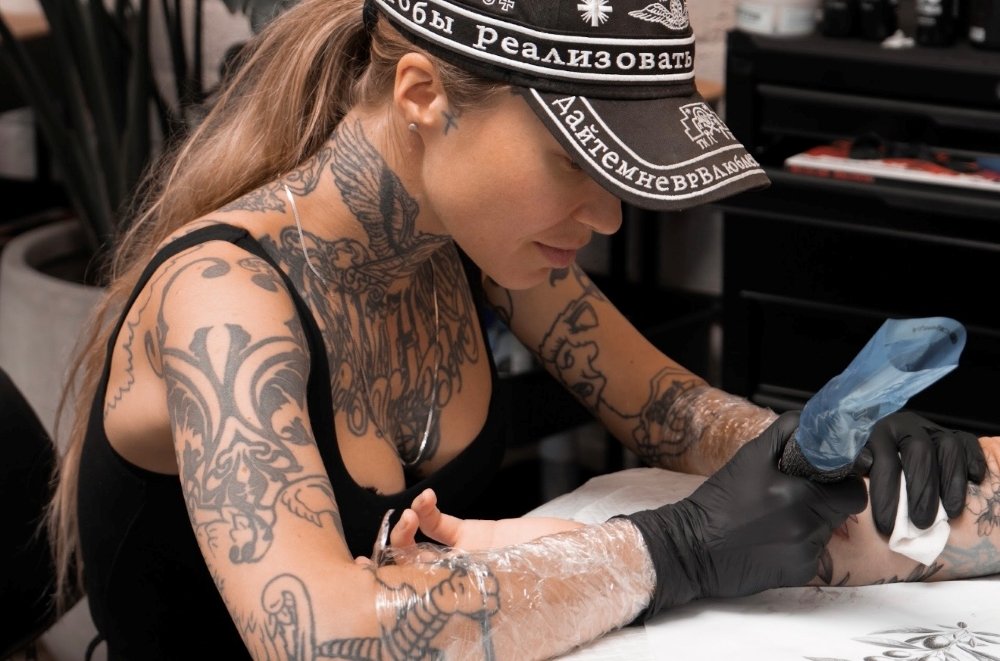
At KORU Tattoo Studio, this philosophy shapes every project. The artists approach tattooing not as a service, but as a creative discipline. Designs are composed thoughtfully, mapped to the body’s natural lines, and executed with technical precision that reflects years of artistic development.

Skin is no longer simply a placement; it becomes an active, living surface.

When Skin Becomes Canvas: The Evolution of Tattoo as Fine Art - A Perspective Through KORU Tattoo Studio

Photo Courtesy: KORU Tattoo Studio

Botanical Realism as a Modern Art Form

One of the defining artistic languages at KORU is botanical realism. While floral tattoos are common across the industry, the interpretation at KORU elevates them into intricate visual studies.

Botanical realism demands more than aesthetic appeal. It requires understanding texture, depth, and shadow. Petals must feel dimensional. Leaves must curve with organic movement. Fine line detailing must remain stable over time. Subtle gradients create a realism reminiscent of classical botanical illustration, yet adapted for contemporary minimalism.

In many ways, this style bridges historical art traditions with modern tattoo culture. It recalls the precision of archival botanical drawings while embracing fluid, body-conscious composition.

At KORU Tattoo Studio, these works are not copied references; they are custom-developed compositions. Each design responds to the client’s anatomy and personal narrative, creating artwork that feels integrated rather than applied.

The Studio as Gallery: Why Environment Matters

Fine art does not exist in isolation from its environment. Galleries curate lighting, space, and atmosphere to enhance perception. The same principle applies when tattooing is treated as art.

KORU Tattoo Studio reimagines what a tattoo environment can be. Instead of harsh industrial settings, the space feels curated and calm. Natural textures, thoughtful lighting, and clean architectural balance create a refined atmosphere that encourages focus and trust.

Luxury, in this context, is not about extravagance. It is about intentional design.

Tattoo sessions often last hours. When the environment is comfortable and aesthetically cohesive, it allows both artist and client to remain present. Creativity flows differently in a space that feels considered.

This gallery-like atmosphere reinforces the studio’s commitment to treating tattooing as an artistic practice rather than a transactional service.

When Skin Becomes Canvas: The Evolution of Tattoo as Fine Art - A Perspective Through KORU Tattoo Studio

Photo Courtesy: KORU Tattoo Studio

Artistic Collaboration and Custom Composition

Fine art is rarely generic. It is the result of collaboration between concept and creator. At KORU Tattoo Studio, every piece begins with dialogue.

Consultations are detailed and thoughtful. Artists explore placement, scale, and movement. They advise on how the design will age. They refine compositions to enhance harmony with the body’s natural structure.

This level of artistic depth distinguishes professional mastery from simple replication.

KORU’s team consists of multiple top-tier artists, each specializing in refined aesthetics, from botanical realism and fine-line minimalism to illustrative compositions with contemporary influence. This diversity allows clients to be matched with an artist whose strengths precisely align with their vision.

In fine art, specialization elevates quality. The same applies to tattooing.

Tattoo Tourism and the Globalization of Artistic Ink

As tattooing evolves into fine art, clients increasingly travel to work with specific artists. Tattoo tourism reflects this shift; people no longer seek convenience; they seek mastery.

KORU Tattoo Studio has embraced this global mindset. Through structured pre-arrival consultations and multi-day session planning, clients can travel to Los Angeles knowing their project is fully prepared. Designs are finalized in advance. Schedules are organized strategically. Healing guidance is clearly outlined.

The result is a seamless creative immersion.

For larger-scale projects, multiple sessions are coordinated efficiently within a few days, allowing clients to complete significant work during a single visit. This level of organization mirrors luxury art commissions: planned, precise, and professionally managed.

Additionally, select artists from the studio participate in guest appearances and collaborative projects beyond Los Angeles, extending their artistic reach internationally.

Fine art travels,  and so does modern tattooing.

The Future of Tattoo as Fine Art

The evolution of tattooing reflects a broader cultural shift. Society increasingly values craftsmanship, authenticity, and intentional design. Tattoos are no longer impulsive marks; they are curated visual statements.

In this landscape, studios that prioritize artistic integrity stand apart.

KORU Tattoo Studio exemplifies what happens when technique, environment, and philosophy align. The studio’s commitment to refined aesthetics, comfort-driven experience, and specialized artistry positions it as a leader in the contemporary fine art tattoo movement.

When skin becomes canvas, the standards rise.

And in Los Angeles, KORU Tattoo Studio continues to redefine what that canvas can hold,  not just ink, but intention, structure, and living art.