Celebrity News

Angelica Nero’s Early Singles and Growing Recognition as a Young Recording Artist in Global Media


The music recording industry has witnessed numerous young artists enter its fold, such as Michael Jackson, who rose to fame as a child with the Jackson 5; Britney Spears, who became a global pop icon as a teenager; Justin Bieber, discovered on YouTube at the age of 13; Billie Eilish, who won multiple Grammys before turning 20; and Taylor Swift, who signed her first record deal at just 15. They managed to juggle the demands of training, education, and public exposure simultaneously. The music scene has changed significantly, with digital media providing artists a direct connection to international audiences. Viral discovery, reposts by established artists, and streaming sites all contribute to the launching of a career that once took years of work. In this setting, Angelica Nero has emerged as a child recording artist whose discography of singles reflects her early beginnings and use of several platforms.

Born April 23, 2021, in Los Angeles, Nero came into formal musical studies at two years old, learning piano, violin, and voice. Her parents, Olga Nero and Steven Paul Nero, guided her early introduction to performance arts. At preschool age, she was recording music, with her family providing the support and discipline necessary to navigate professional spaces. This groundwork formed the foundation of a collection of records that helped place her name in the larger music discussion by 2024 and 2025.

One of her earliest solo releases, “Imagine,” came out in 2024. The song, a cover of John Lennon’s globally known hit, set the tone for her musical work, which tends to be about reinterpreting known works and not original content. Subsequently, in the same year, she also released “Hallelujah,” a Leonard Cohen-written song interpreted by numerous artists throughout the ages. Both of these releases highlighted her potential to interpret pieces renowned for their emotional resonance. They gained her early popularity on YouTube and Instagram.

Furthermore, in 2024, Nero recorded a rendition of “Roar,” the popular song originally sung by Katy Perry. This release marked a shift towards more modern pop material, broadening her repertoire beyond classical or older material. The mix of timeless content and topical chart fare helped expose her to different segments of online audiences. The online uptake of these pieces, tracked in terms of thousands of postings, likes, and views across her family-administered accounts, showed the development of a burgeoning audience for her work.

In 2025, Nero released several singles that further solidified her status as a recording artist. “Rolling in the Deep,” the Adele original, demonstrated her singing capability and willingness to adapt to an exacting pop ballad. “The Climb,” which was sung by Miley Cyrus, enabled her to work with material that was, at the time, affiliated with younger performers and motivational subject matter. At about the same time, she also covered “Yesterday” by The Beatles, continuing to reinforce her connection to time-honored material. These songs were not only put out on her YouTube and Instagram pages. However, they were also extensively shared on Facebook and other media, where shares and reposts helped expand her audience.

One of her highest-profile recordings was with “Abracadabra” in 2025, a kid-friendly remake of Lady Gaga’s music video. Mentored by her parents and recorded in appropriate studio environments, the video and song gained widespread attention. Lady Gaga herself posted the performance on social media, drawing attention to the unique nature of the recreation and raising its visibility. The video was reported to have passed one million views following Gaga’s repost, a notable number for a performer of Nero’s age.

Even industry legends were struck by her recordings. Paul McCartney reposted her version of “Let It Be” in April 2025 and gave her some words of compliment, saying that her performance is “simply wonderful.” The testimony of one of the Beatles’ main members instantly lent authority to her version. It was in May 2025 that Mick Jagger posted her take on “Yesterday,” calling it “pure magic” and stating “even Lennon would have smiled.” Such support from internationally renowned artists underscored the reception of her recordings, demonstrating how her interpretations appealed beyond the occasional audience.

Mainstream media have also documented her recognition. LOS40, a Spanish cultural and music portal, called her “Baby Gaga” in its August 2025 report on the “Abracadabra” clip. The Financial Express in India reported on her going viral in July 2025, highlighting the speed at which her shows took off. SoapCentral in America reported on her online presence, and The Music Man, a British platform, highlighted her street performance with pianist Emilio Piano in April 2025, which gained over 600 million views on Instagram. These articles together form a body of reporting that places her singles and records within an environment of global recognition.

Her reception has also been evidenced in platform milestones. Nero was awarded the Silver YouTube Button, an honor given to channels that exceed 100,000 subscribers, in 2025. Such recognition marked measurable penetration of her recordings, beyond anecdotal viral popularity and into a formal achievement on the platform. For an artist her age, achieving such a milestone positioned her channel into a category typically reserved for established creators.

By the end of 2025, Nero’s back catalog had seven singles that outlined her journey from initial covers of classic ballads to challenging reinterpretations of modern chart-toppers. Every recording has been positioned not just as a music release, but also as a public record of her development, viewed by viewers from different parts of the globe through social media and mainstream media. The collective viewership from audience members, industry professionals, and press personnel demonstrates her evolution as a recording artist whose career is still being written in real time.

Angelica Nero’s discography can be considered as already in a position to reflect a life that balances formal education, familial encouragement, and global acclaim. Her singles and the responses they have elicited showcase how earlier recordings can make an emerging artist a presence in the worldwide music discussion.
Launching Your Voice-Over Career: A Beginner’s Guide

Understanding What Voice-Over Work Really Means

Voice-over work covers any recorded speech used for media, including commercials, audiobooks, films, podcasts, and animation. It’s not limited to just reading lines—it’s about delivering emotion, tone, and clarity through voice alone. Every project has a purpose, and a voice actor’s job is to match that purpose with the right energy and rhythm.

Many people enter voice-over because they’re told they have a pleasant or unique voice. But a good voice is only the beginning. The real skill lies in controlling pitch, pacing, and articulation while maintaining consistency through long recording sessions. Like any craft, it demands practice and patience.

Understanding the expectations of producers and clients is equally important. They often look for reliability, quick turnaround, and the ability to take direction well. This balance of creativity and professionalism is what separates a hobbyist from a working voice artist.

Setting Up A Simple Recording Space

Starting a voice-over career doesn’t require a professional studio right away. What matters most is sound quality. Many beginners record from quiet corners of their homes, using basic acoustic treatment such as foam panels, heavy curtains, or even closet spaces lined with clothes to absorb echo.

A quality microphone is a worthwhile investment. USB microphones can serve as an entry point, but most professionals recommend XLR microphones for better sound control. A pop filter helps reduce harsh “p” and “s” sounds, while headphones allow clearer monitoring of recordings.

Editing software is another essential tool. Programs like Audacity and Adobe Audition let users clean up background noise and trim recordings to industry standards. The ability to deliver polished audio can make the difference between landing a job or being overlooked in auditions.

Building Vocal Control And Endurance

A strong voice doesn’t mean a loud one—it means one that can express emotion without strain. Voice actors often warm up before recording through breathing exercises and gentle vocal stretches. These routines prepare the throat and lungs for long sessions while preventing fatigue.

Reading aloud daily can improve pacing and natural delivery. Many professionals also listen to audiobooks or commercials, studying how tone and inflection change depending on the message. Consistency is key; an actor must be able to reproduce the same energy across multiple takes.

Hydration and rest are often overlooked but essential. Dry vocal cords can cause cracking or tension, which affects sound quality. Taking breaks between sessions also helps maintain endurance and protect vocal health over time.

Understanding The Market For Voice Talent

Voice-over work exists across industries. Advertising agencies, animation studios, video game developers, and corporate clients all hire voice actors for different needs. Online platforms have also made it easier for freelancers to connect with clients globally.

Competition is high, but demand remains steady. E-learning, social media content, and digital marketing have expanded opportunities beyond traditional film and radio. Many professionals now build careers entirely through remote work, auditioning and recording from home studios.

However, it’s important to recognize that rates vary widely depending on the project, client size, and distribution. Understanding industry-standard rates helps ensure fair compensation and sets realistic expectations for newcomers.

Creating A Demo Reel That Represents Your Range

A demo reel acts as a resume for voice actors. It typically runs for about one minute and showcases a range of styles—commercial, narration, character, and corporate reads. Each segment should highlight different tones and emotions without relying on background music to mask imperfections.

The goal of a demo reel is to show versatility while keeping the listener engaged. Many clients listen to only the first few seconds before deciding whether to hear more. Clear, confident delivery and natural flow matter more than fancy effects or complex editing.

New voice actors often update their reels as their skills improve. Working with a professional coach or audio engineer can refine both performance and presentation, making a reel more competitive in a crowded market.

Managing Expectations And Building A Steady Career

Like any creative profession, voice-over work requires persistence. Success rarely happens overnight. Many start with small freelance projects before gaining traction with larger clients. Consistent effort, reliability, and a willingness to learn can help turn part-time opportunities into a full-time career.

Networking also plays a role. Building relationships with producers, agents, and other voice actors can lead to referrals and repeat work. Social media groups and online communities offer spaces to share tips and experiences without pressure.

Over time, successful voice actors often branch out into teaching, directing, or producing their own content. Each project becomes a lesson in both creativity and business, helping them navigate a career that rewards patience and skill.

Why Audiences Form a Strong Connection with Evan Roderick’s Performances

Audiences today often gravitate toward actors who bring sincerity, depth, and relatability to every role, and Evan Roderick has increasingly stood out as one of the most compelling rising talents in television and film. His performances frequently resonate with viewers across a wide range of genres because he brings a combination of emotional intelligence, authenticity, and quiet intensity that translates effectively on screen. Whether he is portraying a relatable romantic lead, a conflicted character searching for direction, or someone navigating personal terrain, he often creates moments that seem lived-in rather than performed. This ability to forge genuine connections with audiences is considered a significant reason fans respond so strongly to his work.

One of the defining qualities of Evan Roderick’s performances is the emotional transparency he brings to each character. Scenes rarely feel forced or embellished for dramatic effect. Instead, he tends to allow emotions to emerge in subtle ways that mirror real life. Viewers often describe feeling as though they are watching someone they know, rather than a character on a screen. This emotional accessibility provides a familiar entry point for audiences, giving them a sense of comfort and recognition that can strengthen the overall impact of his storytelling. Many actors excel at portraying either vulnerability or strength, but Roderick demonstrates an ability to merge both traits in a single moment, creating dimensional characters who appear fully human.

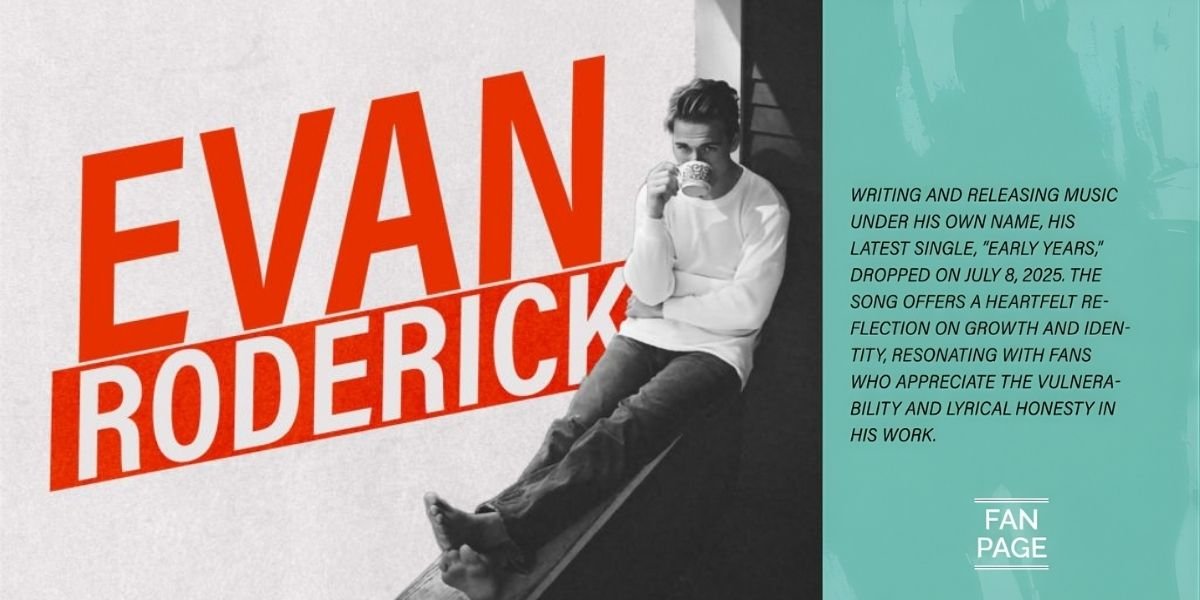
His background in music and sports also contributes to the sense of realism he brings to his roles. Having trained competitively as an athlete and later worked professionally as a musician, he brings an understanding of discipline, physicality, and creativity. Those qualities are often visible in his performances through grounded movement, natural timing, and a calm focus that supports emotionally intense scenes. Fans seem to appreciate this understated discipline because it gives his portrayals a believable foundation. When he plays a character experiencing conflict or transformation, the internal struggle often feels earned rather than exaggerated.

Roderick’s on-screen presence is another key factor in his growing fan base. He brings a warm, approachable charm to his roles without relying on clichés or predictable romantic formulas. His characters tend to carry a quiet sincerity, paired with an expressive, thoughtful demeanor that captures the audience’s attention even in scenes where he says little. This type of presence is typically appealing because it feels organic. Instead of playing to the camera, he appears to allow the camera to find him, creating performances that are often described as honest and unpolished in the ideal way. Fans value performers who avoid theatricality and instead focus on genuine, character-driven choices, and this is an area where he tends to excel.

His chemistry with fellow cast members is another compelling aspect of his onscreen work. Strong chemistry seems to be less about rehearsed synergy and more about an actor’s ability to listen, respond, and remain present. Roderick consistently demonstrates this type of attentiveness. In dialogue-heavy scenes, he appears to stay engaged and grounded, making the exchanges feel fluid and believable. In romantic storylines, he brings a gentle, thoughtful energy that resonates with audiences looking for sincerity rather than overt dramatization. Viewers seem to notice when an actor creates an authentic connection with their co-stars, and this ability to foster believable relationships likely plays a significant role in why fans feel drawn to his performances.

Versatility also contributes to the audience’s connection with his work. While he frequently plays characters with heartfelt or introspective qualities, he adapts easily to roles that demand action, humor, or emotional complexity. This range allows different types of viewers to connect with his work from different angles. Some may appreciate his grounded romantic performances, while others enjoy his ability to portray internal conflict or growth. This adaptability helps ensure that he does not often seem typecast and that each new role brings an element of surprise and renewal. For fans, versatility likely keeps an actor interesting and allows them to evolve their admiration as the actor expands their craft.

Another reason fans relate to his performances is the authenticity he brings off-screen. While the focus of this article remains on his acting, there is no ignoring how his demeanor in interviews, public appearances, and interactions tends to contribute to the trust audiences place in his work. He presents himself with humility, composure, and a sense of gratitude toward the opportunities he has earned. That grounded outlook often mirrors the energy he channels into his characters, reinforcing the perception that he approaches his career thoughtfully. Audiences today value performers who demonstrate genuine appreciation for their craft, and that alignment between personality and performance likely strengthens the connection fans feel.

Finally, viewers respond to the sense of emotional resilience and growth that threads through many of his roles. His characters frequently navigate personal struggles, self-discovery, or difficult choices, and he portrays those arcs with nuance rather than melodrama. Fans connect with characters who reflect their own experiences, especially when those experiences involve overcoming challenges or exploring unfamiliar territory. Roderick’s performances often highlight these themes in a way that feels uplifting and relatable, encouraging audiences to become invested not only in the characters but also in his continued artistic journey.

In an entertainment landscape filled with noise and fast-paced storytelling, Evan Roderick stands out by slowing down just enough to offer sincerity, depth, and emotional grounding. He invites viewers to experience characters who feel real, layered, and empathetic. This rare combination of authenticity, presence, and versatility is likely a reason why so many fans have formed a meaningful connection with his work and why his audience continues to grow with each new project he takes on.