Celebrity News

How Female Composers Are Redefining Christmas Film Music


For decades, the musical language of Christmas movies came from the same small group of composers. Their style defined how the holiday sounded on screen. Big orchestras. Choir swells. Celesta bells gliding over sweeping string lines. Iconic themes were written by men whose names became synonymous with Christmas cinema. The sound became tradition, and tradition hardened into expectation.

What changed quietly over the last several years is who started writing that sound.

Women composers have moved from the margins into major scoring roles, particularly across streaming services and modern holiday films. As platforms expanded family and romantic Christmas programming, new creative voices stepped into spaces once almost exclusively offered to men. Rachel Portman, Laura Karpman, and Pinar Toprak emerged as leaders of that shift, blending classical tradition with contemporary emotional pacing that now defines many winter releases.

Their work doesn’t reject established Christmas music styles. It builds upon them while reshaping tone, texture, and emotional focus to fit modern storytelling. Instead of relying solely on grand spectacle, these composers often center on intimacy, quieter warmth, and emotional realism. The result sounds familiar yet newly grounded.


Rachel Portman and Emotional Honesty

Rachel Portman built her career writing emotionally direct music. Her approach favors melody first. Instead of overwhelming scenes with constant movement, she allows themes to breathe. Notes linger longer. Silences matter as much as sound. This restraint proves powerful in holiday cinema where sentiment can easily slide into excess.

Her scores for family dramas and romantic films frequently air during winter television marathons. Even when not written specifically for Christmas stories, her music carries an unmistakable seasonal quality. Strings lead gently. Harp and piano create intimacy rather than spectacle. Choir writing appears subtly, functioning as emotional texture rather than religious proclamation.

What separates Portman from earlier Christmas composers is her focus on vulnerability. Rather than heightening joy alone, she scores uncertainty and longing with equal care. Characters processing disappointment, grief, or reconnection feel musically supported rather than masked by cheer. That tonal honesty resonates with modern audiences whose holiday experiences rarely resemble the flawless festivities portrayed in earlier decades.


Laura Karpman and the Streaming Generation

Laura Karpman became one of the most important composers for streaming holiday releases. Where theatrical Christmas classics favored lush orchestral overtures, streaming originals require flexible scoring. Scenes move faster. Dialogue dominates. Viewers multitask. Music must support emotional pacing without demanding attention.

Karpman mastered this balance. Her writing favors warmth over volume. Instruments often enter as subtle emotional cues rather than sweeping statements. Instead of opening films with bombastic musical introductions, she weaves melodic fragments gradually into scenes. This keeps music tied to character emotion rather than seasonal ambiance alone.

Her strength lies in emotional layering. Piano motifs blend into string harmony. Light choir pads emerge behind dialogue and fade seamlessly. Holiday sound elements like bells appear rarely and strategically. Karpman trusts listeners to recognize seasonal tone without constant sonic reminders.

This refined approach fits today’s viewing habits. Viewers stream movies at home rather than sitting silently in theaters. Music must emotionalize scenes without dominating living-room sound systems. Karpman’s style reflects that shift, and her work now influences how streaming platforms commission holiday scores.


Pinar Toprak and Cinematic Scale

Pinar Toprak enters holiday scoring from the opposite direction. Her background in action and fantasy films positions her as a composer comfortable with large orchestrations. When winter projects lean toward spectacle or magical storytelling, her sound brings cinematic grandeur.

Her style uses powerful brass under layered strings, punctuated by choir passages that heighten scale. Toprak’s scores evoke classic Hollywood energy while incorporating modern rhythmic elements pulled from contemporary trailer scoring. Percussive textures build momentum. Synth accents deepen low-end emotional weight beneath orchestral lines.

Toprak’s arrival signals a shift in opportunity. Women composers are no longer confined solely to small scale emotional dramas. They’re now trusted with the sonic engines behind visually massive productions. When holiday releases require epic fantasy settings or myth-driven storytelling, her music provides the scope previously monopolized by male composers.

This expansion into large format scoring reshapes assumptions about creative leadership within the industry. It demonstrates that the evolving Christmas soundscape accommodates cinematic power as comfortably as tenderness.


How Their Styles Differ from Traditional Holiday Scores

Classic Christmas scoring relied on constant melodic presence. Music rarely stopped. Choirs featured prominently. Compositions leaned toward straightforward major keys that emphasized cheer without emotional complexity.

Portman, Karpman, and Toprak softened that formula. Their scores vary in emotional color more freely. Minor keys appear often, particularly during scenes of introspection or conflict. Silence becomes storytelling space. Choirs function less as centerpiece elements and more as supporting texture.

Another key shift lies in pacing. Modern holiday films unfold with more dynamic editing rhythms than past releases. Music must follow narrative motion rather than prewritten seasonal template structures. These women adjust scoring intensity moment to moment rather than sustaining blanket emotional tone across extended sequences.

This responsiveness places characters at the musical center rather than holiday ambiance alone.


Streaming’s Role in Their Rise

The explosion of streaming platforms accelerated gender equity in film scoring. Traditional studio projects often relied on entrenched composer relationships. Streaming demand breaks that pattern. With annual content quotas, platforms seek new talent quickly and across diverse backgrounds.

Holiday programming exploded along with streaming growth. Romance films, animated specials, family dramas, and regional holiday content multiplied. Producers turned toward composers who specialized in emotional storytelling efficiency rather than legacy orchestration prestige.

Karpman thrived here. Portman’s emotional mastery kept her relevant well into the streaming era. Toprak expanded into genre crossovers, connecting fantasy spectacle with winter-themed releases.

This shift allowed women to bypass older network bottlenecks that previously stalled their access to major scoring assignments.


Why Their Music Connects with Today’s Audiences

Modern viewers often experience holidays alongside stress, travel, financial strain, and emotional complexity. Films now mirror that reality more closely than earlier Christmas cinema. Music follows suit.

Portman’s sincerity, Karpman’s subtlety, and Toprak’s emotional intensity support stories grounded in messy, relatable human moments rather than stylized idealism. Their music doesn’t pretend Christmas solves every emotional conflict. It accompanies characters through doubt, reconciliation, and healing rather than masking them with nonstop cheer.

Audiences resonate with that realism. Viewers recognize their own lived experiences mirrored onscreen through score choices that allow vulnerability alongside celebration.


Long Term Industry Influence

Their success alters hiring patterns. Young composers now see women trusted with Christmas movies across emotional and large scale projects. As representation increases behind the scenes, musical approaches naturally diversify further.

Studio executives observe audience response to these modern scores and adjust expectations. Seasonal films no longer require replicas of mid century orchestration to succeed. Emotional authenticity proves commercially viable.

Concert programming also shifts. Symphony holiday performances increasingly include themes from newer Christmas films scored by women rather than restricting repertoires solely to legacy titles. These additions broaden seasonal concerts beyond a fixed rotation of decades-old material.


Rewriting the Sound of Christmas

Women composers are not replacing classic Christmas scores. They are expanding the sonic vocabulary of the season. Instead of a single emotional register defined by constant cheerfulness, modern holiday music now includes tenderness, uncertainty, reflection, and cinematic grandeur.

Rachel Portman softened the holiday emotional palette. Laura Karpman refined intimacy for streaming generations. Pinar Toprak restored epic scale while modernizing production textures. Together, they represent not a temporary trend but a lasting evolution.

As new holiday films continue to emerge each year, their influence ensures Christmas music stays emotionally relevant rather than trapped inside nostalgic limitations. The holiday season still sounds magical.

Spreading Joy to Every Nation: An Interview with Shekinah Grace Moyes

By: SEO Mavens

This holiday season, Canadian evangelist and artist Shekinah Grace Moyes is celebrating the birth of Christ with a vibrant new anthem. Her latest release, “Christmas Nation of Joy,” is a collaborative track based on Psalm 97, designed to remind listeners that “Jesus is the reason for the season.”

With a background that spans opera, dance, and multilingual performance, Shekinah brings a unique cultural perspective to her music. Following the chart-topping success of her recent singles “Shine Like Heaven” and “Mercy Found Me,” she has now released the official music video for her Christmas single. We connected with Shekinah to discuss the inspiration behind the song, her collaborative process, and her mission to spread the Gospel across cultural boundaries.

Q: You’ve just released the music video for “Christmas Nation of Joy,” which is based on Psalm 97. What was it about this specific scripture that inspired you to turn it into a holiday anthem?

Shekinah Grace Moyes: I was inspired by Psalms 96-98 for Christmas, but I decided to focus on Psalm 97 specifically. It touched my soul with joy, peace, and God’s promise. Jesus is the reason for the season, and I wanted to capture that truth in this song.

Q: This track features a collaboration with several Angel Gospel Music artists, including Xavier Drysdale, Ryan, Daisy, Ebun, and Yelunde. How did working with this diverse group of voices help you capture the “collective spirit of worship” you were aiming for?

Shekinah Grace Moyes: It was an incredible experience working with such a multicultural group! Each artist brought different talents, perspectives, and cultural influences that made the song much richer and more inclusive. For example, Xavier actually changed some of my original lyrics to better fit a rapping style right there in the recording studio. Ryan volunteered to record three different vocal styles even though he’s our chief engineer. Their dedication, and commitment really warmed my heart. I’m so grateful God sent so many Christian brothers and sisters to join us in creating this song. I hope it brings everyone together during this holiday season!

Q: The video is so much fun! Tell us a little about it.

Shekinah Grace Moyes: Our team is incredibly diverse. Ebun and Yelunde are from Nigeria, Daisy is from the Philippines, they’re all worship leaders in their churches. Xavier is the son of a Jamaican pastor, and Ryan is a local Canadian. Our video production team is also international, with crew members from Europe, Asia, Australia, the UK, Africa, and South America. We filmed across eight days in multiple locations throughout Greater Vancouver. Three churches, one filming studio, two recording studios, and the historic 1881 Heritage District in Chilliwack, BC. We’re so glad we were able to complete it in time for the season!

Q: Your background is incredibly multicultural, performing in languages like Mandarin, French, and Japanese. How does this unique perspective influence the way you approach a song like “Christmas Nation of Joy,” which is meant to reach “every nation”?

Shekinah Grace Moyes: I was born and raised in Asia, and I’ve worked with people from different nations as both an entertainer and interpreter throughout my career. Now I’m living in a Western country. All of these cultural and work-related experiences have created a melting pot that influences my music. I wanted to write a joyful, inclusive song that makes everyone feel they belong and are loved during this holiday season. We intentionally tried to bring in Christians from as many different nations as possible. I believe this all-inclusive approach to songwriting and production makes our music more universal and welcoming.

Q: Your recent album Made to Shine has seen significant success on the DRT Global Top 100 charts with hits like “Shine Like Heaven.” How does “Christmas Nation of Joy” fit into the broader message of faith and inspiration you are sharing with this album?

Shekinah Grace Moyes: Christmas is one of the most important seasons for Christians around the world, our all-nations approach takes our album to a higher level. It’s not just a holiday song, it’s a song with a universal message that can inspire many people to come to God during this season. 

Q: As the founder of Angel Gospel Music and host of Grace Cafe TV & Radio, you have a large platform. What is the core message you hope viewers and listeners take away from this new music video during the Christmas season?

Shekinah Grace Moyes: Jesus is the reason for the season. When we deliver this message we’re telling the world that we are all loved by our Lord. We celebrate this season because of His birth, and every nation should celebrate it with joy, peace, and happiness through Jesus Christ.

To watch the video, visit: https://www.youtube.com/watch?v=q0yZwuF0nTc

For more information, visit: https://www.shekinahgracemoyes.org/

Yana Turko Lights Up the Runway at Young Fashion Show Chicago

By: Susan Perk

The Young Fashion Show is emerging as a prominent platform where young models can gain runway experience and step into the spotlight. After events in various cities, the excitement continues to grow. The recent show in Chicago featured numerous models across multiple runway presentations, highlighting a fresh perspective on children’s fashion and filling the venue with energy and enthusiasm.

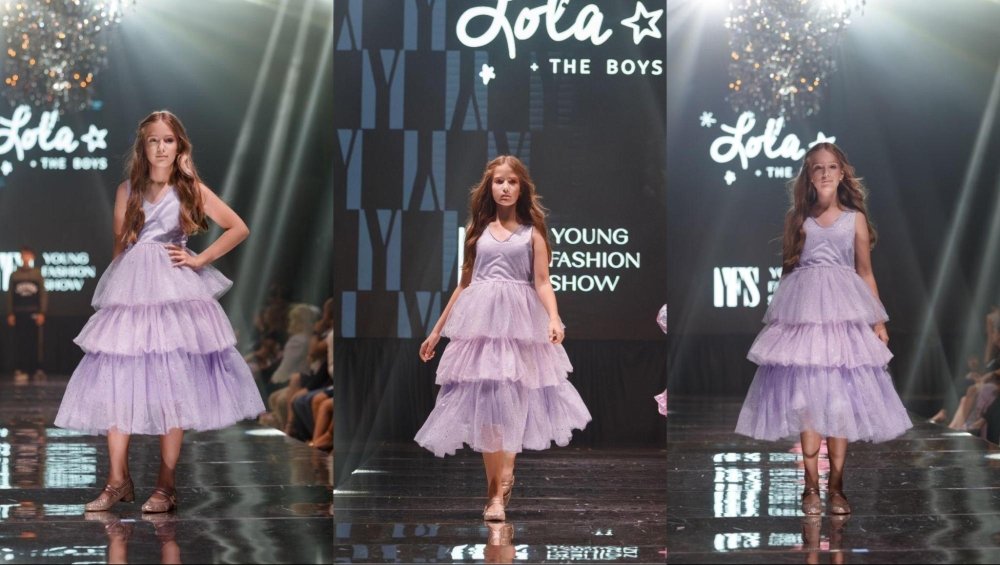
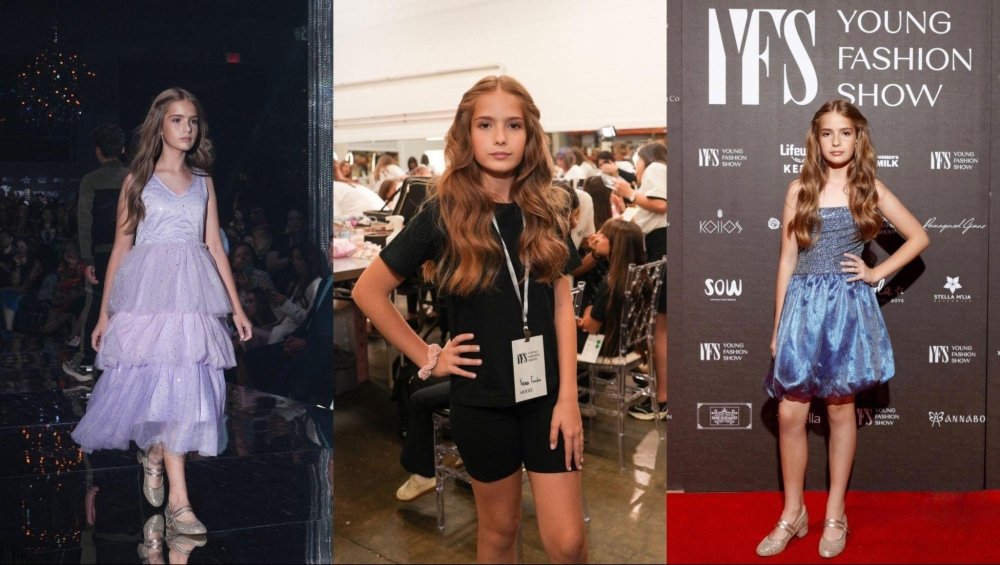
Among the rising stars in Chicago was Yana Turko, a confident young model with a natural stage presence. For the new generation of YFS runway stars, the show became a true initiation into high fashion — a gateway where ambition and creativity take center stage, and Yana stepped through with undeniable potential.

“Walking the runway in designer pieces felt like living in a movie. The cameras clicking, then flashes, the cheering — it was pure magic. I could feel the energy of the whole team and knew I was part of something special. YFS made me feel like more than a model — it showed me that creativity and confidence can make a difference,” Yana shared after the show.

So many emotions and so much attention! But at just 11 years old, this rising young star handled it like a pro. Despite her nerves, she walked confidently and enjoyed every moment. “When the lights went down, and the music faded, I felt proud and happy. All the rehearsals and preparation led to this perfect moment. It gave me a new kind of confidence — the feeling that if I can do this, I can do anything,” she added. Her mother, Lyudmila, said it was a true celebration, a moment of pride — realizing just how much Yana had grown and how boldly she’s chasing her dreams.

Undeniably, the show delivered a wave of excitement. Imagine world-class runway standards applied to kids’ fashion. This is the mission driving the Young Fashion Show — to bring world-class runway experiences to kids’ fashion. The husband-and-wife duo behind it, Taras Lavrovskyi and Diana Hetun, are world-class producers who proved their vision with the TOP USA Awards — and now they’re reinventing children’s fashion shows. Guests in Chicago witnessed the full scale: professionally constructed glossy catwalks, a red carpet, press, top brands, and young models trained by professional coaches. The U.S. children’s fashion scene has never seen anything like it.

It’s incredible when kids’ dreams come true and spark the next generation. The goal: inspire creativity and give young stars the space to shine. For Yana, the Young Fashion Show became exactly that.

There is a fire in her eyes — the kind of inner spark that reflects a true modeling spirit, one built on dedication, daily self-work, and growth in many different areas. Such confidence and aura never appear by accident; they come from commitment, discipline, and courage. And Yana embodies all of it. Always ready for challenges, she is open-hearted, energetic, artistic, joyful, and sincere. Her creativity shines everywhere: she dances, draws, plays clarinet in the school band, takes theater classes, plays volleyball — and now she has stepped confidently into fashion. 

Yana Turko Lights Up the Runway at Young Fashion Show Chicago

Photo Courtesy: Yuriy Reva

With her confidence and charisma, Yana caught the attention of the well-known brand Lola + The Boys — a playful, high-quality kidswear label loved by celebrity children and designed for kids who want to express their individuality through fashion. The brand mixes bold colors, glitter, and unicorns to create fun, expressive outfits perfect for everything from the playground to the red carpet, and Yana beautifully brought this vibrant spirit to life on the runway.

Another highlight of Yana Turko’s debut is that she has been featured by the brand Stella M’Lia, which invited her to present its dresses on the runway. Stella M’Lia transforms runway trends from New York, Paris, and Milan into sophisticated, age-appropriate designs that highlight a girl’s natural elegance and inner confidence, empowering a new generation of young fashionistas to express themselves with confidence and grace.

This rising young star’s heart raced during her big runway debut — a dream she’d long hoped for. Her mother’s support, signing her up immediately, became her ticket to triumph. From there, Yana worked hard: training, rehearsals, working with mentors, meeting other young models, and feeling the true spirit of teamwork. It all inspired her and let her creativity shine.

Her mother says YFS had a huge impact: “She became more confident and learned so much about fashion. She realized fashion isn’t just clothes — it’s self-expression. She saw how designers, stylists, and photographers work together behind the scenes. Now her dreams are even bigger. The teamwork at YFS, the support, the energy — it all made her more motivated than ever.”

Participating in the Young Fashion Show transformed Yana. She’s more confident, expressive, and brave. Fashion became more than clothes — it’s art, personality, and courage. Seeing the creative process inspired her to dream bigger. Yana now wants to keep growing in this world, walk more runways, collaborate with designers, and maybe even create her own collection. She dreams of traveling, meeting new people, and inspiring others — just like YFS inspired her.

Yana Turko Lights Up the Runway at Young Fashion Show Chicago

Photo Courtesy: Yuriy Reva / Daryna Antoniuk

“Everything about the show amazed me — the organization, the professionalism, the catwalk, the decorations, the styling. It all felt like a top-level fashion week. Seeing how seriously everyone treated us was inspiring. The YFS team truly believes in us, in our potential and our dreams,” the young star shared.

For Yana and her fellow models, the Young Fashion Show is a powerful springboard for modeling and creative growth. Now, Yana is known in fashion and entertainment circles for her talent, drive, and ambition. There’s no doubt this young star will shine at many more shows — and beyond.

Meanwhile, the YFS team is already preparing the next event, ready to introduce America to more rising young stars. Remember: making kids’ dreams come true lays the foundation for a confident, creative future. Act. Create. Shine.

Angryginge Wins I’m a Celebrity and Becomes Jungle King

When the final votes came in on December 8, 2025, the crown on I’m a Celebrity… Get Me Out of Here! landed on YouTube creator Angryginge, born Morgan Burtwistle. For viewers in the US who follow global pop culture through social media clips and viral moments, his win landed as a genuine crossover event. A gamer turned streamer stepping into the British jungle and walking out as champion felt like a sign of where celebrity culture is headed.

Angryginge didn’t enter the show as the most traditional contestant. He wasn’t a movie star or chart topping singer. His fame came from gaming streams, loud commentary, soccer content, and a devoted online following. That audience followed him into the jungle, flooding social feeds with reactions each night. But internet popularity alone has never guaranteed success on this kind of show.

Winning I’m a Celebrity requires a mix of public voting strength and genuine on screen likability. The jungle environment strips away filters and edits. Contestants eat basic meals, sleep rough, and face daily trials designed to push physical limits. Over the course of the season, viewers didn’t just see Angryginge’s competitive drive. They watched moments of vulnerability, stress, humor, and teamwork. Those human beats made the difference.


Who Angryginge Is and How He Built His Platform

Agnyginge built his online following through gaming streams and reaction videos that lean heavily on blunt humor and exaggerated energy. His presence sits closer to sports fandom culture than to polished influencer branding. Fans connect because he reacts like the viewer at home rather than presenting as carefully managed talent.

In the streamer world, visibility comes from consistency rather than glamour. Long hours online translate to loyal audiences. That loyalty showed up once voting opened. His base mobilized quickly and broadened as traditional TV viewers warmed to him after watching the daily challenges. Many US viewers familiar with influencer culture recognized this path immediately. The skillset that fuels online communities overlaps more than people realize with reality TV success.

Before the jungle, Angryginge existed mainly inside digital spaces. Winning pushed him onto a broadcast stage watched by millions who rarely tune into gaming streams. That shift from niche to mainstream visibility marks a turning point not just for him but for the creator economy in general.


The Final Showdown and Winning Moment

The finale placed Angryginge against two television veterans, Tom Read Wilson and Shona McGarty. Both had long careers in traditional entertainment and clear fan followings. On paper, that lineup looked like a tough mountain for a streamer to climb.

In the final trials, all three completed demanding physical tests to earn stars, which represent meals shared by campmates. These trials usually decide emotional momentum heading into the vote. Finishing strong sends viewers home feeling satisfied with effort rather than sympathy for struggle.

When the final announcement aired, Angryginge’s reaction captured why audiences rooted for him. He didn’t perform shock or confidence. He showed disbelief. Tears followed. Gratitude toward fellow contestants took center stage over self centered celebration. Those moments revealed authenticity that platforms like YouTube sometimes hide behind comedic exaggeration.


Why Public Support Came Together

One reason Angryginge gained traction was relatability. He entered the jungle openly, anxious about certain challenges. Viewers saw genuine nerves before eating trials or height based tasks. Watching someone admit fear before overcoming it connects with people more deeply than bravado.

Another factor came from camp dynamics. He forged respectful bonds rather than depending on strategic alliances. Viewers tend to distrust manipulation on reality TV. His steady supportive presence felt honest. Jokes felt spontaneous instead of scripted. Even disagreements never crossed into cruelty.

Public voting hinges less on résumé and more on personality displayed under pressure. Over time, Angryginge became the person campmates leaned on during down moments. Those roles matter when audiences decide who feels deserving during finales.


Internet Stars Breaking Into Broadcast Fame

This victory highlighted a broader pattern. Digital creators no longer exist on a separate celebrity tier. Algorithms still drive discovery, but televised moments can launch creators into new audience brackets overnight. Angryinge’s arc mirrored transitions seen in reality winners who began online and then secured mainstream recognition.

For US audiences watching streaming personalities cross into music festivals, movie cameos, or network shows, this win fits a growing narrative. Fame now flows in cycles rather than ladders. Internet platforms feed broadcast networks, while television moments feed back into social media relevance.

The show producers benefited too. Casting creators introduce younger viewers who might not otherwise tune into broadcast competitions. That blend refreshes audience demographics and fuels viral content after each episode via meme clips and reaction edits.


What Winning Does to a Streamer’s Career

Winning changes scale, not substance. Angryginge now holds recognition outside gaming circles that multiplies his earning potential and creative freedom. Brand partnerships increase. Television spots follow. Appearances diversify. That visibility can drive alternative content projects beyond streaming.

Yet the core challenge becomes balance. His streaming audience expects consistent availability. Broadcast fame demands appearances and promotional campaigns that pull talent offline. Maintaining trust with loyal fans requires careful time distribution rather than abandoning community spaces.

The upside includes negotiating power. Bigger platforms mean creative autonomy. He can explore hosting formats, collaborative series, or reality follow ups without being boxed into only gaming content.


How Reality TV Benefits From Creator Culture

Producers increasingly look to creators to bridge stagnating television viewership with digital first audiences. Streamers already perform live emotional storytelling including triumphs and losses within gaming worlds. That emotional pacing translates directly into competitive reality formats.

Creators also arrive with media savvy. They move easily on camera. They handle live interactions. They know how to respond to critics and fans in real time. All of that shortens learning curves on televised productions.

Older formats gain renewed cultural relevance when cast diversity expands beyond traditional celebrity lanes. Angryginge’s presence symbolized that pivot. Viewers didn’t just tune in to see established stars endure survival trials. They watched the collision of digital and television cultures play out unscripted.


Addressing Viewer Skepticism

Some observers question whether internet fandom overpowered traditional truth telling results. However, I’m a Celebrity remains strictly public vote-driven. No judge panels adjust outcomes. Voting systems remain audited under broadcast rules.

What changes is who holds voting power. Younger demographics, once disengaged from televised voting, now mobilize through social platforms. That energy does not discredit results. It illustrates evolving audience participation.

Concerns around online hype overshadowing talent remain valid. But reality competition isn’t talent adjudication in the classical sense. It measures relatability, resilience, contribution, and viewer engagement instead of technical skills alone. Under those rules, Angryginge earned his victory fairly.


Why This Moment Stands Out

This win captured a generational pivot. Celebrity identities now originate across cameras big and small. Streaming creators can step onto global television and deliver performances audiences accept without hesitation.

The crowning of Angryginge represents less about ending one competition and more about blending entertainment ecosystems. The jungle crown validated years of relationship building between creators and their online supporters. It also validated network willingness to cast beyond conventional fame templates.

For media watchers in the US, this story plays as confirmation that pop culture gatekeeping continues to dissolve. A voice that gains traction online can now echo across prime time screens internationally when opportunity and personality align.


What Comes Next for Angryginge

After the win buzz settles, attention turns to long term positioning. His post jungle interviews already reflect awareness of industry pressure. Remaining genuine while navigating new platforms becomes the next challenge.

He can lean into hosting, reality crossovers, or sports entertainment projects tied to his gaming persona. He might remain primarily online while using traditional media appearances sparingly to amplify reach.

No single pathway guarantees longevity. Sustained relevance depends on staying true to the humor and frankness that built his audience while responsibly handling expanded influence. For fans and industry observers alike, his next set of moves will reveal how durable this jungle crown truly becomes.

Angryginge didn’t just walk away with a title. He walked into a larger conversation about how celebrity gets built today. Titles fade. Cultural shifts endure.